
Рисунок 2
004 Digitalization of construction process information
10 June 2025
image8
006 Data management systems from data mining to business challenges
10 June 2025

005 Digital revolution and the emergence of modular MRPERP-systems

The era of modern digital data storage and processing began with the advent of magnetic tape in the 1950s, which opened up the possibility of storing and utilizing large amounts of information. The next breakthrough was the advent of disk drives, which radically changed the approach to data management in the construction industry.

With the development of data warehousing, a large number of companies have entered the solution market and started developing modular software to create, store, process data and automate routine tasks

The exponential growth of information and tools has led to the need for integrated, modular solutions that don’t work with individual files, but help manage and control the flow of data across processes and projects.

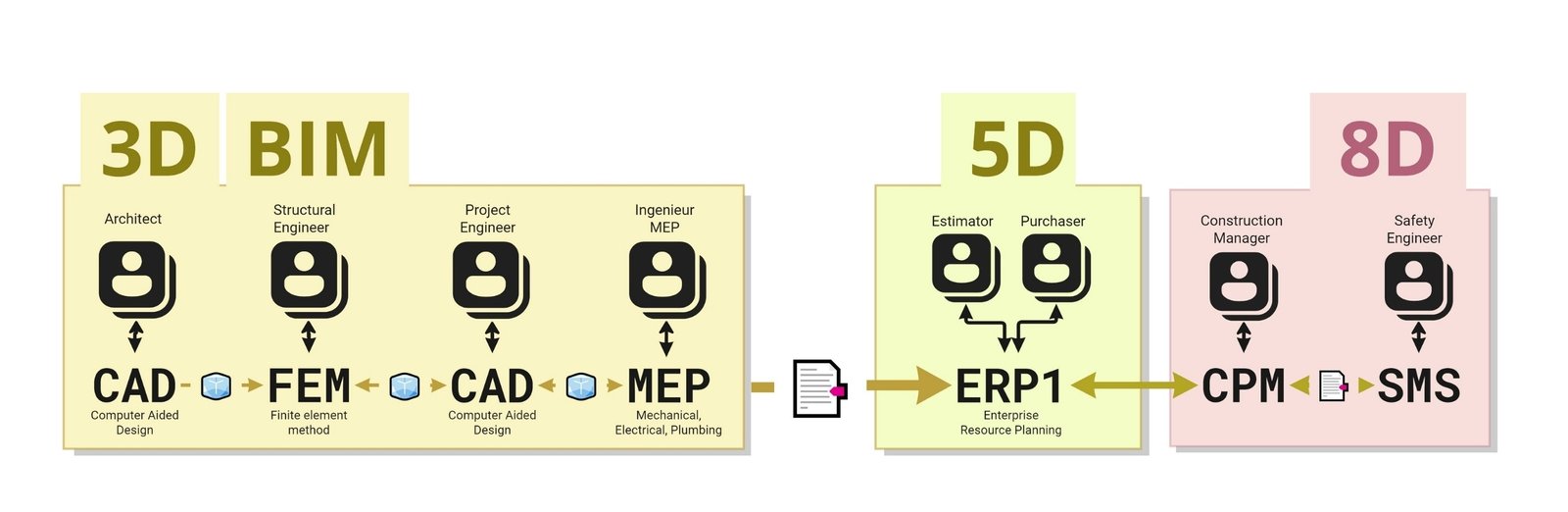
The first comprehensive platform tools had to not only store documents, but also document all change requests and operations in processes: who initiated them, what was the scope of the request, and what was finally recorded as a value or attribute. For these purposes, a system was needed that could track accurate calculations and decisions made (Fig. 1.2-1). Such platforms were the first MRP (Material Requirements Planning) and ERP (Enterprise Resource Planning) systems that gained popularity since the early 1990s (И. McCue, “History of ERP,” 2024)]
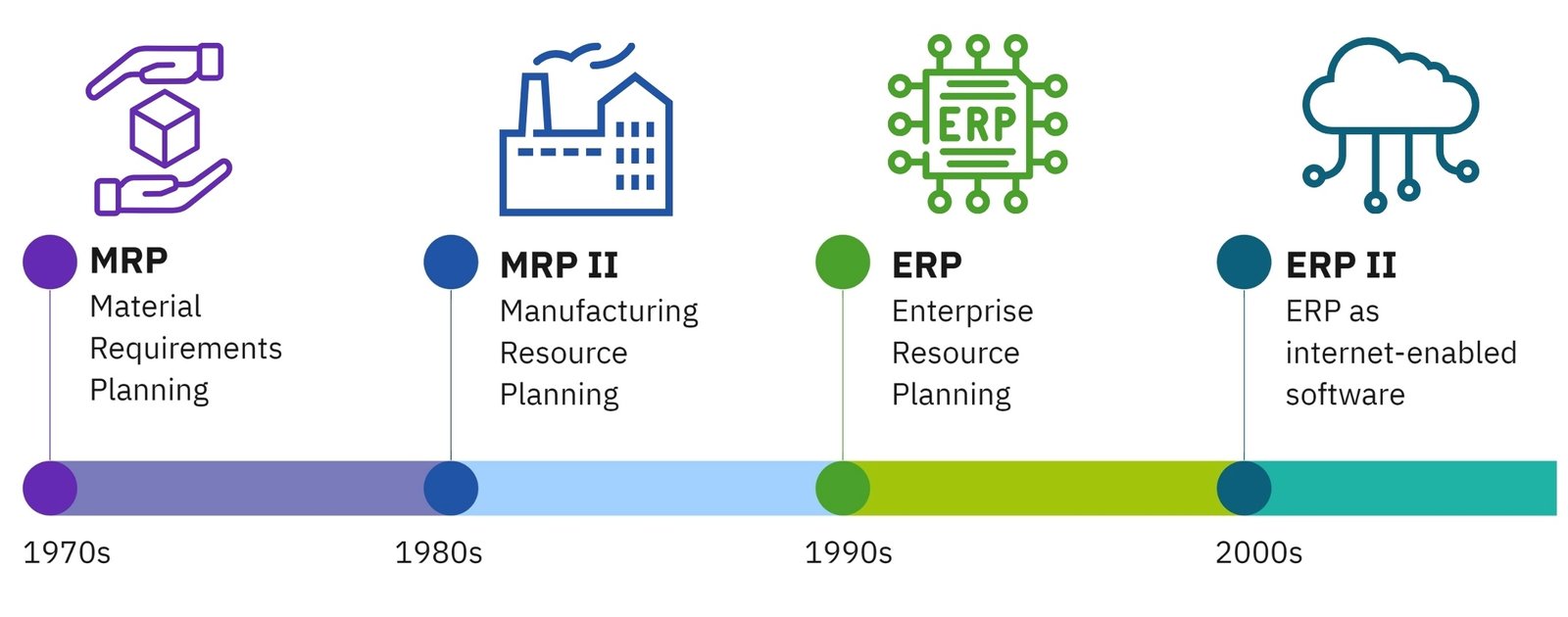
image38
Fig. 1.2-1 Advances in data storage technology led to the emergence of ERP -systems in the 1980s.

The first MRP – and ERP – systems laid the foundation for the digitalization era in business process and construction project management. Modular systems, originally designed to automate key business processes, have over time become integrated with additional, more flexible and adaptive software solutions.

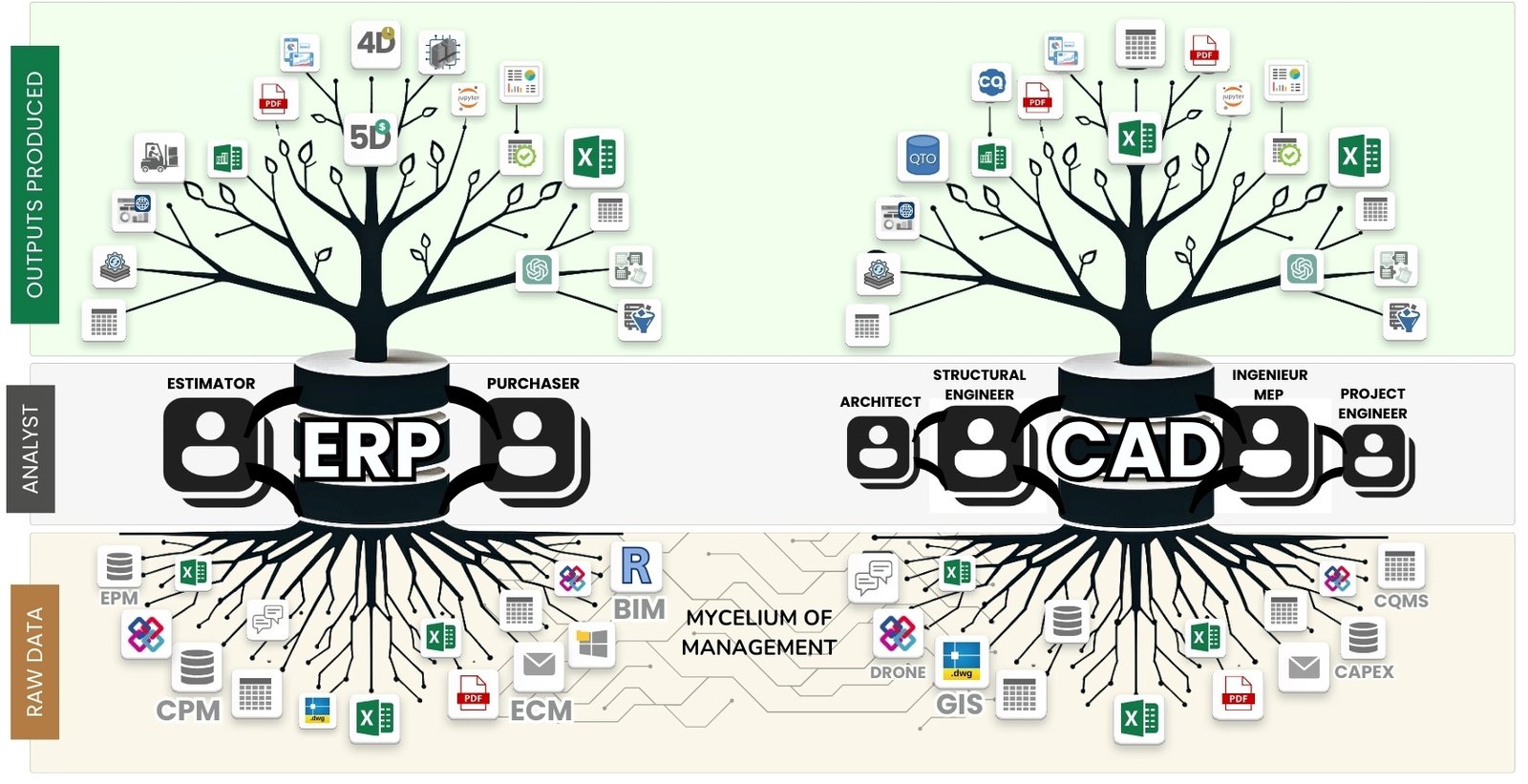
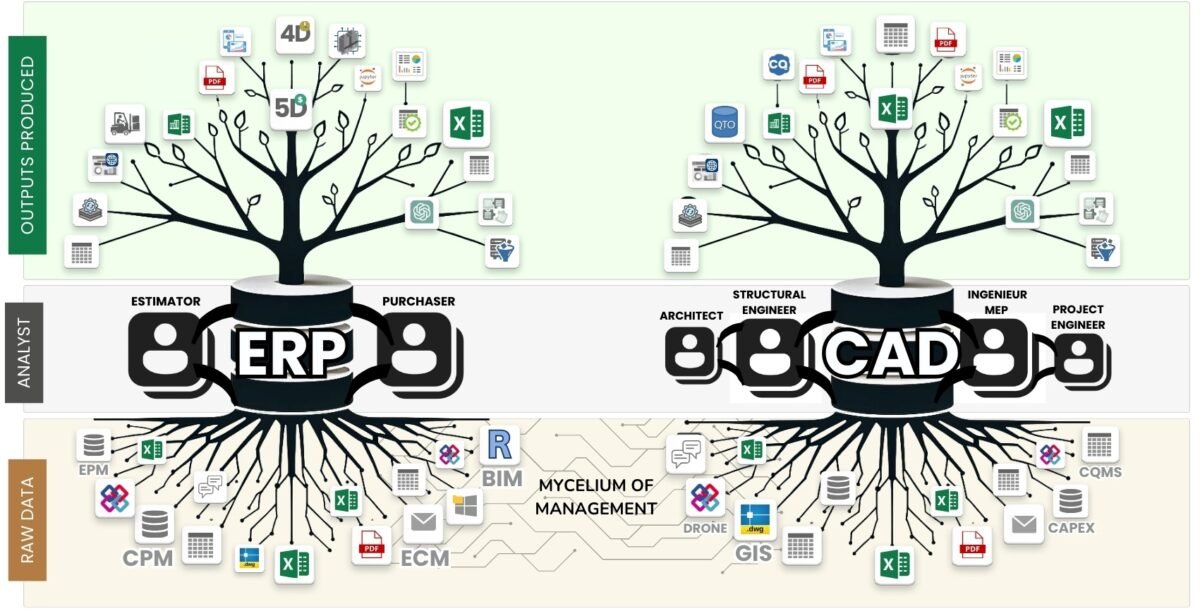
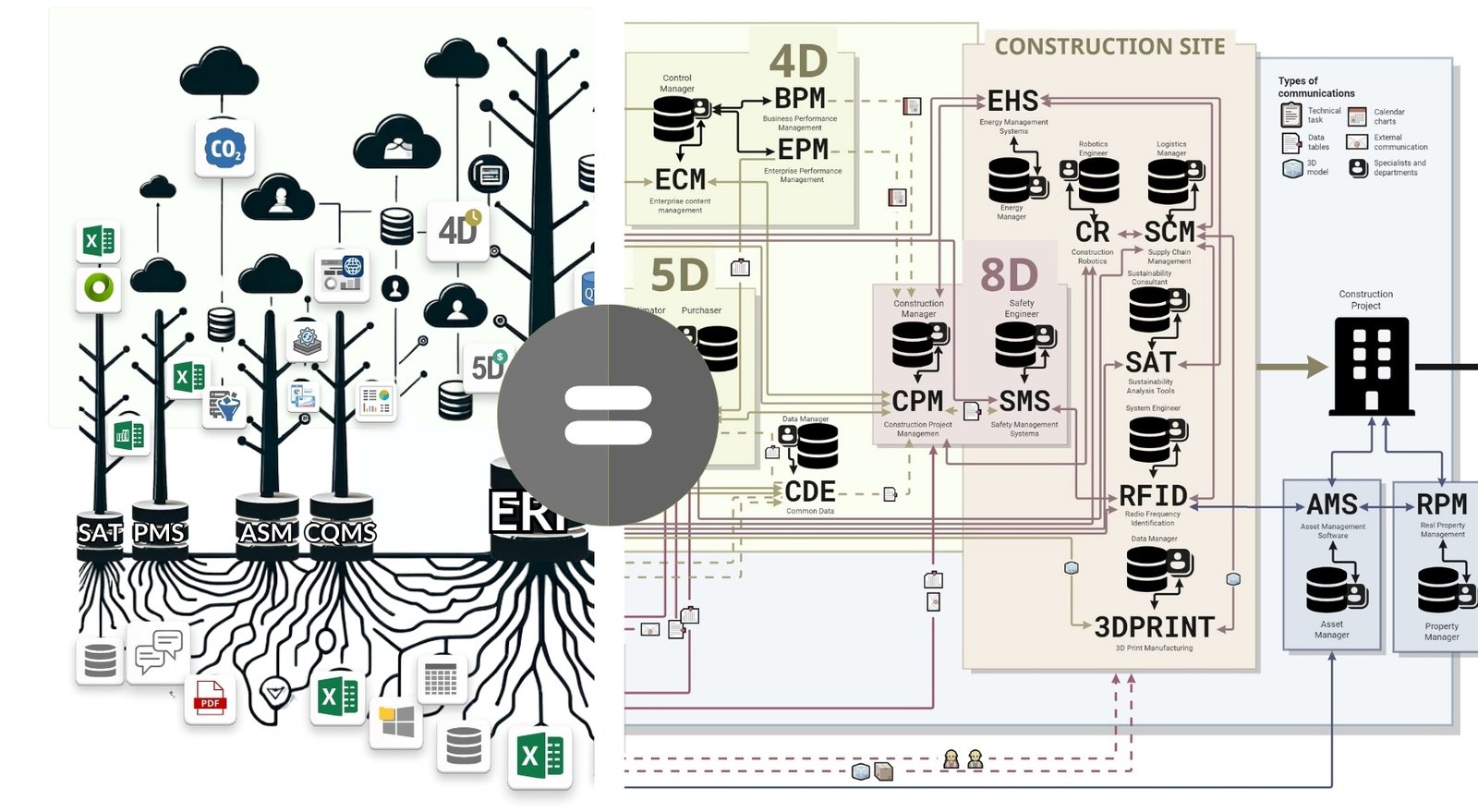
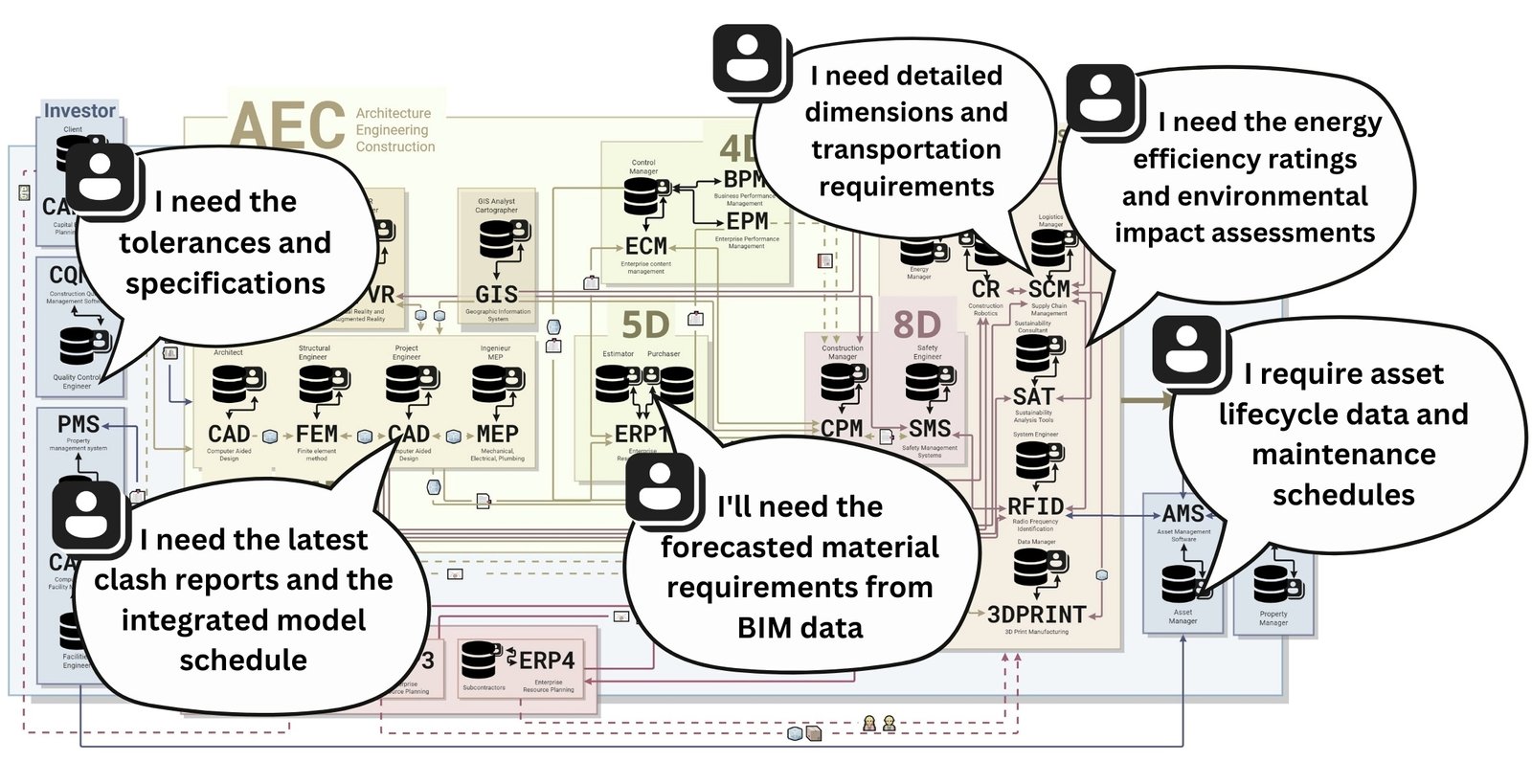
These additional solutions were designed for data processing and project content management (Fig. 1.2-2), they either replaced certain modules of large systems, or effectively complemented them, extending the functionality of the entire system.
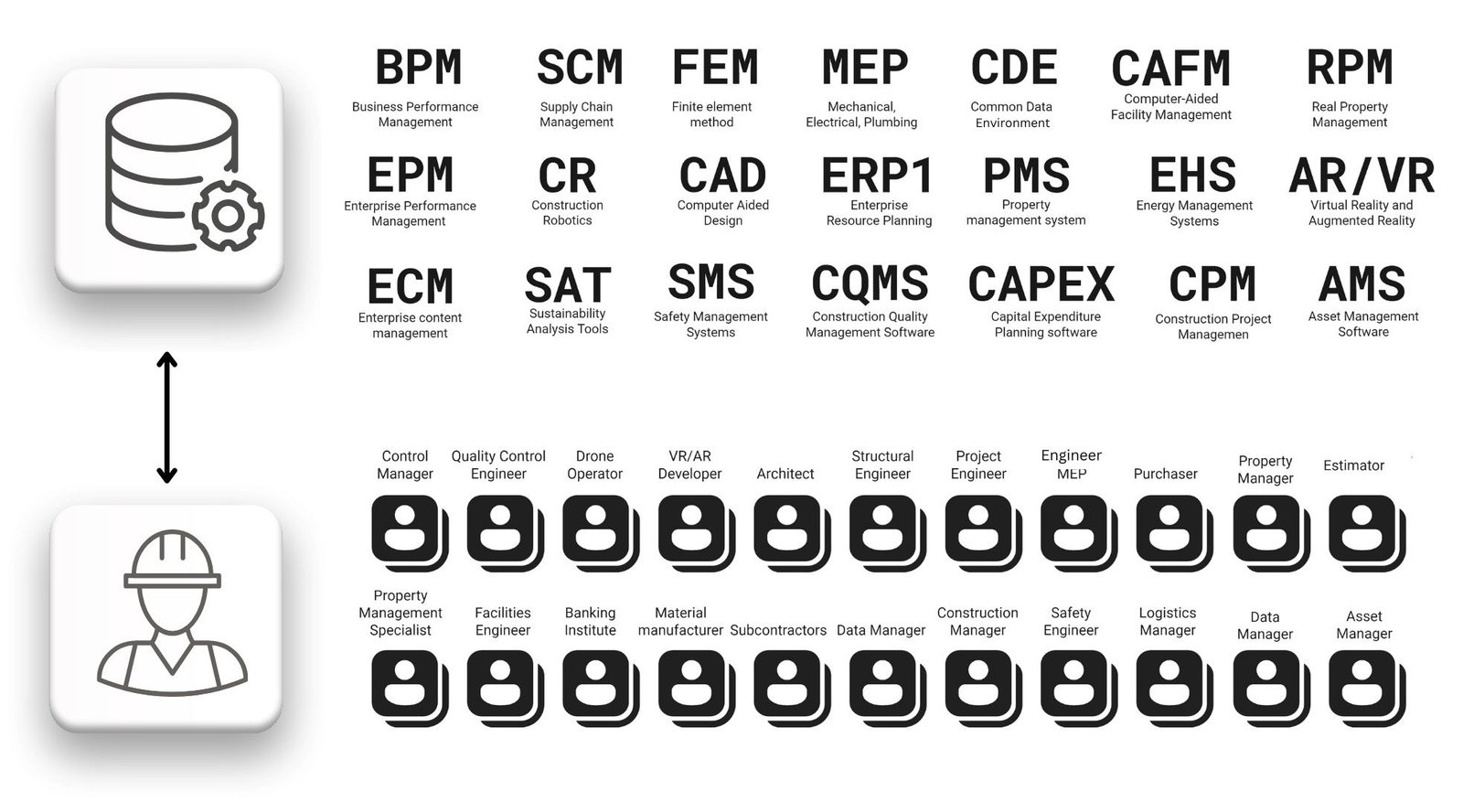
image77
Fig. 1.2-2 New software solutions have attracted an army of managers into the business to manage data flows.

Over the past decades, companies have invested heavily in modular systems (erpscout, “ERP Price: How much does an ERP system cost?”), perceiving them as long-term integrated solutions.

According to the Software Path report for 2022 (softwarepath, “What 1,384 ERP projects tell us about selecting ERP (2022 ERP report),” 18 Jan. 2022), theaverage budget per user of an ERP -system is $9,000. On average, about 26% of the company’s employees use such systems. Thus, for an organization with 100 users, the total cost of ERP implementation reaches approximately $900,000.

Investments in proprietary, closed, modular solutions are becoming less and less justified against the backdrop of the rapid development of modern, flexible and open technologies. If such investments have already been made, it is important to objectively reevaluate the role of existing systems: whether they remain necessary in the long term, or whether their functions can be revised and implemented more efficiently and transparently.

One of the key problems with today’s modular data platforms is that they centralize data management within closed applications. As a result, data – a company’s primary asset – becomes dependent on specific software solutions, rather than the other way around. This limits information reuse, complicates migration and reduces business agility in a rapidly changing digital landscape.

If it is likely that the value or relevance of closed modular architecture will diminish in the future, it makes sense to recognize the costs incurred today as sunk costs and focus on a strategic shift to a more open, scalable and adaptive digital ecosystem.

Proprietary software is characterized by exclusive control by the development company over the source code and user data created as part of the use of such solutions. Unlike open source software, users do not have access to the internal structure of the application and cannot independently review, modify or adapt it to their needs. Instead, they are required to purchase licenses that grant the right to use the software within the limits set by the vendor.

A modern data-centric approach offers a different paradigm: data should be viewed as a core strategic asset – independent, durable and separate from specific software solutions. Applications, in turn, become mere data tools that can be freely replaced without the risk of losing critical information.

The development of ERP and MRP systems in the 1990s (Fig. 1.2-1) provided businesses with powerful tools for process management, but it also had the unintended consequence of significantly increasing the number of employees dedicated to maintaining information flows. Instead of automating and simplifying operational tasks, such systems often created new levels of complexity, bureaucracy and dependence on internal IT resources.

.

Leave a Reply

Change language

Post's Highlights

Stay updated: news and insights


We’re Here to Help

Fresh solutions are released through our social channels

UNLOCK THE POWER OF DATA
 IN CONSTRUCTION

Dive into the world of data-driven construction with this accessible guide, perfect for professionals and novices alike.
From the basics of data management to cutting-edge trends in digital transformation, this book
will be your comprehensive guide to using data in the construction industry.

Related posts 

Focus Areas

navigate
  • ALL THE CHAPTERS IN THIS PART
  • A PRACTICAL GUIDE TO IMPLEMENTING A DATA-DRIVEN APPROACH (8)
  • CLASSIFICATION AND INTEGRATION: A COMMON LANGUAGE FOR CONSTRUCTION DATA (8)
  • DATA FLOW WITHOUT MANUAL EFFORT: WHY ETL (8)
  • DATA INFRASTRUCTURE: FROM STORAGE FORMATS TO DIGITAL REPOSITORIES (8)
  • DATA UNIFICATION AND STRUCTURING (7)
  • SYSTEMATIZATION OF REQUIREMENTS AND VALIDATION OF INFORMATION (7)
  • COST CALCULATIONS AND ESTIMATES FOR CONSTRUCTION PROJECTS (6)
  • EMERGENCE OF BIM-CONCEPTS IN THE CONSTRUCTION INDUSTRY (6)
  • MACHINE LEARNING AND PREDICTIONS (6)
  • BIG DATA AND ITS ANALYSIS (5)
  • DATA ANALYTICS AND DATA-DRIVEN DECISION-MAKING (5)
  • DATA CONVERSION INTO A STRUCTURED FORM (5)
  • DESIGN PARAMETERIZATION AND USE OF LLM FOR CAD OPERATION (5)
  • GEOMETRY IN CONSTRUCTION: FROM LINES TO CUBIC METERS (5)
  • LLM AND THEIR ROLE IN DATA PROCESSING AND BUSINESS PROCESSES (5)
  • ORCHESTRATION OF ETL AND WORKFLOWS: PRACTICAL SOLUTIONS (5)
  • SURVIVAL STRATEGIES: BUILDING COMPETITIVE ADVANTAGE (5)
  • 4D-6D and Calculation of Carbon Dioxide Emissions (4)
  • CONSTRUCTION ERP AND PMIS SYSTEMS (4)
  • COST AND SCHEDULE FORECASTING USING MACHINE LEARNING (4)
  • DATA WAREHOUSE MANAGEMENT AND CHAOS PREVENTION (4)
  • EVOLUTION OF DATA USE IN THE CONSTRUCTION INDUSTRY (4)
  • IDE WITH LLM SUPPORT AND FUTURE PROGRAMMING CHANGES (4)
  • QUANTITY TAKE-OFF AND AUTOMATIC CREATION OF ESTIMATES AND SCHEDULES (4)
  • THE DIGITAL REVOLUTION AND THE EXPLOSION OF DATA (4)
  • Uncategorized (4)
  • CLOSED PROJECT FORMATS AND INTEROPERABILITY ISSUES (3)
  • MANAGEMENT SYSTEMS IN CONSTRUCTION (3)
  • AUTOMATIC ETL CONVEYOR (PIPELINE) (2)

Search

Search

057 Speed of decision making depends on data quality

Today’s design data architecture is undergoing fundamental changes. The industry is moving away from bulky, isolated models and closed formats towards more flexible, machine-readable structures focused on analytics, integration and process automation. However, the transition...
060 A common language of construction the role of classifiers in digital transformation

In the context of digitalization and automation of inspection and processing processes, a special role is played by classification systems elements – a kind of “digital dictionaries” that ensure uniformity in the description and parameterization...

061 Masterformat, OmniClass, Uniclass and CoClass the evolution of classification systems

Historically, construction element and work classifiers have evolved in three generations, each reflecting the level of available technology and the current needs of the industry in a particular time period (Fig. 4.2-8): First generation (early...

Don't miss the new solutions


Linux

macOS

Looking for the Linux or MAC version? Send us a quick message using the button below, and we’ll guide you through the process!


📥 Download OnePager

Welcome to DataDrivenConstruction—where data meets innovation in the construction industry. Our One-Pager offers a concise overview of how our data-driven solutions can transform your projects, enhance efficiency, and drive sustainable growth. 

🚀 Welcome to the future of data in construction!

You're taking your first step into the world of open data, working with normalized, structured data—the foundation of data analytics and modern automation tools.
By downloading, you agree to the DataDrivenConstruction terms of use 

Stay ahead with the latest updates on converters, tools, AI, LLM
and data analytics in construction — Subscribe now!

🚀 Welcome to the future of data in construction!

You're taking your first step into the world of open data, working with normalized, structured data—the foundation of data analytics and modern automation tools.
By downloading, you agree to the DataDrivenConstruction terms of use 

Stay ahead with the latest updates on converters, tools, AI, LLM
and data analytics in construction — Subscribe now!

🚀 Welcome to the future of data in construction!

You're taking your first step into the world of open data, working with normalized, structured data—the foundation of data analytics and modern automation tools.

By downloading, you agree to the DataDrivenConstruction terms of use 

Stay ahead with the latest updates on converters, tools, AI, LLM
and data analytics in construction — Subscribe now!

🚀 Welcome to the future of data in construction!

You're taking your first step into the world of open data, working with normalized, structured data—the foundation of data analytics and modern automation tools.

By downloading, you agree to the DataDrivenConstruction terms of use 

Stay ahead with the latest updates on converters, tools, AI, LLM
and data analytics in construction — Subscribe now!

🚀 Welcome to the future of data in construction!

You're taking your first step into the world of open data, working with normalized, structured data—the foundation of data analytics and modern automation tools.

By downloading, you agree to the DDC terms of use 

🚀 Welcome to the future of data in construction!

You're taking your first step into the world of open data, working with normalized, structured data—the foundation of data analytics and modern automation tools.

By downloading, you agree to the DataDrivenConstruction terms of use 

Stay ahead with the latest updates on converters, tools, AI, LLM
and data analytics in construction — Subscribe now!

DataDrivenConstruction offers workshops tested and practiced on global leaders in the construction industry to help your team navigate and leverage the power of data and artificial intelligence in your company's decision making.

Reserve your spot now to rethink your
approach to decision making!


🚀 Welcome to the future of data in construction!

By downloading, you agree to the DataDrivenConstruction terms of use 

Stay ahead with the latest updates on converters, tools, AI, LLM
and data analytics in construction — Subscribe now!

Have a question or need more information? Reach out to us directly!
Schedule a time to discuss your needs with our team.
Tailored sessions to help your team grow — let's plan together!
Have you attended one of our workshops, read our book, or used our solutions? Share your thoughts with us!
Name
Data Maturity Diagnostics

🧰 Data-Driven Readiness Check

This short assessment will help you identify your company's data management pain points and offer solutions to improve project efficiency. It takes only 1–2 minutes to complete and you will receive personalized recommendations tailored to your needs.

Clean & Organized Data

Theoretical Chapters:

Practical Chapters:

What You'll Find on
DDC Solutions:

  • CAD/BIM to spreadsheet/database converters (Revit, AutoCAD, IFC, Microstation)
  • Ready-to-deploy n8n workflows for construction processes
  • ETL pipelines for data synchronization between systems
  • Customizable Python scripts for repetitive tasks
  • Intelligent data validation and error detection
  • Real-time dashboard connectors
  • Automated reporting systems

Connect Everything

Theoretical Chapters:

Practical Chapters:

What You'll Find on
DDC Solutions:

  • CAD/BIM to spreadsheet/database converters (Revit, AutoCAD, IFC, Microstation)
  • Ready-to-deploy n8n workflows for construction processes
  • ETL pipelines for data synchronization between systems
  • Customizable Python scripts for repetitive tasks
  • Intelligent data validation and error detection
  • Real-time dashboard connectors
  • Automated reporting systems

Add AI & LLM Brain

Theoretical Chapters:

Practical Chapters:

What You'll Find on
DDC Solutions:

  • CAD/BIM to spreadsheet/database converters (Revit, AutoCAD, IFC, Microstation)
  • Ready-to-deploy n8n workflows for construction processes
  • ETL pipelines for data synchronization between systems
  • Customizable Python scripts for repetitive tasks
  • Intelligent data validation and error detection
  • Real-time dashboard connectors
  • Automated reporting systems
005 Digital revolution and the emergence of modular MRPERP-systems
This website uses cookies to improve your experience. By using this website you agree to our Data Protection Policy.
Read more
×