
image58
066 Requirements gathering and analysis transforming communications into structured data
10 June 2025
image177
069 Data collection for the verification process
10 June 2025

068 Structured Requirements and RegEx regular expressions

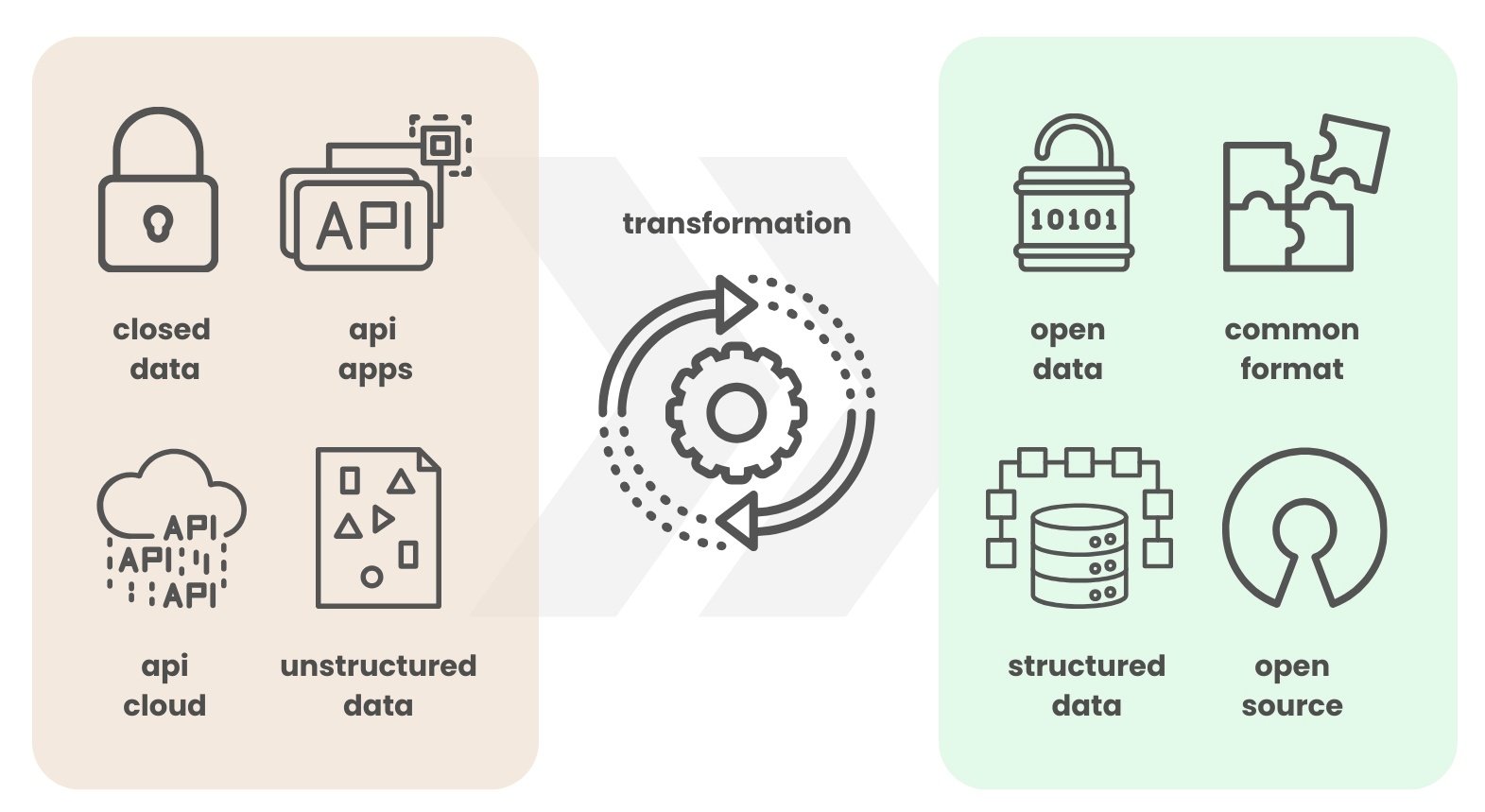
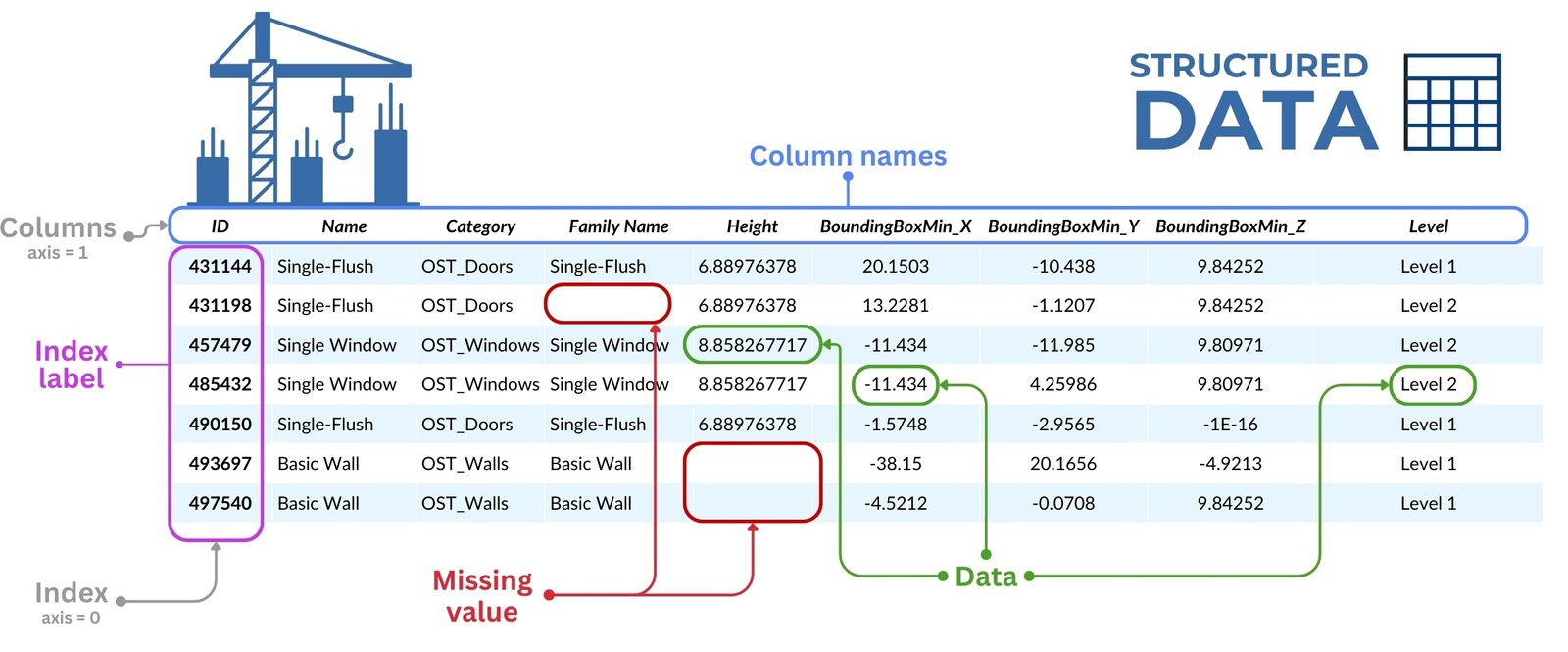
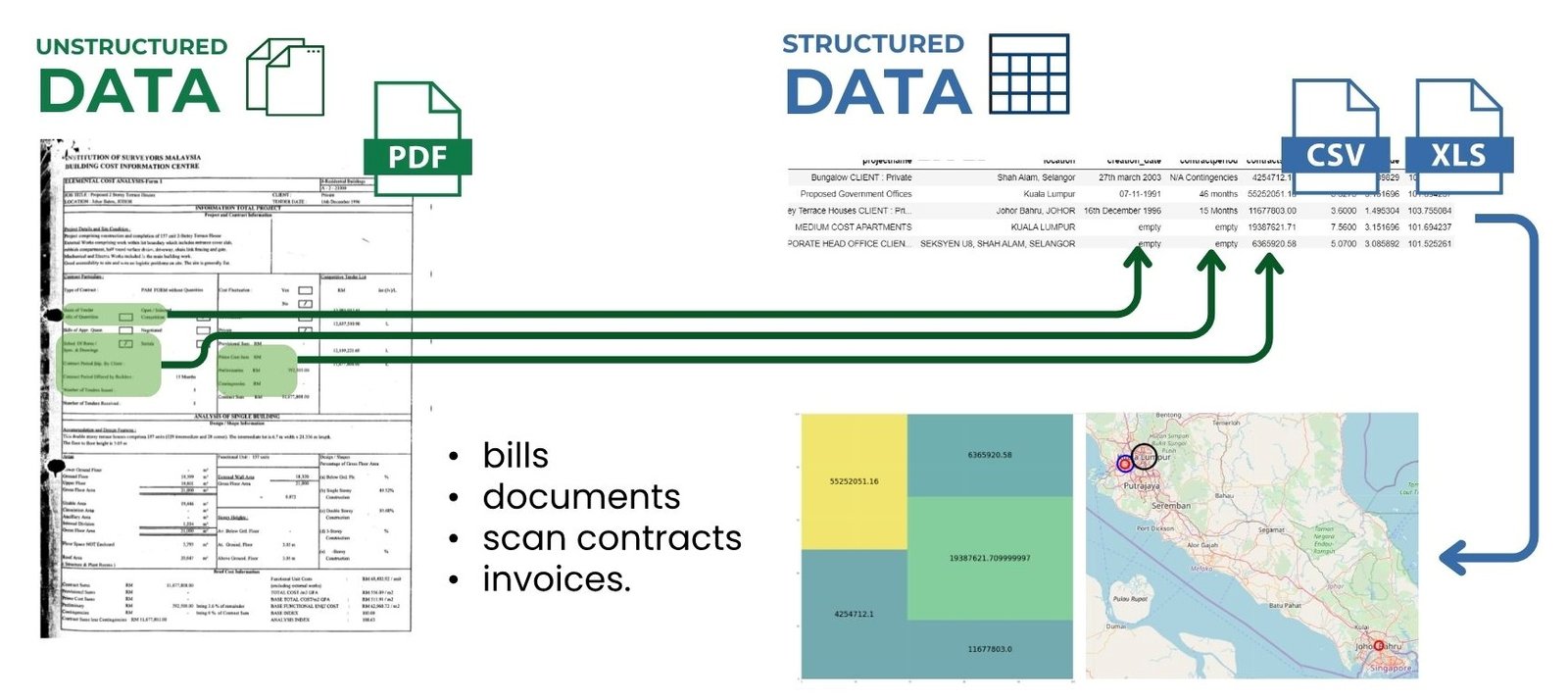
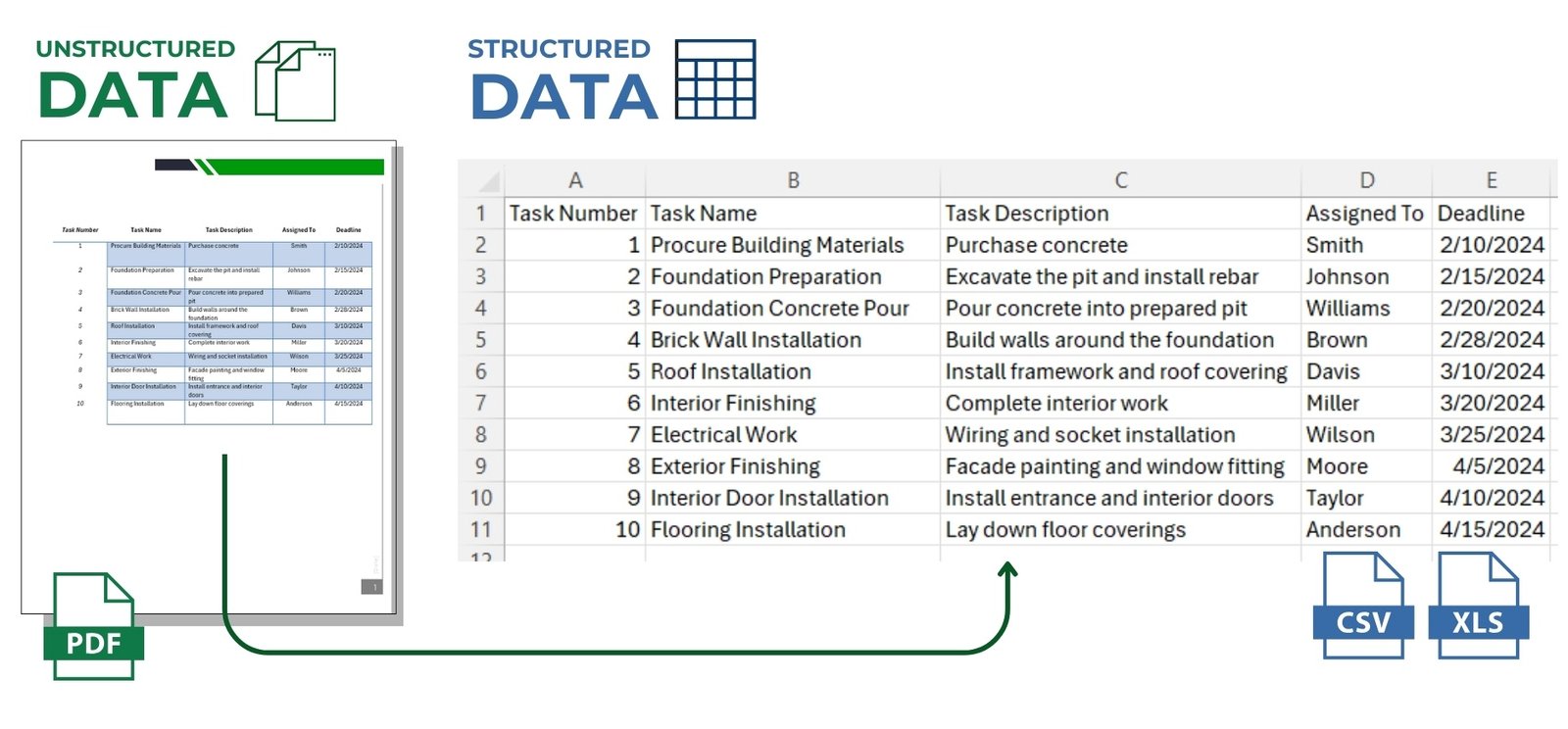
Up to 80% of data created in companies is in unstructured or semi-structured formats (“Structured and unstructured data: What’s the Difference?,” 2024) – text, documents, letters, PDF -files, conversations. Such data (Fig. 4.4-1) is difficult to analyze, verify, transfer between systems and use in automation.

To ensure manageability, transparency, and automatic validation, it is necessary to translate textual and semi-structured requirements into well-defined, structured formats. The structuring process concerns not only the data (which we discussed in detail in the first chapters of this part of the book), but also the requirements themselves, which project participants usually formulate in free text form throughout the project lifecycle, often without thinking that these processes can be automated.

Just as we have already converted data from an unstructured textual form to a structured form, in the requirements workflow we will convert textual requirements to a structured “logical and physical layer” format.

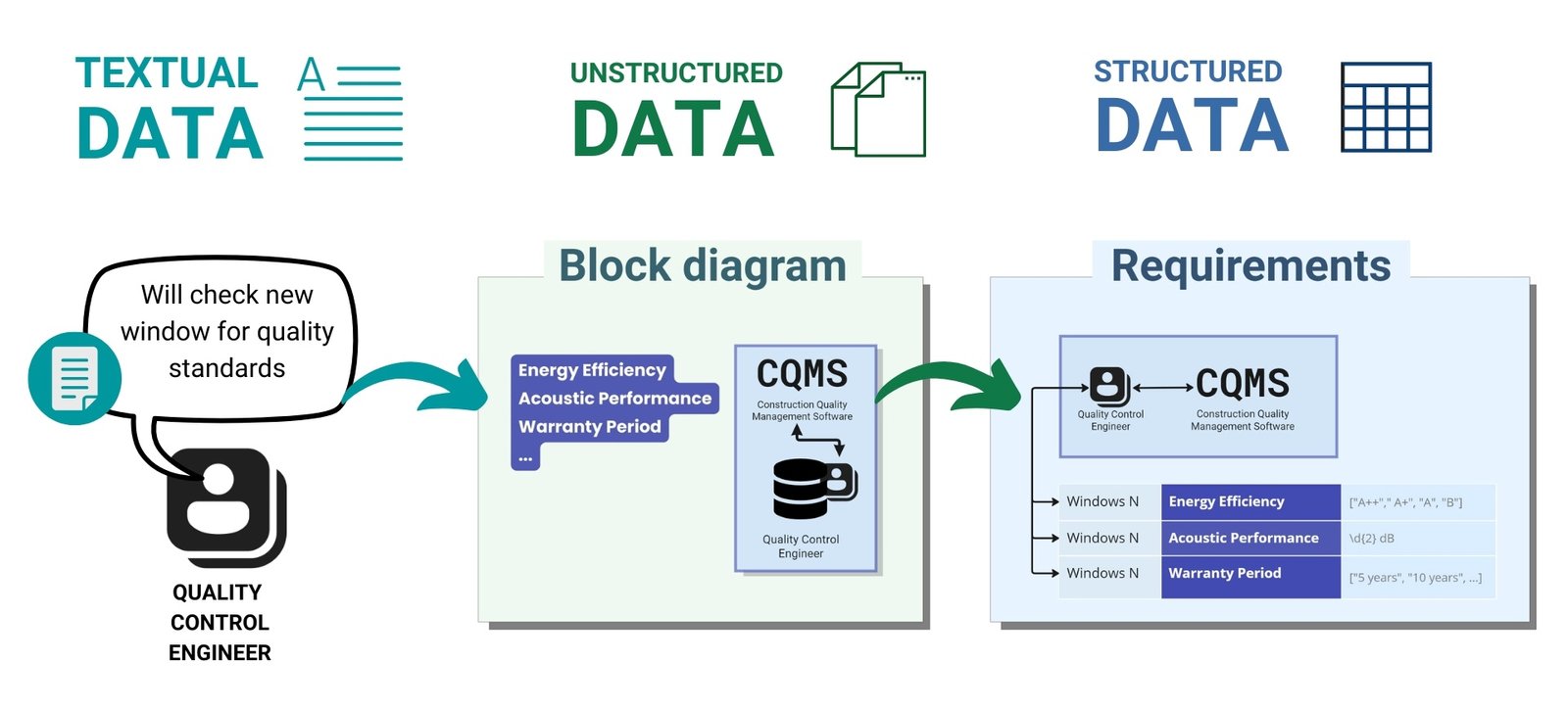
Within the example of adding a window (Fig. 4.4-1), the next step is to describe the data requirements in tabular form. We will structure the information for each system used by the project participants by specifying key attributes and their boundary values

Consider, for example, one such system (Fig. 4.4-5) – Construction Quality Management System (CQMS), which is used by the quality control engineer on the client’s side. With its help he checks whether a new element of the project – in this case “new window” – complies with the established standards and requirements.
.

image70
Fig. 4.4-5 Converting textual requirements into a table format with descriptions of entity attributes simplifies understanding for other specialists.

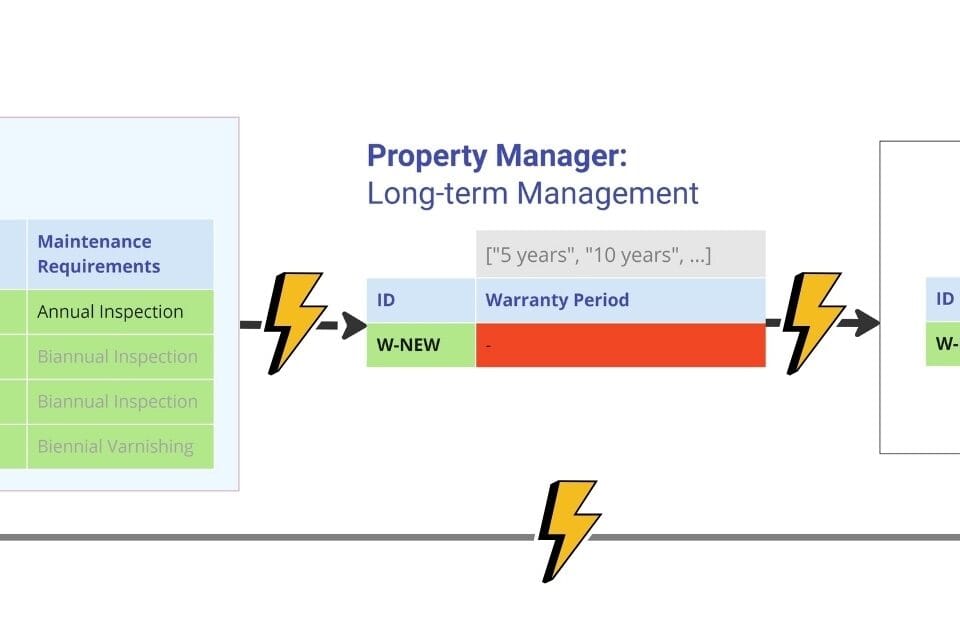
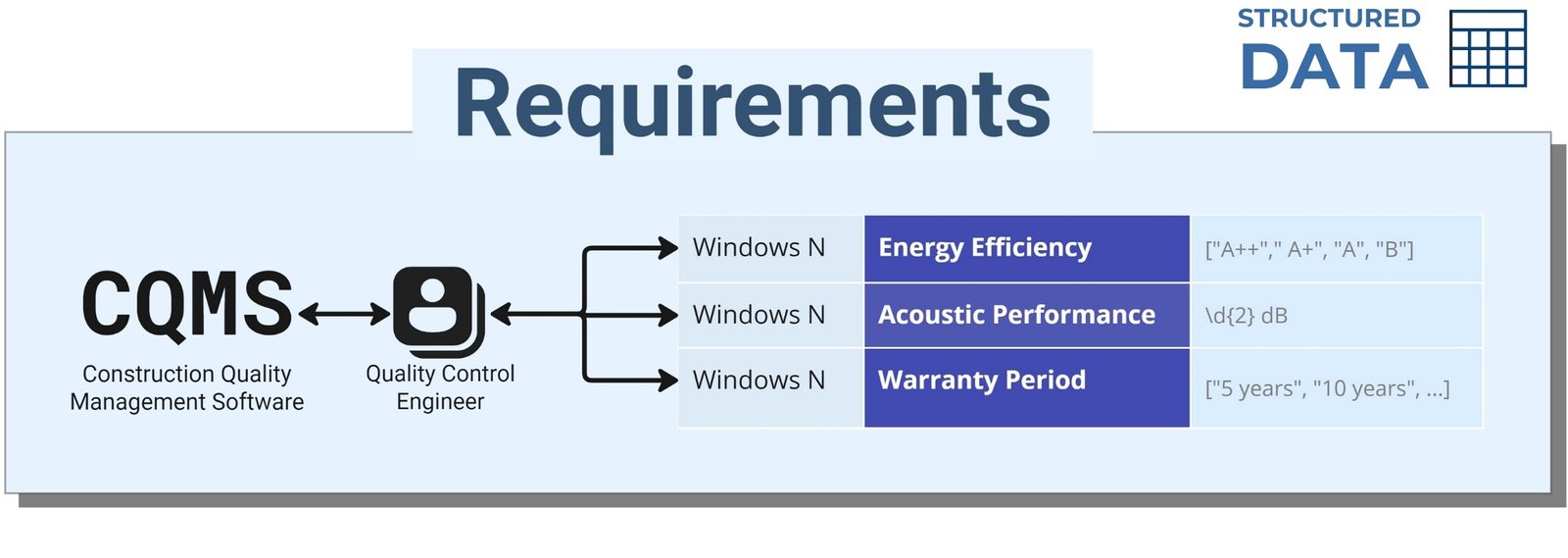
As an example, consider some important requirements for attributes of entities of type “window systems” in CQMS -system (Fig. 4.4-6): energy efficiency, acoustic performance and warranty period. Each category includes certain standards and specifications that need to be considered when designing and installing window systems.
.

image178
Fig. 4.4-6 The Quality Control Engineer should inspect new Window Type elements for energy efficiency, sound insulation, and warranty standards.

The data requirements that a QA engineer specifies in a table have, for example, the following boundary values:

  • The energy efficiency class of windows ranges from “A++”, denoting the highest efficiency, to “B”, considered the minimum acceptable level, and these classes are represented by a list of acceptable values [“A++”, “A+”, “A”, “A”, “A”, “B”].
  • The acoustic insulation of windows, measured in decibels and indicating their ability to reduce street noise, is defined by the regular expression \d{2}dB.
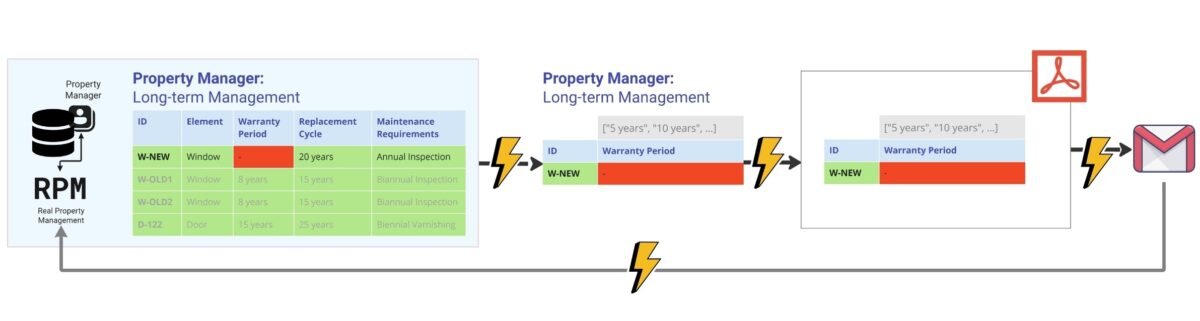
  • The “Warranty Period” attribute for the Window Type entity starts at five years, setting this period as the minimum allowed when selecting a product; warranty period values such as [“5 years”, “10 years”, etc.] or the logical condition “>5 (years)” are also specified.

According to the collected requirements, within the established attributes, new window category or class elements with grades below “B” such as “C” or “D” will not pass the energy efficiency test. Acoustical insulation of windows in data or documents to the QA Engineer shall be labeled with a two-digit number followed by the postfix “dB”, such as “35 dB” or “40 dB”, and values outside this format such as “9 D B” or “100 decibels” will not be accepted (as they will not pass the pattern for RegEx strings). The warranty period must begin with a minimum of “5 years” and windows with shorter warranty periods such as “3 years” or “4 years” will not meet the requirements that the Quality Engineer has described in the table format.

To check such attribute-parameter values against boundary values from requirements in the validation process, we use either a list of allowed values ([“A”, “B”, “C”]), dictionaries ([“A”: “H1”, “H2”; “B”: W1″, “W2”]), logical operations (e.g., “>”, “<“, “<=”, “>=” “==”) for numeric values) and regular expressions (for string and text values such as in the “Acoustic Performance” attribute). Regular expressions are an extremely important tool when working with string values.

Regular expressions (RegEx) are used in programming languages, including Python (Re library), to find and modify strings. Regex is like a detective in the string world, able to identify text patterns in text with precision.

In regular expressions, letters are described directly using the corresponding alphabet characters, while numbers can be represented using the special character \d, which corresponds to any digit from 0 to 9. Square brackets are used to indicate a range of letters or digits, e.g., [a-z] for any lowercase letter of the Latin alphabet or [0-9], which is equivalent to \d. For non-numeric and non-letter characters, \D and \W are used, respectively.

Popular RegEx use cases (Fig. 4.4-7):

  • Verifying email address: to check if a string is a valid email address, you can use the template “^ [a-zA-Z0-9._%+-]+@[a-zA-Z0-9.-]+\.[a-zA-Z]{2,}$”.
  • Date Extraction: “\b\d{2}\d{2}\d{2}\d{2}\d{2}\d{2}\d{2}\d{2}\d{2}\.\d{4}\b” template can be used to extract date from text in DD.MM.YYYYYY format.
  • Verifying phone numbers: to verify phone numbers in the format +49(000)000-0000, the pattern will look like “\+\d{2}\(\d{3}\)\d{3}-\d{4}”.

    By translating the requirements of a QA engineer into the format of attributes and their boundary values (Fig. 4.4-6), we have transformed them from their original text format (conversations, letters, and regulatory documents) into an organized and structured table, thus making it possible to automatically check and analyze any incoming data (e.g., new elements of the Window category). The presence of requirements allows for the automatic discarding of data that has not been checked, while the checked data is automatically transferred to the systems for further processing.
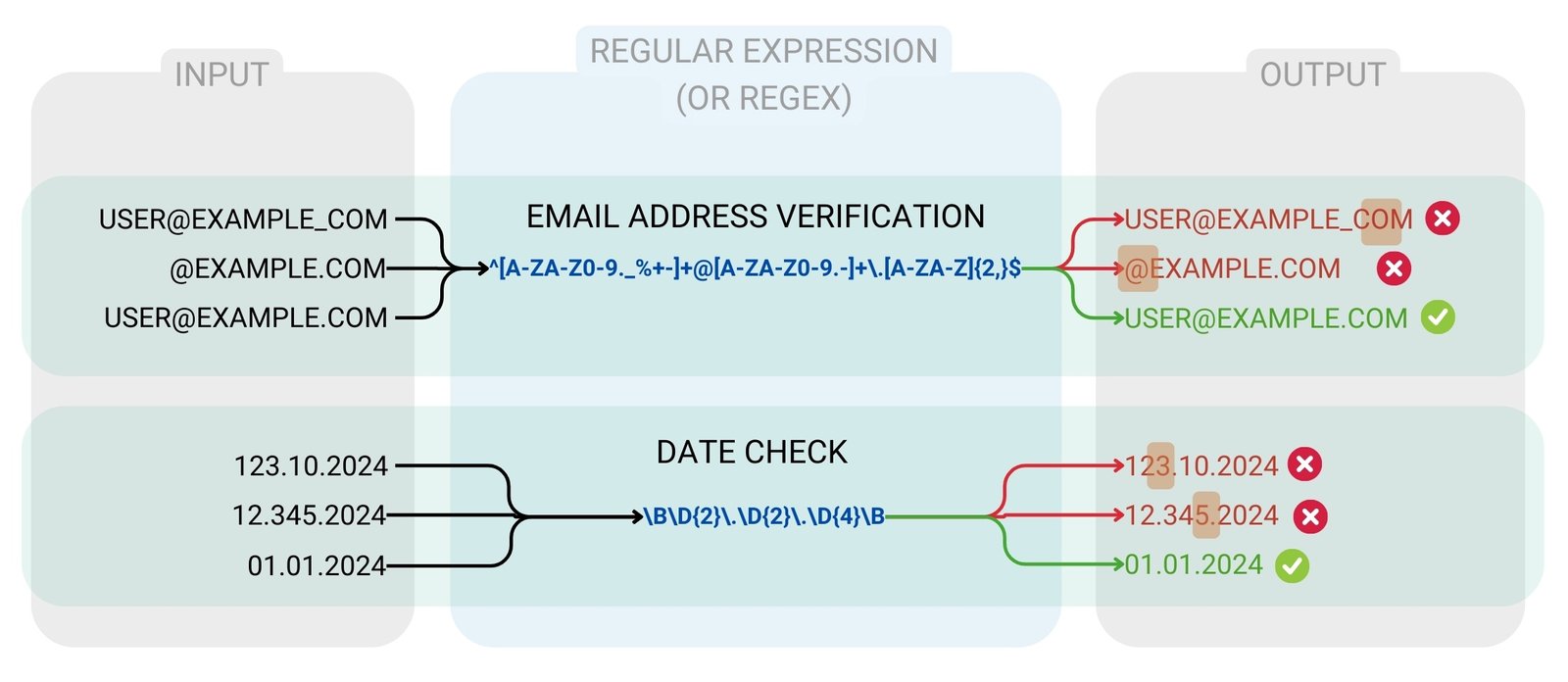
image61
Fig. 4.4-7 The use of regular expressions is an extremely important tool in the text data validation process.

Now, moving from the conceptual to the logical level of working with requirements, we will convert all requirements of all specialists in our process of installing a new window (Fig. 4.4-4) into an organized list in attribute format and add these lists with the necessary attributes to our flowchart for each specialist (Fig. 4.4-8).
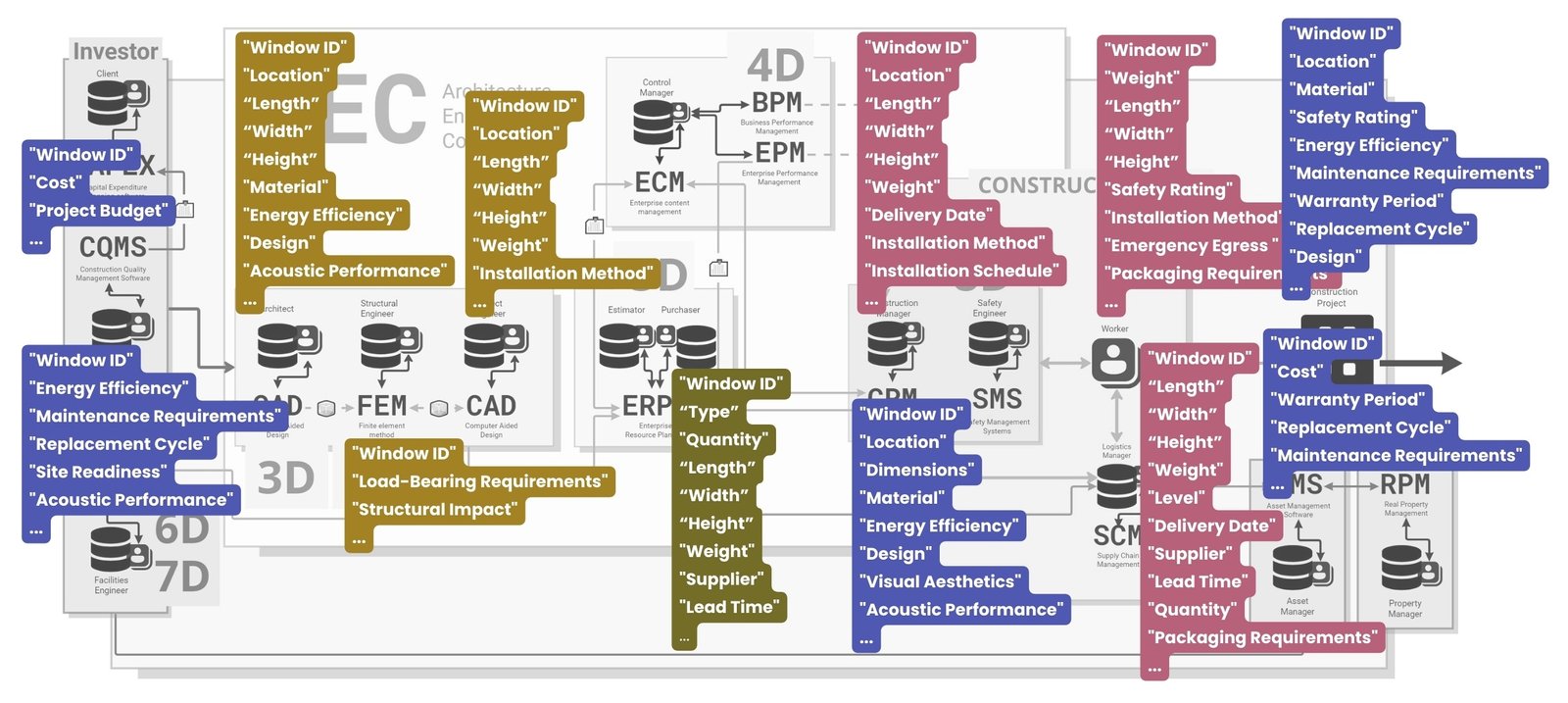
image165
Fig. 4.4-8 At the logical process level, the attributes that each technician handles are added to their respective systems.

By adding all attributes to one common process table, we transform the information previously presented as text and dialogue at the conceptual level (Fig. 4.4-1) into the structured and systematized form of physical-level tables (Fig. 4.4-9).
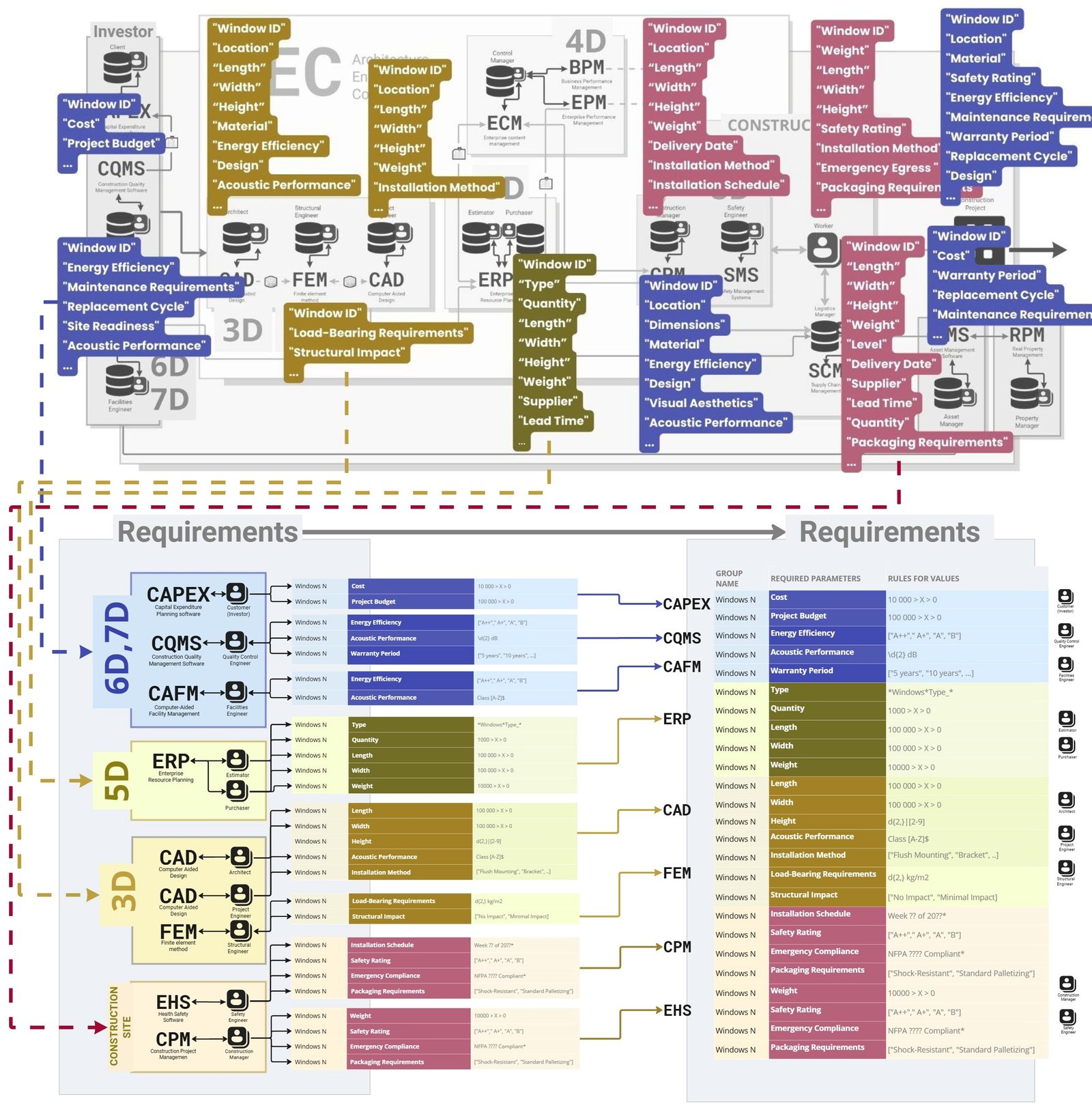
image55
Fig. 4.4-9 Converting unstructured expert dialog into structured tables helps to understand requirements at the physical level.

Now the data requirements need to be communicated to the specialists creating information for specific systems. For example, if you are working in a CAD database, before you start modeling elements, you should collect all the necessary parameters based on the end use scenarios of this data. This usually starts with the operational phase, followed by the construction site, the logistics department, the estimating department, the structural calculations department, and so on. Only after you have taken into account the requirements of all these links can you start creating data – based on the parameters collected. This will allow you to automate the verification and transfer of data along the chain.

When new data meets the requirements, it is automatically integrated into the company’s data ecosystem, going directly to the users and systems for which it was intended. Verification of data against attributes and their values ensures that the information meets the required quality standards and is ready to be applied to company scenarios.

The data requirements have been defined and now, before verification can begin, the data to be verified must be created, obtained or collected, or the current state of information in databases must be recorded to be used in the verification process.

.

Leave a Reply

Change language

Post's Highlights

Stay updated: news and insights


We’re Here to Help

Fresh solutions are released through our social channels

UNLOCK THE POWER OF DATA
 IN CONSTRUCTION

Dive into the world of data-driven construction with this accessible guide, perfect for professionals and novices alike.
From the basics of data management to cutting-edge trends in digital transformation, this book
will be your comprehensive guide to using data in the construction industry.

Related posts 

Focus Areas

navigate
  • ALL THE CHAPTERS IN THIS PART
  • A PRACTICAL GUIDE TO IMPLEMENTING A DATA-DRIVEN APPROACH (8)
  • CLASSIFICATION AND INTEGRATION: A COMMON LANGUAGE FOR CONSTRUCTION DATA (8)
  • DATA FLOW WITHOUT MANUAL EFFORT: WHY ETL (8)
  • DATA INFRASTRUCTURE: FROM STORAGE FORMATS TO DIGITAL REPOSITORIES (8)
  • DATA UNIFICATION AND STRUCTURING (7)
  • SYSTEMATIZATION OF REQUIREMENTS AND VALIDATION OF INFORMATION (7)
  • COST CALCULATIONS AND ESTIMATES FOR CONSTRUCTION PROJECTS (6)
  • EMERGENCE OF BIM-CONCEPTS IN THE CONSTRUCTION INDUSTRY (6)
  • MACHINE LEARNING AND PREDICTIONS (6)
  • BIG DATA AND ITS ANALYSIS (5)
  • DATA ANALYTICS AND DATA-DRIVEN DECISION-MAKING (5)
  • DATA CONVERSION INTO A STRUCTURED FORM (5)
  • DESIGN PARAMETERIZATION AND USE OF LLM FOR CAD OPERATION (5)
  • GEOMETRY IN CONSTRUCTION: FROM LINES TO CUBIC METERS (5)
  • LLM AND THEIR ROLE IN DATA PROCESSING AND BUSINESS PROCESSES (5)
  • ORCHESTRATION OF ETL AND WORKFLOWS: PRACTICAL SOLUTIONS (5)
  • SURVIVAL STRATEGIES: BUILDING COMPETITIVE ADVANTAGE (5)
  • 4D-6D and Calculation of Carbon Dioxide Emissions (4)
  • CONSTRUCTION ERP AND PMIS SYSTEMS (4)
  • COST AND SCHEDULE FORECASTING USING MACHINE LEARNING (4)
  • DATA WAREHOUSE MANAGEMENT AND CHAOS PREVENTION (4)
  • EVOLUTION OF DATA USE IN THE CONSTRUCTION INDUSTRY (4)
  • IDE WITH LLM SUPPORT AND FUTURE PROGRAMMING CHANGES (4)
  • QUANTITY TAKE-OFF AND AUTOMATIC CREATION OF ESTIMATES AND SCHEDULES (4)
  • THE DIGITAL REVOLUTION AND THE EXPLOSION OF DATA (4)
  • Uncategorized (4)
  • CLOSED PROJECT FORMATS AND INTEROPERABILITY ISSUES (3)
  • MANAGEMENT SYSTEMS IN CONSTRUCTION (3)
  • AUTOMATIC ETL CONVEYOR (PIPELINE) (2)

Search

Search

057 Speed of decision making depends on data quality

Today’s design data architecture is undergoing fundamental changes. The industry is moving away from bulky, isolated models and closed formats towards more flexible, machine-readable structures focused on analytics, integration and process automation. However, the transition...
060 A common language of construction the role of classifiers in digital transformation

In the context of digitalization and automation of inspection and processing processes, a special role is played by classification systems elements – a kind of “digital dictionaries” that ensure uniformity in the description and parameterization...

061 Masterformat, OmniClass, Uniclass and CoClass the evolution of classification systems

Historically, construction element and work classifiers have evolved in three generations, each reflecting the level of available technology and the current needs of the industry in a particular time period (Fig. 4.2-8): First generation (early...

Don't miss the new solutions


Linux

macOS

Looking for the Linux or MAC version? Send us a quick message using the button below, and we’ll guide you through the process!


📥 Download OnePager

Welcome to DataDrivenConstruction—where data meets innovation in the construction industry. Our One-Pager offers a concise overview of how our data-driven solutions can transform your projects, enhance efficiency, and drive sustainable growth. 

🚀 Welcome to the future of data in construction!

You're taking your first step into the world of open data, working with normalized, structured data—the foundation of data analytics and modern automation tools.

By downloading, you agree to the DataDrivenConstruction terms of use 

Stay ahead with the latest updates on converters, tools, AI, LLM
and data analytics in construction — Subscribe now!

🚀 Welcome to the future of data in construction!

You're taking your first step into the world of open data, working with normalized, structured data—the foundation of data analytics and modern automation tools.

By downloading, you agree to the DataDrivenConstruction terms of use 

Stay ahead with the latest updates on converters, tools, AI, LLM
and data analytics in construction — Subscribe now!

🚀 Welcome to the future of data in construction!

You're taking your first step into the world of open data, working with normalized, structured data—the foundation of data analytics and modern automation tools.

By downloading, you agree to the DataDrivenConstruction terms of use 

Stay ahead with the latest updates on converters, tools, AI, LLM
and data analytics in construction — Subscribe now!

🚀 Welcome to the future of data in construction!

You're taking your first step into the world of open data, working with normalized, structured data—the foundation of data analytics and modern automation tools.

By downloading, you agree to the DataDrivenConstruction terms of use 

Stay ahead with the latest updates on converters, tools, AI, LLM
and data analytics in construction — Subscribe now!

🚀 Welcome to the future of data in construction!

You're taking your first step into the world of open data, working with normalized, structured data—the foundation of data analytics and modern automation tools.

By downloading, you agree to the DDC terms of use 

🚀 Welcome to the future of data in construction!

You're taking your first step into the world of open data, working with normalized, structured data—the foundation of data analytics and modern automation tools.

By downloading, you agree to the DataDrivenConstruction terms of use 

Stay ahead with the latest updates on converters, tools, AI, LLM
and data analytics in construction — Subscribe now!

DataDrivenConstruction offers workshops tested and practiced on global leaders in the construction industry to help your team navigate and leverage the power of data and artificial intelligence in your company's decision making.

Reserve your spot now to rethink your
approach to decision making!


🚀 Welcome to the future of data in construction!

By downloading, you agree to the DataDrivenConstruction terms of use 

Stay ahead with the latest updates on converters, tools, AI, LLM
and data analytics in construction — Subscribe now!

Have a question or need more information? Reach out to us directly!
Schedule a time to discuss your needs with our team.
Tailored sessions to help your team grow — let's plan together!
Have you attended one of our workshops, read our book, or used our solutions? Share your thoughts with us!
Name
Data Maturity Diagnostics

🧰 Data-Driven Readiness Check

This short assessment will help you identify your company's data management pain points and offer solutions to improve project efficiency. It takes only 1–2 minutes to complete and you will receive personalized recommendations tailored to your needs.

Clean & Organized Data

Theoretical Chapters:

Practical Chapters:

What You'll Find on
DDC Solutions:

  • CAD/BIM to spreadsheet/database converters (Revit, AutoCAD, IFC, Microstation)
  • Ready-to-deploy n8n workflows for construction processes
  • ETL pipelines for data synchronization between systems
  • Customizable Python scripts for repetitive tasks
  • Intelligent data validation and error detection
  • Real-time dashboard connectors
  • Automated reporting systems

Connect Everything

Theoretical Chapters:

Practical Chapters:

What You'll Find on
DDC Solutions:

  • CAD/BIM to spreadsheet/database converters (Revit, AutoCAD, IFC, Microstation)
  • Ready-to-deploy n8n workflows for construction processes
  • ETL pipelines for data synchronization between systems
  • Customizable Python scripts for repetitive tasks
  • Intelligent data validation and error detection
  • Real-time dashboard connectors
  • Automated reporting systems

Add AI & LLM Brain

Theoretical Chapters:

Practical Chapters:

What You'll Find on
DDC Solutions:

  • CAD/BIM to spreadsheet/database converters (Revit, AutoCAD, IFC, Microstation)
  • Ready-to-deploy n8n workflows for construction processes
  • ETL pipelines for data synchronization between systems
  • Customizable Python scripts for repetitive tasks
  • Intelligent data validation and error detection
  • Real-time dashboard connectors
  • Automated reporting systems
068 Structured Requirements and RegEx regular expressions
This website uses cookies to improve your experience. By using this website you agree to our Data Protection Policy.
Read more
×