
Grafik 115
099 Why semantic technologies fail to live up to expectations in the construction industry
10 June 2025
image57
101 The myth of interoperability between CAD systems
10 June 2025

100 Closed data and falling productivity the dead end of the CAD industry (BIM)

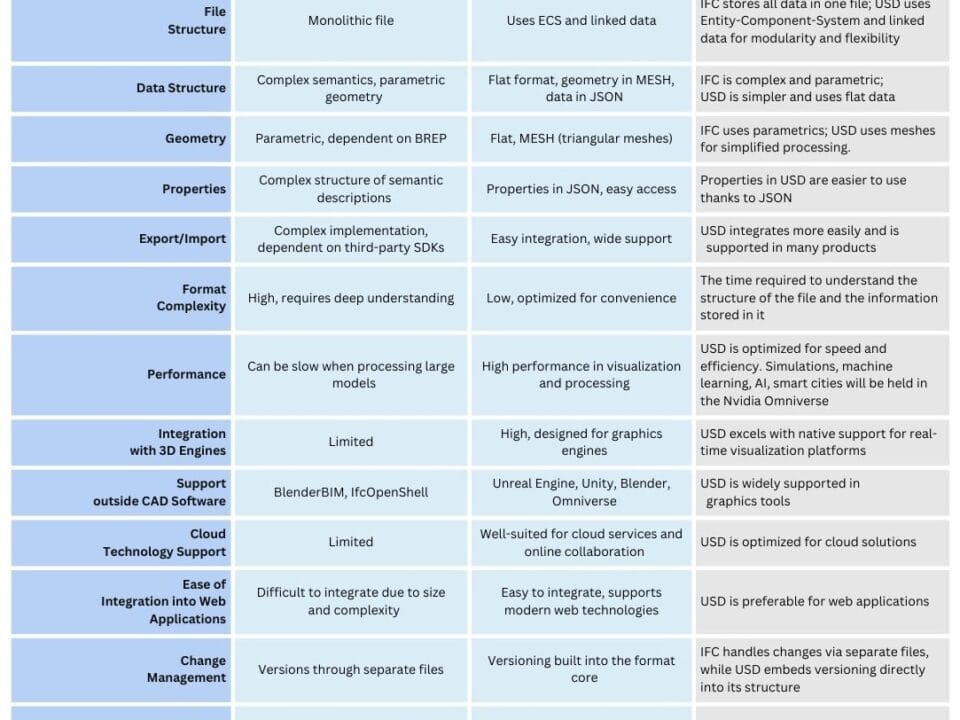
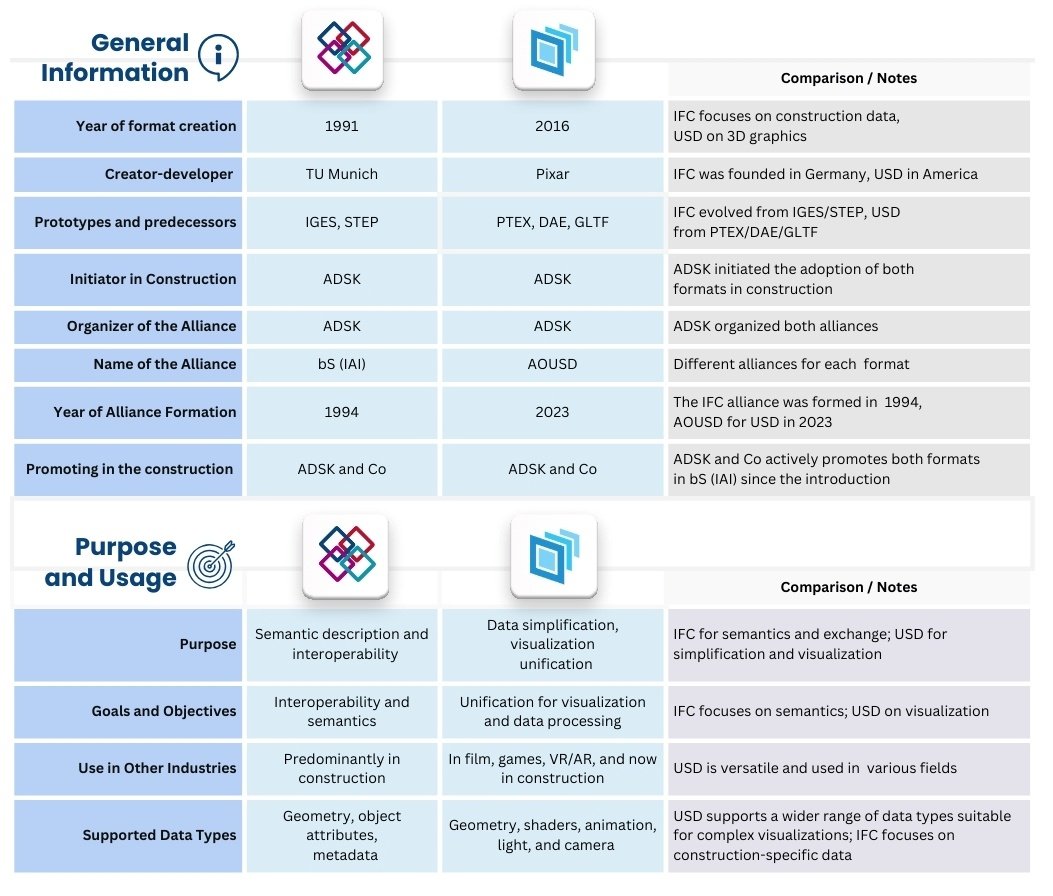
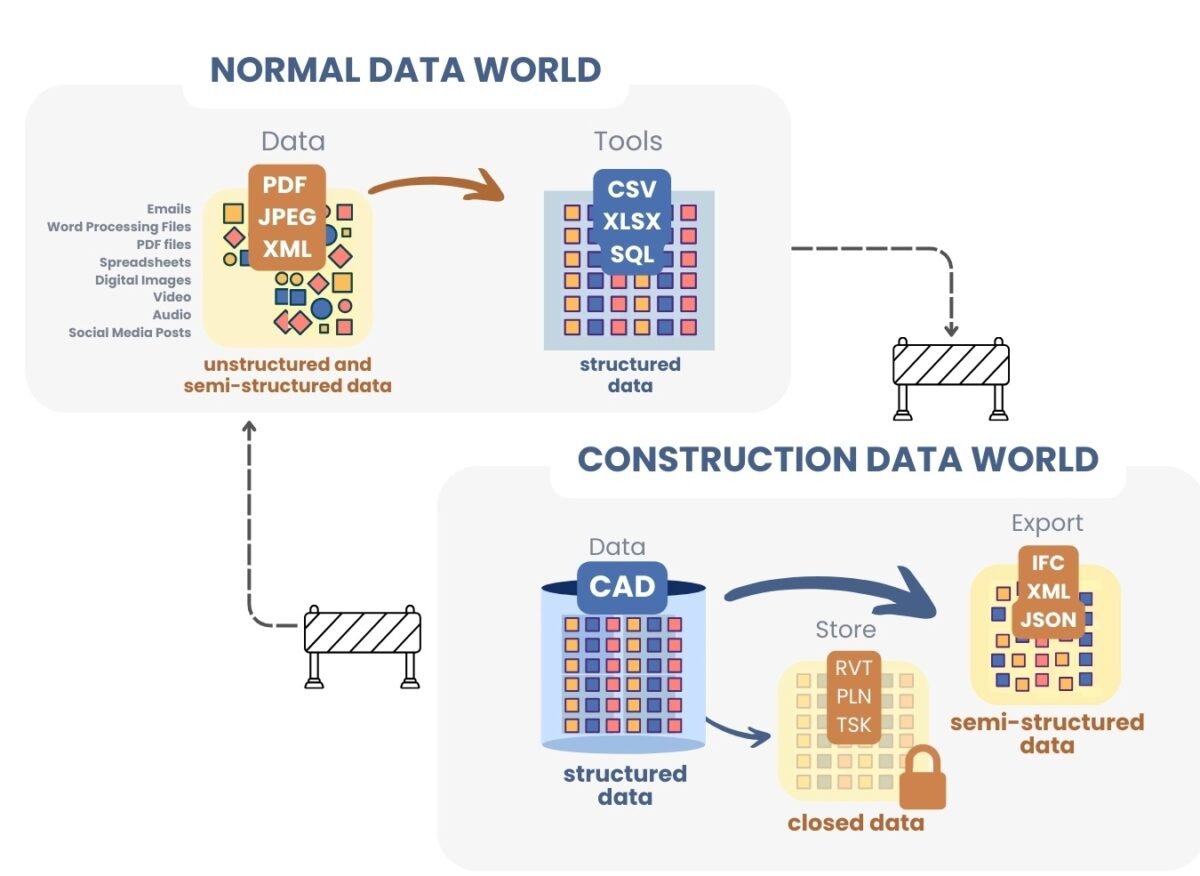
The proprietary nature of CAD -systems has led to the fact that each program has its own unique data format, which is either closed and inaccessible from the outside – RVT, PLN, DWG, NDW, NWD, SKP, or is available in semi-structured form through a rather complex conversion process – JSON, XML (CPIXML), IFC, STEP and ifcXML, IfcJSON, BIMJSON, IfcSQL, CSV etc..

Different data formats that can store the same data about the same projects not only differ in structure, but also include different versions of internal markup that developers need to consider to ensure application compatibility. For example, a CAD format from 2025 will open in a CAD program from 2026, but the same project will never open in all versions of the CAD program that may have been available before 2025.

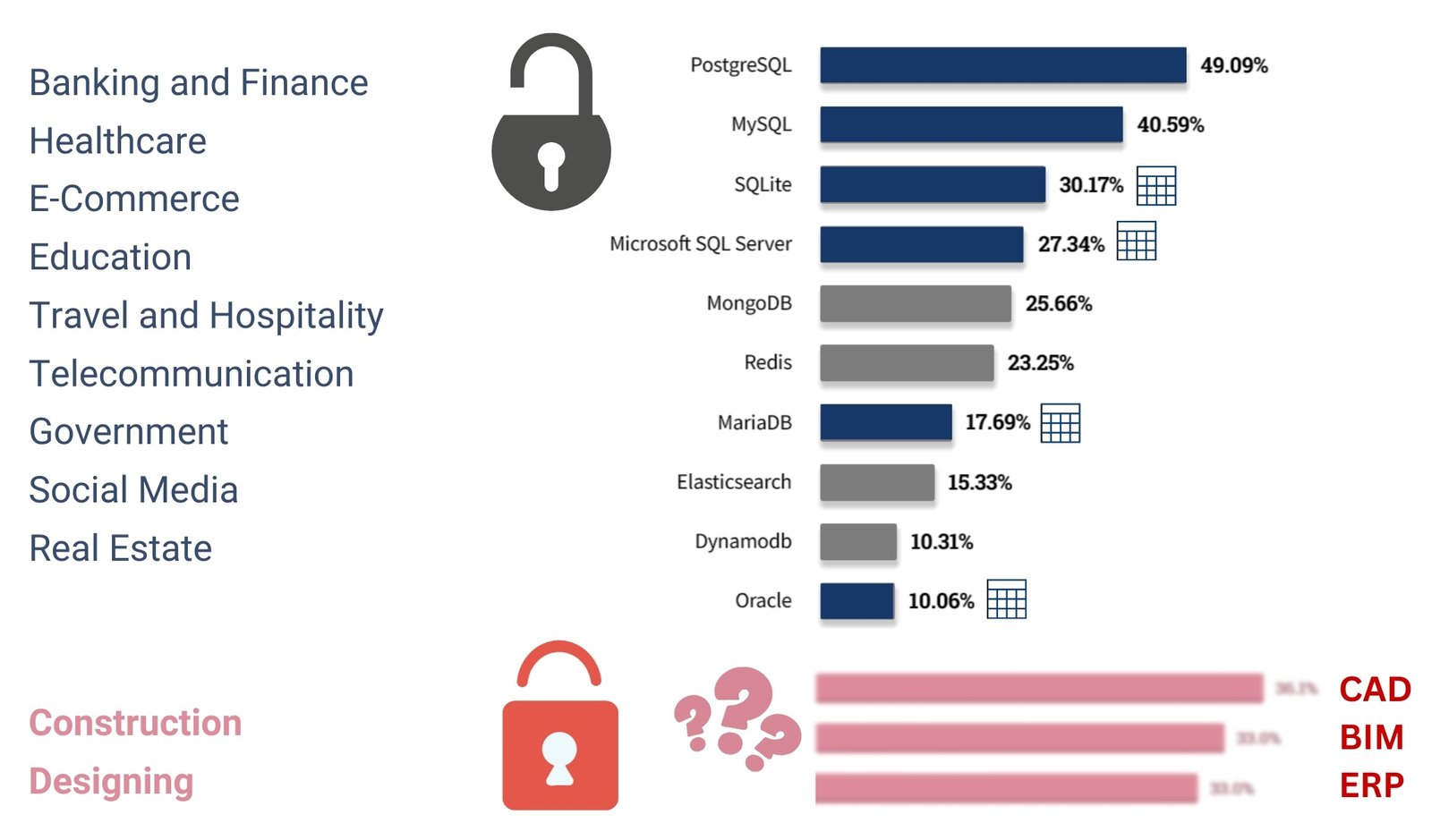
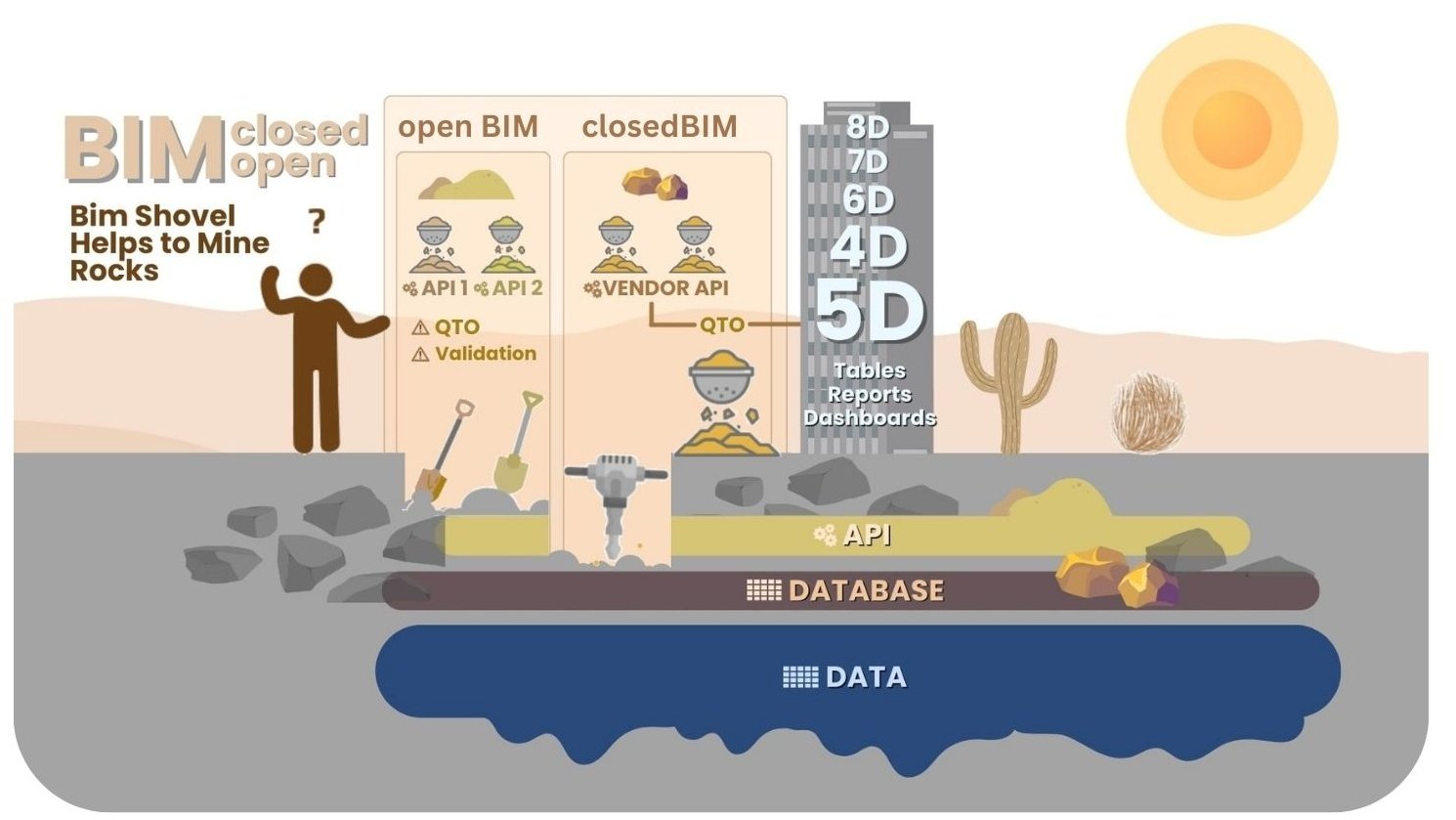
By not providing direct access to databases, a software vendor in the construction industry often creates its own unique format and tools that a professional (design engineer or data manager) must use to access, import and export data.

As a consequence, vendors of basic CAD (BIM) and related solutions (e.g. ERP/PMIS) are constantly raising prices for using the products, and ordinary users are forced to pay a “commission” at each stage of data transfer by formats (А. Boiko, “Lobbykriege um Daten im Bauwesen | Techno-Feudalismus und die Geschichte von BIMs,” 2024): for connecting, importing, exporting and working with data that users have created themselves.

The cost of accessing data in cloud storage from popular CAD – (BIM-) products will reach $1 per transaction in 2025 (“Flex token cost,” 2024), and subscriptions toconstruction ERP -products for medium-sized companies reach five- and six-Fig. sums per year (А. Boiko, “Forget BIM and democratize access to data (17. Kolloquium Investor – Hochschule – Bauindustrie),” 2024)

The essence of modern construction software is that it is not automation or increased efficiency, but the ability of engineers to understand a particular highly specialized software that affects the quality and cost of construction project data processing, as well as the profits and long-term survival of companies undertaking construction projects.

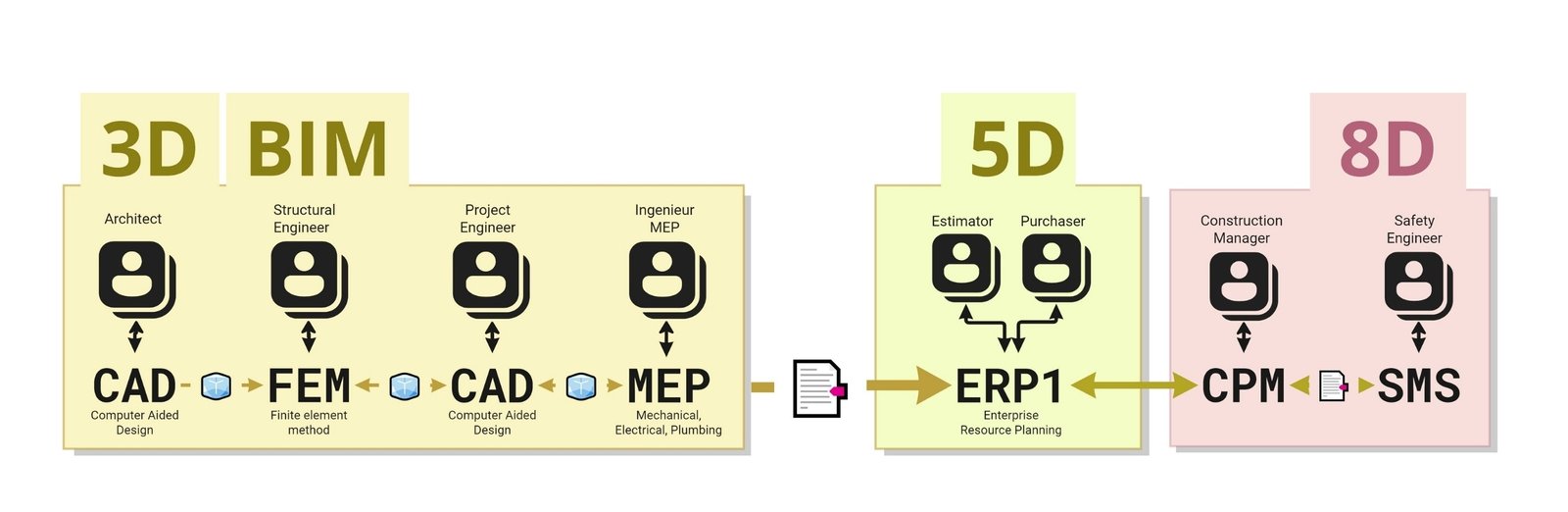
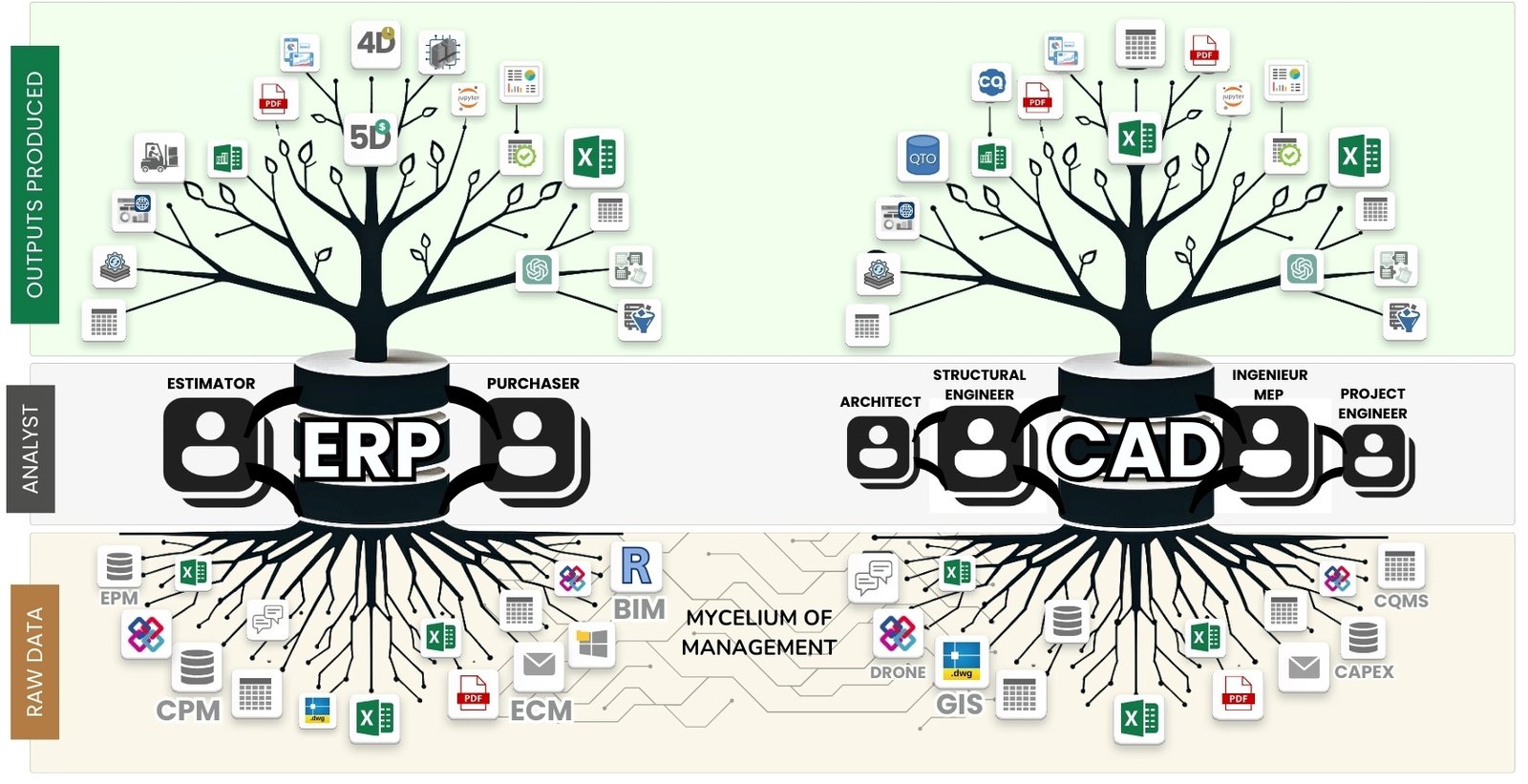
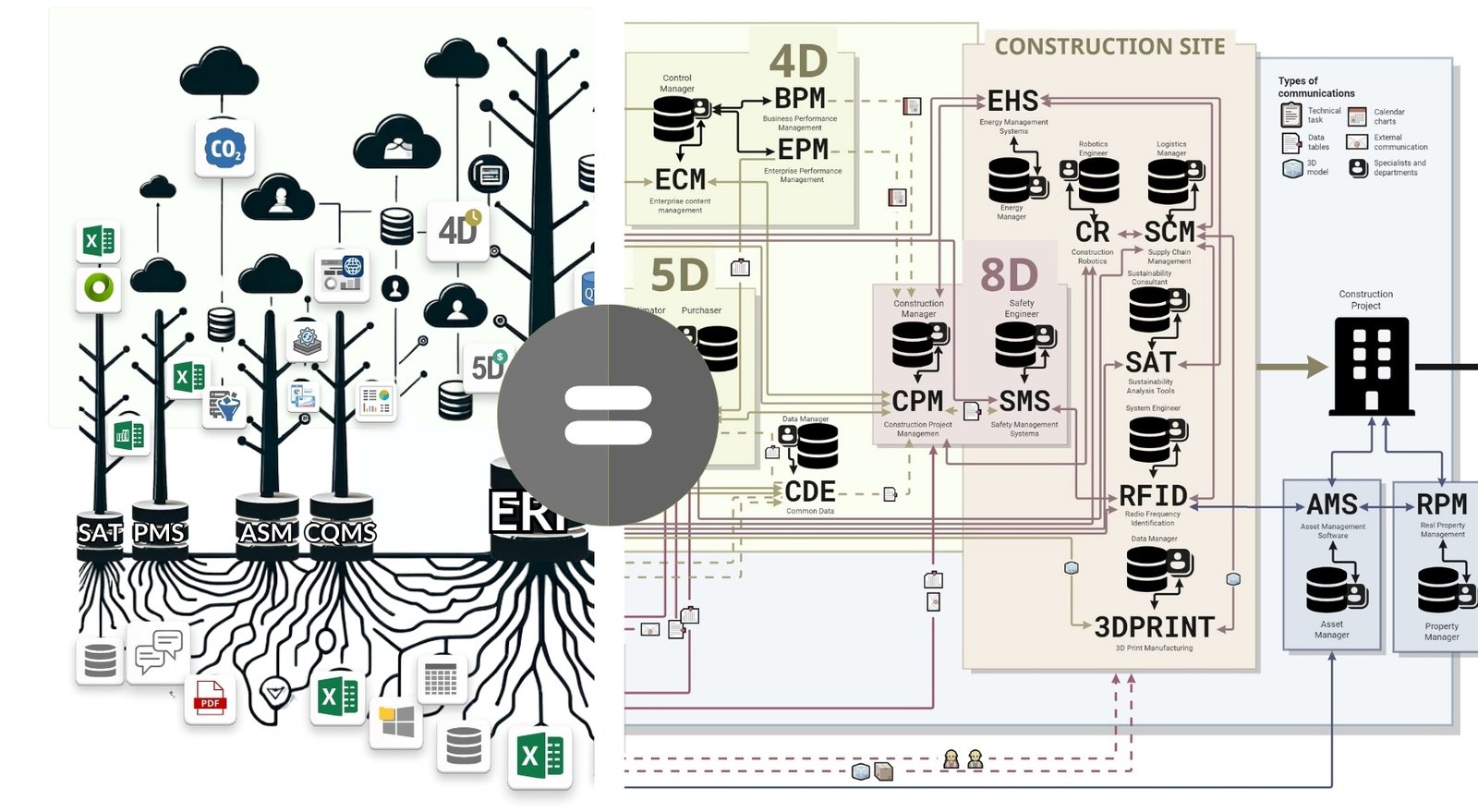
The lack of access to databases CAD -systems that are used in dozens of other systems and hundreds of processes (А. Boiko, “Lobbykriege um Daten im Bauwesen | Techno-Feudalismus und die Geschichte von BIMs,” 2024), and the resulting lack of quality communication between individual professionals has led the construction industry to the status of one of the most inefficient sectors of the economy in terms of productivity (McKinsey, “Delivering on construction productivity is no longer optional,” August 9, 2024).

Over the last 20 years of CAD- (BIM-) design applications, the emergence of new systems (ERP), new construction technologies and materials, the productivity of the entire construction industry has dropped by 20% (Fig. 2.2-1), while the overall productivity of all sectors of the economy that do not have major problems accessing databases and marketing-like BIM concepts has increased by 70% (96% in the manufacturing industry) (D. Hill, D. Foldesi, S. Ferrer, M. Friedman, E. Loh, and F. Plaschke, “Solving the construction industry productivity puzzle,” 2015).
Picture 2
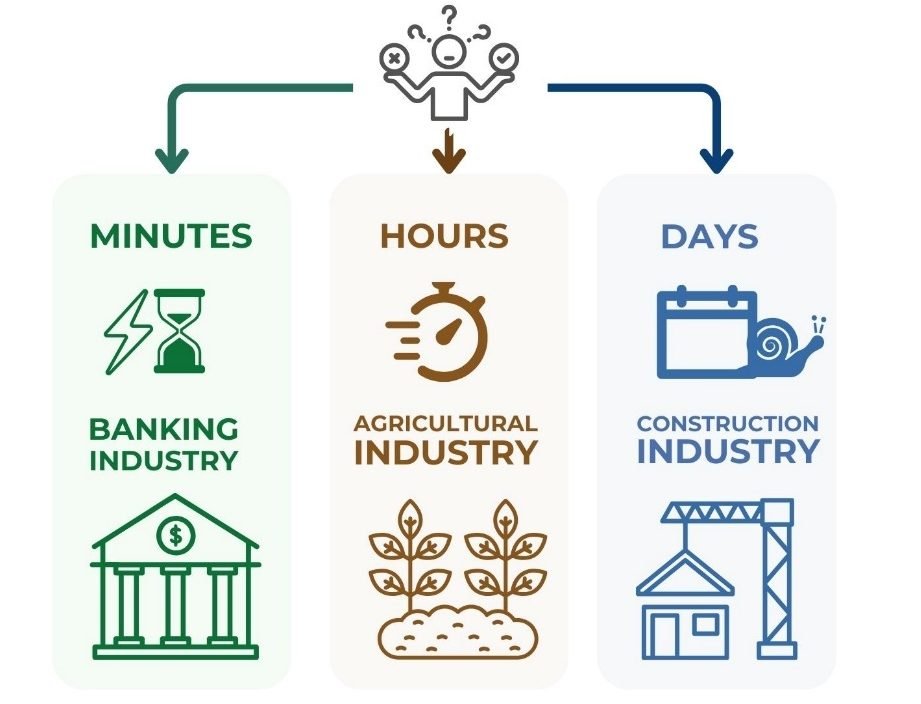
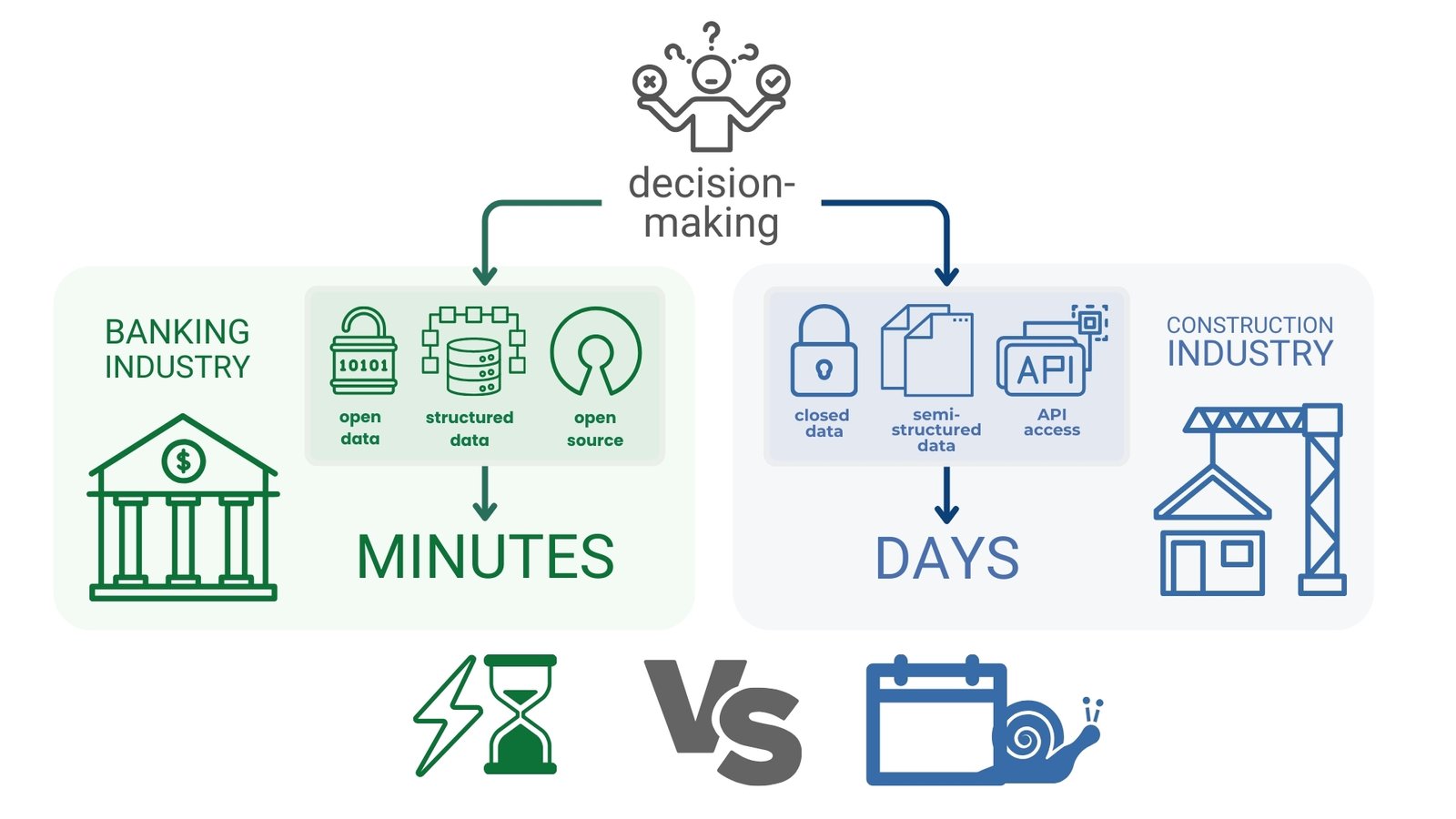
Fig. 6.2-1 Because of the isolation and complexity of project data on which dozens of departments and hundreds of processes depend in the construction industry, the speed of decision making is several times slower than in other industries.

However, there are also isolated examples of alternative approaches to creating interoperability between CAD solutions. Europe’s largest construction company with the SCOPE project (“SCOPE – Projektdatenumgebung und Modellierung multifunktionaler Bauprodukte mit Fokus auf die Gebäudehülle,” 1 Jan. 2018), started back in 2018, demonstrates how it is possible to go beyond the classical logic of CAD- (BIM-) systems. Instead of trying to subjugate IFC or relying on proprietary geometry kernels, SCOPE developers use APIs and SDKs reverse engineering to extract data from various CAD programs, convert them into neutral formats such as OBJ or CPIXML based on the only Open Source geometry kernel OCCT, and further apply them to hundreds of business processes of construction and design companies. However, despite the progressiveness of the idea, such projects face the limitations and complexity of free geometry kernels and they still remain part of closed ecosystems of one company that reproduce the logic of monovendor solutions.

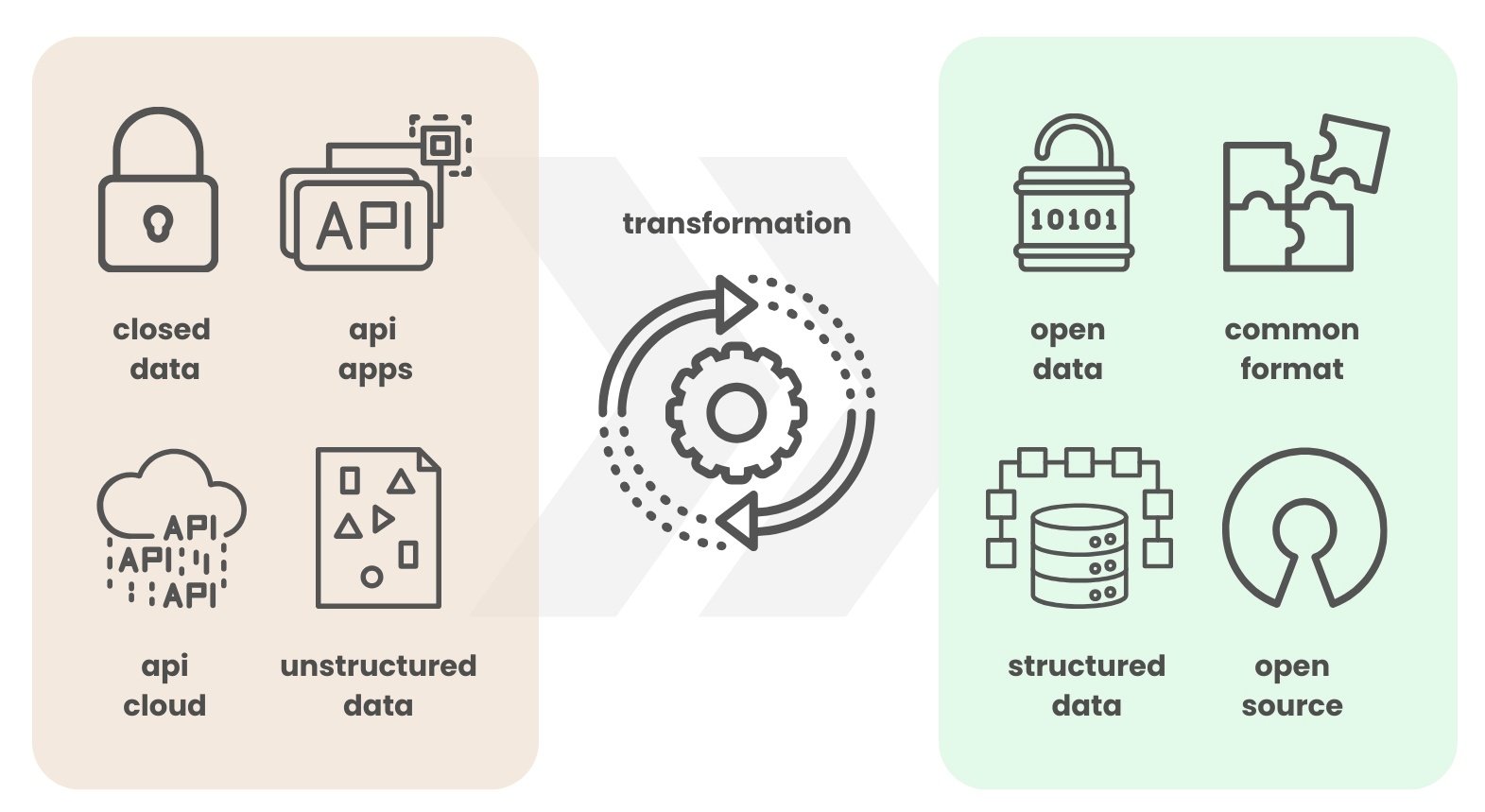
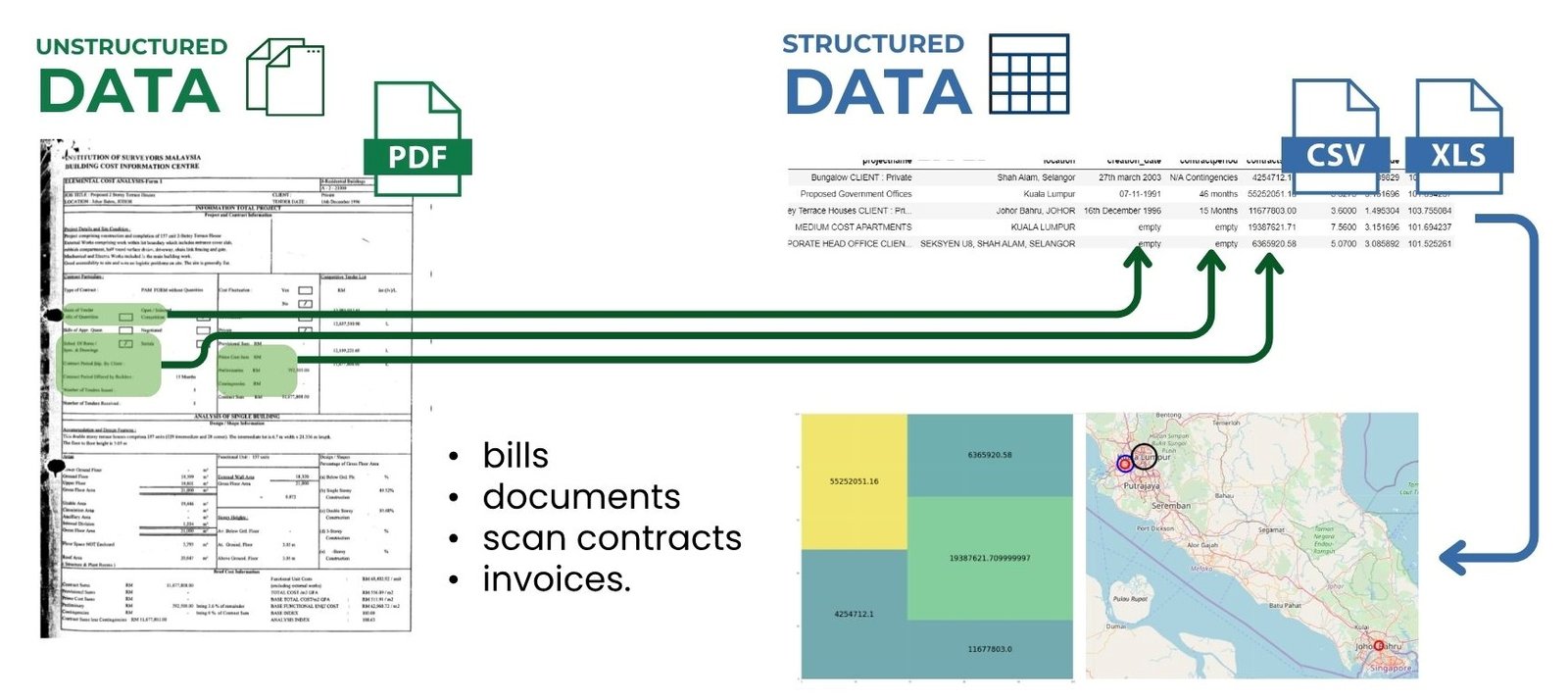
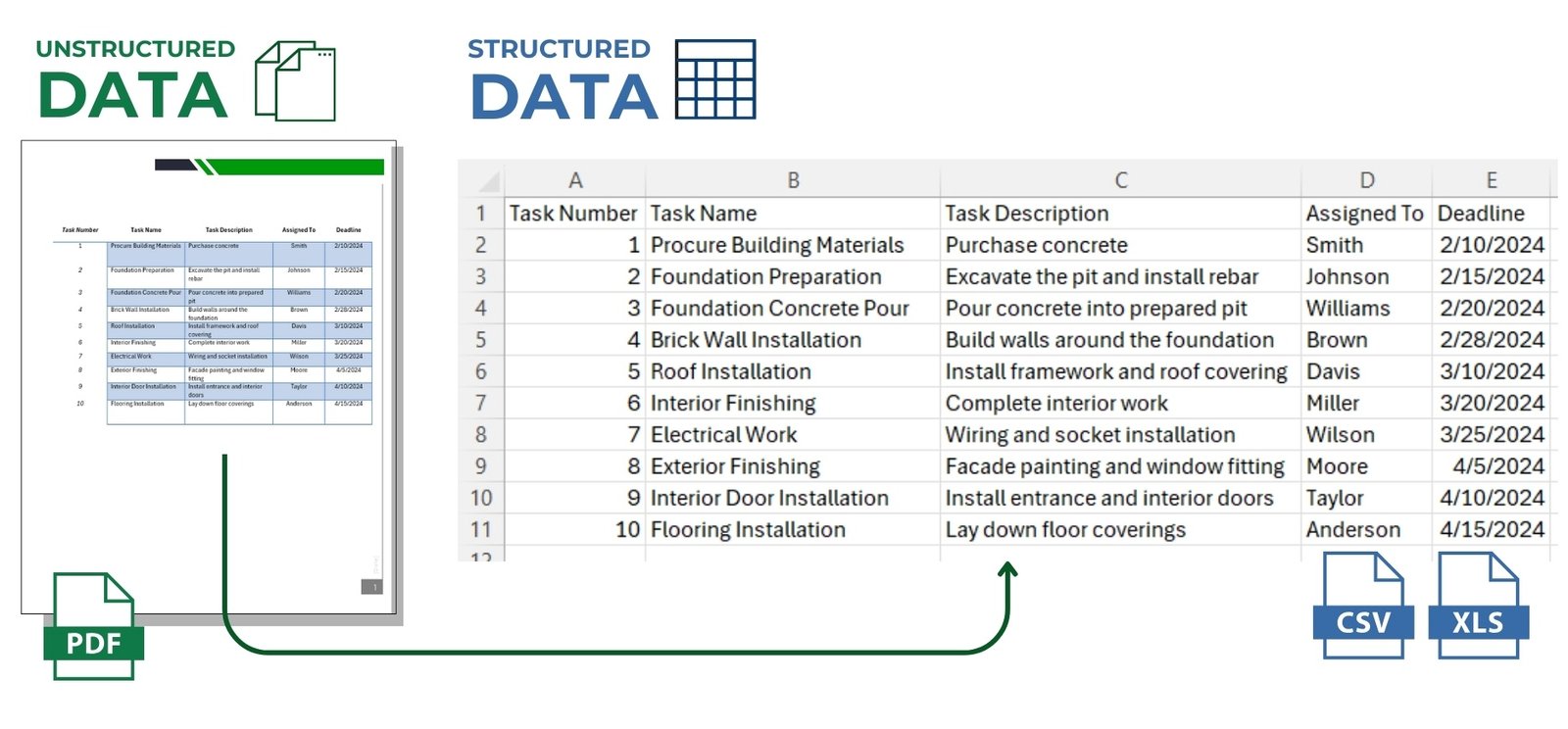
Due to the limitations of closed systems and differences in data formats, as well as the lack of effective tools for their unification, companies that have to work with CAD formats are faced with the accumulation of significant amounts of data with varying degrees of structure and closedness. These data are not used properly and disappear in archives, where they remain forever forgotten and unused.

Data obtained through significant effort in the design phase becomes inaccessible for further use due to its complexity and closed nature.

As a result, over the past 30 years, developers in the construction industry have been forced to face the same problem over and over again: each new closed format or proprietary solution generates the need to integrate with existing open and closed CAD systems. These constant attempts to provide interoperability between different CAD and BIM solutions only serve to complicate the data ecosystem, instead of contributing to its simplification and standardization.

.

Leave a Reply

Change language

Post's Highlights

Stay updated: news and insights


We’re Here to Help

Fresh solutions are released through our social channels

UNLOCK THE POWER OF DATA
 IN CONSTRUCTION

Dive into the world of data-driven construction with this accessible guide, perfect for professionals and novices alike.
From the basics of data management to cutting-edge trends in digital transformation, this book
will be your comprehensive guide to using data in the construction industry.

Related posts 

Focus Areas

navigate
  • ALL THE CHAPTERS IN THIS PART
  • A PRACTICAL GUIDE TO IMPLEMENTING A DATA-DRIVEN APPROACH (8)
  • CLASSIFICATION AND INTEGRATION: A COMMON LANGUAGE FOR CONSTRUCTION DATA (8)
  • DATA FLOW WITHOUT MANUAL EFFORT: WHY ETL (8)
  • DATA INFRASTRUCTURE: FROM STORAGE FORMATS TO DIGITAL REPOSITORIES (8)
  • DATA UNIFICATION AND STRUCTURING (7)
  • SYSTEMATIZATION OF REQUIREMENTS AND VALIDATION OF INFORMATION (7)
  • COST CALCULATIONS AND ESTIMATES FOR CONSTRUCTION PROJECTS (6)
  • EMERGENCE OF BIM-CONCEPTS IN THE CONSTRUCTION INDUSTRY (6)
  • MACHINE LEARNING AND PREDICTIONS (6)
  • BIG DATA AND ITS ANALYSIS (5)
  • DATA ANALYTICS AND DATA-DRIVEN DECISION-MAKING (5)
  • DATA CONVERSION INTO A STRUCTURED FORM (5)
  • DESIGN PARAMETERIZATION AND USE OF LLM FOR CAD OPERATION (5)
  • GEOMETRY IN CONSTRUCTION: FROM LINES TO CUBIC METERS (5)
  • LLM AND THEIR ROLE IN DATA PROCESSING AND BUSINESS PROCESSES (5)
  • ORCHESTRATION OF ETL AND WORKFLOWS: PRACTICAL SOLUTIONS (5)
  • SURVIVAL STRATEGIES: BUILDING COMPETITIVE ADVANTAGE (5)
  • 4D-6D and Calculation of Carbon Dioxide Emissions (4)
  • CONSTRUCTION ERP AND PMIS SYSTEMS (4)
  • COST AND SCHEDULE FORECASTING USING MACHINE LEARNING (4)
  • DATA WAREHOUSE MANAGEMENT AND CHAOS PREVENTION (4)
  • EVOLUTION OF DATA USE IN THE CONSTRUCTION INDUSTRY (4)
  • IDE WITH LLM SUPPORT AND FUTURE PROGRAMMING CHANGES (4)
  • QUANTITY TAKE-OFF AND AUTOMATIC CREATION OF ESTIMATES AND SCHEDULES (4)
  • THE DIGITAL REVOLUTION AND THE EXPLOSION OF DATA (4)
  • Uncategorized (4)
  • CLOSED PROJECT FORMATS AND INTEROPERABILITY ISSUES (3)
  • MANAGEMENT SYSTEMS IN CONSTRUCTION (3)
  • AUTOMATIC ETL CONVEYOR (PIPELINE) (2)

Search

Search

057 Speed of decision making depends on data quality

Today’s design data architecture is undergoing fundamental changes. The industry is moving away from bulky, isolated models and closed formats towards more flexible, machine-readable structures focused on analytics, integration and process automation. However, the transition...
060 A common language of construction the role of classifiers in digital transformation

In the context of digitalization and automation of inspection and processing processes, a special role is played by classification systems elements – a kind of “digital dictionaries” that ensure uniformity in the description and parameterization...

061 Masterformat, OmniClass, Uniclass and CoClass the evolution of classification systems

Historically, construction element and work classifiers have evolved in three generations, each reflecting the level of available technology and the current needs of the industry in a particular time period (Fig. 4.2-8): First generation (early...

Don't miss the new solutions


Linux

macOS

Looking for the Linux or MAC version? Send us a quick message using the button below, and we’ll guide you through the process!


📥 Download OnePager

Welcome to DataDrivenConstruction—where data meets innovation in the construction industry. Our One-Pager offers a concise overview of how our data-driven solutions can transform your projects, enhance efficiency, and drive sustainable growth. 

🚀 Welcome to the future of data in construction!

You're taking your first step into the world of open data, working with normalized, structured data—the foundation of data analytics and modern automation tools.

By downloading, you agree to the DataDrivenConstruction terms of use 

Stay ahead with the latest updates on converters, tools, AI, LLM
and data analytics in construction — Subscribe now!

🚀 Welcome to the future of data in construction!

You're taking your first step into the world of open data, working with normalized, structured data—the foundation of data analytics and modern automation tools.

By downloading, you agree to the DataDrivenConstruction terms of use 

Stay ahead with the latest updates on converters, tools, AI, LLM
and data analytics in construction — Subscribe now!

🚀 Welcome to the future of data in construction!

You're taking your first step into the world of open data, working with normalized, structured data—the foundation of data analytics and modern automation tools.

By downloading, you agree to the DataDrivenConstruction terms of use 

Stay ahead with the latest updates on converters, tools, AI, LLM
and data analytics in construction — Subscribe now!

🚀 Welcome to the future of data in construction!

You're taking your first step into the world of open data, working with normalized, structured data—the foundation of data analytics and modern automation tools.

By downloading, you agree to the DataDrivenConstruction terms of use 

Stay ahead with the latest updates on converters, tools, AI, LLM
and data analytics in construction — Subscribe now!

🚀 Welcome to the future of data in construction!

You're taking your first step into the world of open data, working with normalized, structured data—the foundation of data analytics and modern automation tools.

By downloading, you agree to the DDC terms of use 

🚀 Welcome to the future of data in construction!

You're taking your first step into the world of open data, working with normalized, structured data—the foundation of data analytics and modern automation tools.

By downloading, you agree to the DataDrivenConstruction terms of use 

Stay ahead with the latest updates on converters, tools, AI, LLM
and data analytics in construction — Subscribe now!

DataDrivenConstruction offers workshops tested and practiced on global leaders in the construction industry to help your team navigate and leverage the power of data and artificial intelligence in your company's decision making.

Reserve your spot now to rethink your
approach to decision making!


🚀 Welcome to the future of data in construction!

By downloading, you agree to the DataDrivenConstruction terms of use 

Stay ahead with the latest updates on converters, tools, AI, LLM
and data analytics in construction — Subscribe now!

Have a question or need more information? Reach out to us directly!
Schedule a time to discuss your needs with our team.
Tailored sessions to help your team grow — let's plan together!
Have you attended one of our workshops, read our book, or used our solutions? Share your thoughts with us!
Name
Data Maturity Diagnostics

🧰 Data-Driven Readiness Check

This short assessment will help you identify your company's data management pain points and offer solutions to improve project efficiency. It takes only 1–2 minutes to complete and you will receive personalized recommendations tailored to your needs.

Clean & Organized Data

Theoretical Chapters:

Practical Chapters:

What You'll Find on
DDC Solutions:

  • CAD/BIM to spreadsheet/database converters (Revit, AutoCAD, IFC, Microstation)
  • Ready-to-deploy n8n workflows for construction processes
  • ETL pipelines for data synchronization between systems
  • Customizable Python scripts for repetitive tasks
  • Intelligent data validation and error detection
  • Real-time dashboard connectors
  • Automated reporting systems

Connect Everything

Theoretical Chapters:

Practical Chapters:

What You'll Find on
DDC Solutions:

  • CAD/BIM to spreadsheet/database converters (Revit, AutoCAD, IFC, Microstation)
  • Ready-to-deploy n8n workflows for construction processes
  • ETL pipelines for data synchronization between systems
  • Customizable Python scripts for repetitive tasks
  • Intelligent data validation and error detection
  • Real-time dashboard connectors
  • Automated reporting systems

Add AI & LLM Brain

Theoretical Chapters:

Practical Chapters:

What You'll Find on
DDC Solutions:

  • CAD/BIM to spreadsheet/database converters (Revit, AutoCAD, IFC, Microstation)
  • Ready-to-deploy n8n workflows for construction processes
  • ETL pipelines for data synchronization between systems
  • Customizable Python scripts for repetitive tasks
  • Intelligent data validation and error detection
  • Real-time dashboard connectors
  • Automated reporting systems
100 Closed data and falling productivity the dead end of the CAD industry (BIM)
This website uses cookies to improve your experience. By using this website you agree to our Data Protection Policy.
Read more
×