073 Next steps turning data into accurate calculations and plans
16 February 2025
075 Methods of calculating the estimated cost of projects
19 February 2025

074 Construction basics estimating quantity, cost and time

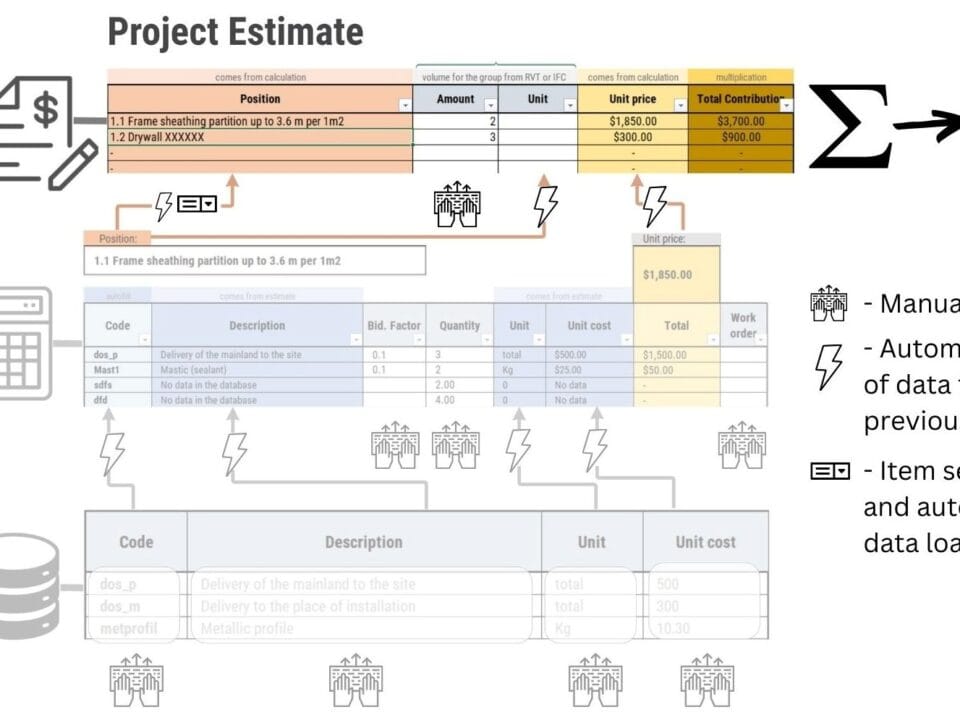
Among the many business processes that determine the sustainability of a company in the construction industry, of particular importance – as they were thousands of years ago – are the processes for accurately estimating the number of elements, project cost and schedule (Fig.‎ 5.1-1).

The development of writing was the result of a complex of factors, including the need to record economic transactions, the development of trade and resource management in early societies. The first legally significant documents, clay tablets with calculations of the cost of materials and labor, were used in the context of trade and construction. These tablets recorded the obligations of the parties in the construction of structures and were kept as evidence of bargaining and monetary relations.

For millennia, the approach to estimating has remained largely unchanged: calculations were performed manually, relying on the experience and intuition of the estimating engineer. However, with the advent of modular ERP systems and CAD tools, the traditional approach to estimating quantity, cost and time began to transform rapidly. Today’s digital technologies allow for full automation of key time and cost calculations, enabling greater accuracy, speed and transparency in resource planning for construction projects.
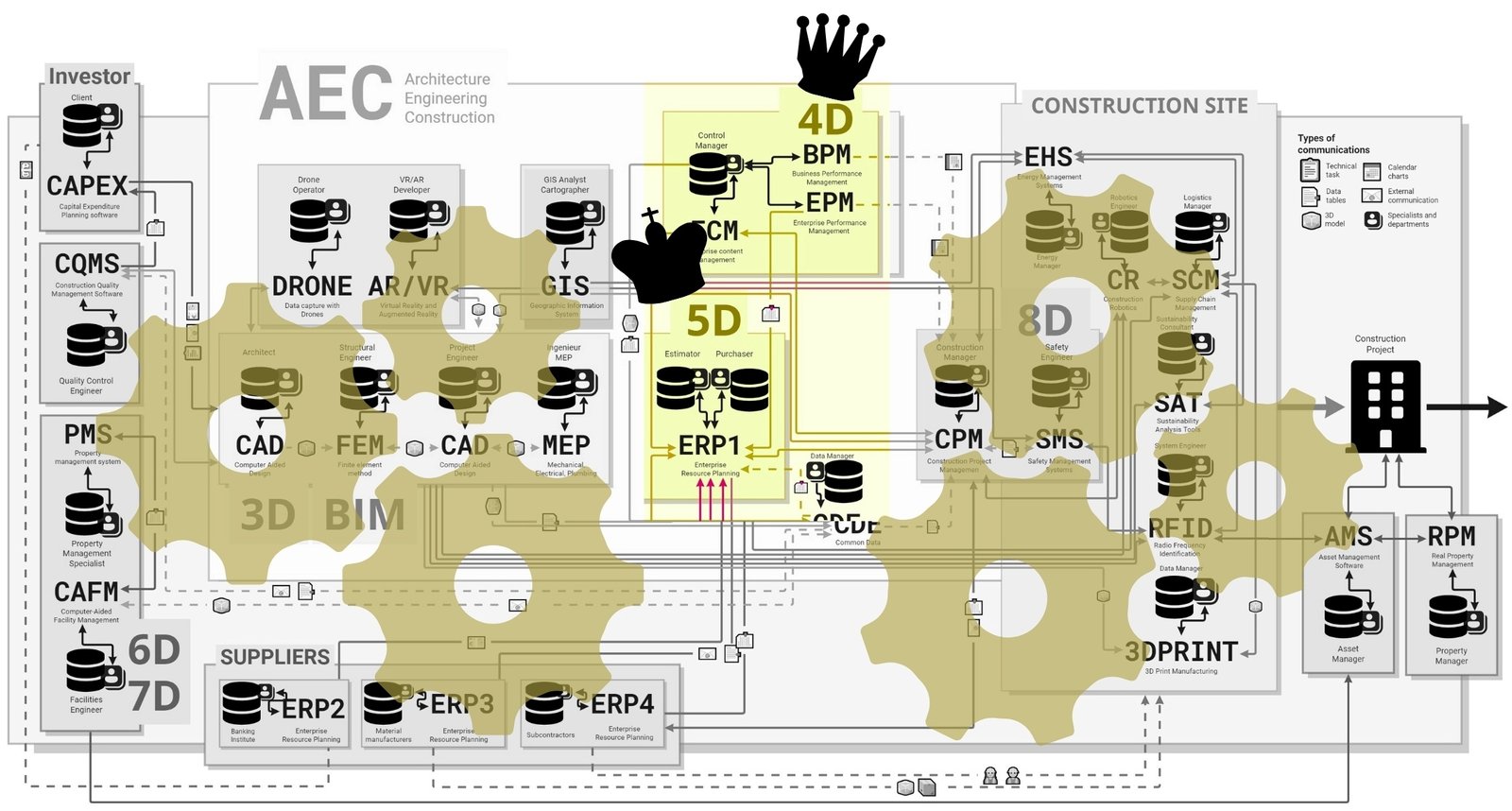
image36
Fig.‎ 5.1-1 Of the many different systems, the tools responsible for volume, cost, and time metrics are the most important in business.

The main focus of construction companies is on accurate time and cost data. These in turn depend on the amount of materials and labor used, and their transparency affects profitability. However, the complexity of calculation processes and their lack of transparency often lead to higher project costs, missed deadlines and even bankruptcy of companies.

According to the KPMG report “Familiar Problems – New Approaches” (2023), only 50% of construction projects are completed on time, and 87% of companies note increased control over the economics of capital projects. The main problems are related to the lack of qualified personnel and the difficulty of risk forecasting (KPMG, “Familiar challenges – new approaches. 2023 Global Construction Survey,” January 1, 2023).

Historical costing and process time data is collected during the construction of past projects throughout the life of the construction company and entered into databases of various systems (ERP, PMIS BPM, EPM, etc.).

The availability of quality historical costing data is a major competitive advantage for a construction organization, directly affecting its survivability.

Estimating and costing departments in construction and engineering companies are created to collect, store and update historical data on project calculations. Their main function is to accumulate and systematize the company’s experience, which allows the accuracy of estimating the scope, timing and cost of new projects to improve over time. This approach helps minimize errors in future calculations based on the practice and results of already implemented projects.

.

Leave a Reply

Change language

Post's Highlights

Stay updated: news and insights


We’re Here to Help

Fresh solutions are released through our social channels

UNLOCK THE POWER OF DATA
 IN CONSTRUCTION

Dive into the world of data-driven construction with this accessible guide, perfect for professionals and novices alike.
From the basics of data management to cutting-edge trends in digital transformation, this book
will be your comprehensive guide to using data in the construction industry.

Related posts 

Focus Areas

Search

Search
Sorry, no articles found.

✕

Don't miss the new solutions


✕
✕

Linux

macOS

Looking for the Linux or MAC version? Send us a quick message using the button below, and we’ll guide you through the process!

✕

📥 Download OnePager

Welcome to DataDrivenConstruction—where data meets innovation in the construction industry. Our One-Pager offers a concise overview of how our data-driven solutions can transform your projects, enhance efficiency, and drive sustainable growth. 

✕

🚀 Welcome to the future of data in construction!

You're taking your first step into the world of open data, working with normalized, structured data—the foundation of data analytics and modern automation tools.

By downloading, you agree to the DataDrivenConstruction terms of use 

Stay ahead with the latest updates on converters, tools, AI, LLM
and data analytics in construction — Subscribe now!

✕

🚀 Welcome to the future of data in construction!

You're taking your first step into the world of open data, working with normalized, structured data—the foundation of data analytics and modern automation tools.

By downloading, you agree to the DataDrivenConstruction terms of use 

Stay ahead with the latest updates on converters, tools, AI, LLM
and data analytics in construction — Subscribe now!

✕

🚀 Welcome to the future of data in construction!

You're taking your first step into the world of open data, working with normalized, structured data—the foundation of data analytics and modern automation tools.

By downloading, you agree to the DataDrivenConstruction terms of use 

Stay ahead with the latest updates on converters, tools, AI, LLM
and data analytics in construction — Subscribe now!

✕

🚀 Welcome to the future of data in construction!

You're taking your first step into the world of open data, working with normalized, structured data—the foundation of data analytics and modern automation tools.

By downloading, you agree to the DataDrivenConstruction terms of use 

Stay ahead with the latest updates on converters, tools, AI, LLM
and data analytics in construction — Subscribe now!

✕

🚀 Welcome to the future of data in construction!

You're taking your first step into the world of open data, working with normalized, structured data—the foundation of data analytics and modern automation tools.

By downloading, you agree to the DDC terms of use 

✕

🚀 Welcome to the future of data in construction!

You're taking your first step into the world of open data, working with normalized, structured data—the foundation of data analytics and modern automation tools.

By downloading, you agree to the DataDrivenConstruction terms of use 

Stay ahead with the latest updates on converters, tools, AI, LLM
and data analytics in construction — Subscribe now!

✕
DataDrivenConstruction offers workshops tested and practiced on global leaders in the construction industry to help your team navigate and leverage the power of data and artificial intelligence in your company's decision making.

Reserve your spot now to rethink your
approach to decision making!

✕


🚀 Welcome to the future of data in construction!

By downloading, you agree to the DataDrivenConstruction terms of use 

Stay ahead with the latest updates on converters, tools, AI, LLM
and data analytics in construction — Subscribe now!

✕
Have a question or need more information? Reach out to us directly!
Schedule a time to discuss your needs with our team.
Tailored sessions to help your team grow — let's plan together!
✕
Have you attended one of our workshops, read our book, or used our solutions? Share your thoughts with us!
Name
✕
Data Maturity Diagnostics

🧰 Data-Driven Readiness Check

This short assessment will help you identify your company's data management pain points and offer solutions to improve project efficiency. It takes only 1–2 minutes to complete and you will receive personalized recommendations tailored to your needs.

✕

Clean & Organized Data

Theoretical Chapters:

Practical Chapters:

What You'll Find on
DDC Solutions:

  • CAD/BIM to spreadsheet/database converters (Revit, AutoCAD, IFC, Microstation)
  • Ready-to-deploy n8n workflows for construction processes
  • ETL pipelines for data synchronization between systems
  • Customizable Python scripts for repetitive tasks
  • Intelligent data validation and error detection
  • Real-time dashboard connectors
  • Automated reporting systems
✕

Connect Everything

Theoretical Chapters:

Practical Chapters:

What You'll Find on
DDC Solutions:

  • CAD/BIM to spreadsheet/database converters (Revit, AutoCAD, IFC, Microstation)
  • Ready-to-deploy n8n workflows for construction processes
  • ETL pipelines for data synchronization between systems
  • Customizable Python scripts for repetitive tasks
  • Intelligent data validation and error detection
  • Real-time dashboard connectors
  • Automated reporting systems
✕

Add AI & LLM Brain

Theoretical Chapters:

Practical Chapters:

What You'll Find on
DDC Solutions:

  • CAD/BIM to spreadsheet/database converters (Revit, AutoCAD, IFC, Microstation)
  • Ready-to-deploy n8n workflows for construction processes
  • ETL pipelines for data synchronization between systems
  • Customizable Python scripts for repetitive tasks
  • Intelligent data validation and error detection
  • Real-time dashboard connectors
  • Automated reporting systems
074 Construction basics estimating quantity, cost and time
This website uses cookies to improve your experience. By using this website you agree to our Data Protection Policy.
Read more
×