Picture 27
127 Pipeline -ETL data validation process with LLM
16 April 2025
Рисунок 13
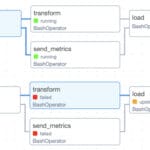
129 DAG and Apache Airflow workflow automation and orchestration
18 April 2025

128 Pipeline-ETL verification of data and information of project elements in CAD (BIM)

Data from CAD systems and databases (BIM) are some of the most sophisticated and dynamically updated data sources in the business of construction companies. These applications not only describe the project using geometry, but also supplement it with multiple layers of textual information: volumes, material properties, room assignments, energy efficiency levels, tolerances, life expectancies and other attributes.

Attributes assigned to entities in CAD -models are formed at the design stage and become the basis for further business processes, including costing, scheduling, life cycle assessment and integration with ERP- and CAFM-systems, where the efficiency of processes largely depends on the quality of data coming from design departments.

The traditional approach to attribute validation in CAD- (BIM-) models involves manual validation (Fig.‎ 7.2-1), which becomes a long and costly process when the volume of models is large. Considering the volume and number of modern construction projects and their regular updates, the process of data validation and transformation becomes unsustainable and unaffordable.

General contractors and project managers are faced with the need to process large amounts of project data, including multiple versions and fragments of the same models. The data comes from design organizations in RVT, DWG, DGN, IFC, NWD and other formats (Fig. 3.1-14) and requires regular review for compliance with industry and corporate standards

The dependence on manual actions and specialized software makes the data validation process a bottleneck in workflows related to data from company-wide models. Automation and the use of structured requirements can eliminate this dependency, multiplying the speed and reliability of data validation (Fig. 7.3-7).

image5
Fig.‎ 7.3-7 Automation increases the speed of data verification and processing, which reduces the cost of work by dozens of times (“Pipeline in Construction,” 2024).

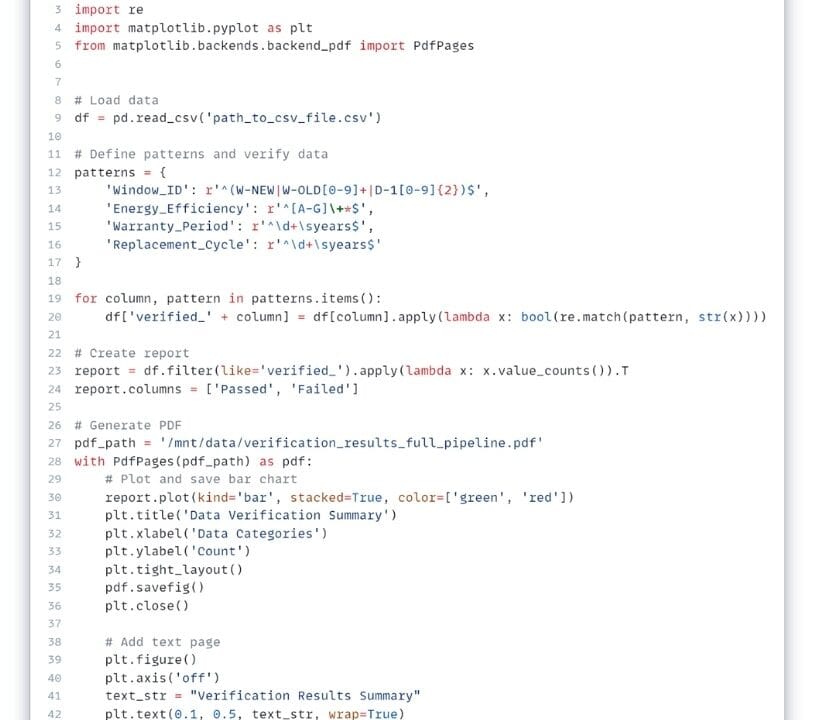
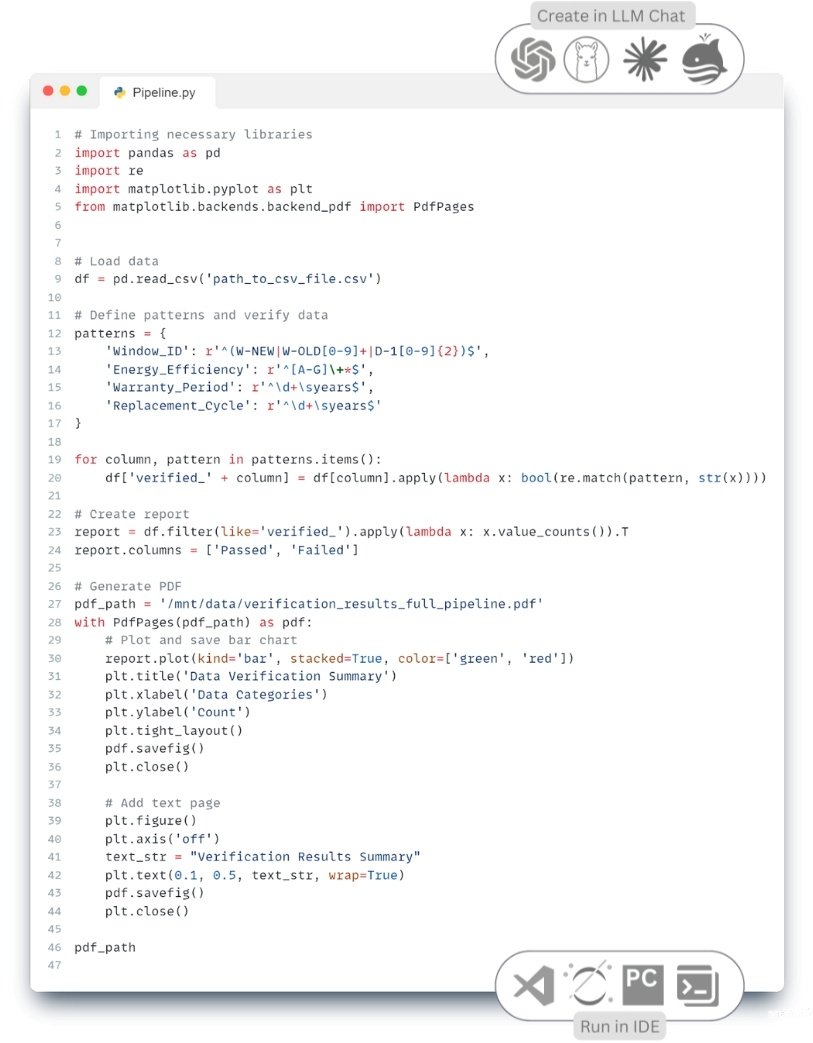
CAD data validation process includes data extraction (ETL stage Extract) from various closed (RVT, DWG, DGN, NWS, etc.), open semi-structured and parametric formats (IFC, CPXML, USD) or open semi-structured and parametric formats (IFC, CPXML, USD), in which rule tables can be applied to each attribute and its values (Transform stage) using regular expressions RegEx (Fig.‎ 7.3-8), a process which we discussed in detail in the fourth part of the book.

The creation of a PDF error report and successfully validated records should be finalized with output (Load step) in structured formats that only consider validated entities that can be used for further processes.

image128
Fig. 7.3-8 Data validation process from project data providers to the final report validated using regular expressions.

Automating the validation of data from CAD (BIM) systems with structured requirements and streaming new data that are processed through ETL-Pipelines (Fig. 7.3-9) reduces the need for manual involvement in the validation process (each of the validation and data requirements processes have been discussed in previous chapters).

.

image89
Fig. 7.3-9 Automating data validation through ETL simplifies construction project management by speeding up processes.

Traditionally, validation of models provided by contractors and CAD (BIM) specialists can take days to weeks. However, with the introduction of automated ETL processes, this can be reduced to a few minutes. In a typical situation, the contractor states: “The model is validated and compliant.“ This statement starts the chain of verification of the contractor’s data quality claim:

Project Manager – “Contractor states, ‘The model has been tested, everything is fine’”

Data Manager – Load Validation:

A simple script in Pandas detects a violation in seconds. Automation eliminates disputes:

Category: OST_StructuralColumns, Parameter: FireRating IS NULL.

Generate list of violation IDs→ export to Excel/PDF.

A simple script in Pandas detects the violation in seconds:

df = model_data[model_data[“Category”] == “OST_StructuralColumns”] # Filtering
issues = df[df[“FireRating”].isnull()] # Empty values
issues[[“ElementID”]].to_excel(“fire_rating_issues.xlsx”) # Export IDs

Data Manager to Project Manager – “A check of shows that 18 columns do not have the FireRating parameter filled in“

Project manager to contractor – “The model is returned for revision: the FireRating parameter is mandatory, without it acceptance is impossible”

As a result, the CAD model does not undergo validation, automation eliminates disputes, and the contractor almost instantly receives a structured report with a list of IDs of problematic elements. In this way, the validation process becomes transparent, repeatable and protected from human error (Fig.‎ 7.3-10).

This approach turns the data validation process into an engineering function rather than a manual quality control process. This not only increases productivity, but also makes it possible to apply the same logic to all of the company’s projects, enabling end-to-end digital transformation of processes, from design to operations.

.

image90
Fig.‎ 7.3-10 Automating element attribute checking eliminates human error and reduces the likelihood of errors.

Through the use of automated pipelines (Fig. 7.3-10), system users expecting quality data from CAD- (BIM-) systems can instantly get the output data they need – tables, documents, images – and quickly integrate it into their work tasks.

The automation of control, processing and analysis is driving a change in the way construction project management is approached, especially the interoperability of different systems, without the use of complex and expensive modular proprietary systems or closed vendor solutions.

While concepts and marketing acronyms come and go, the data requirements validation processes themselves will forever remain an integral part of business processes. Rather than creating more and more specialized formats and standards, the construction industry should look to tools that have already been proven effective in other industries. Today, there are powerful platforms for automating data processing and process integration that allow companies to significantly reduce time for routine operations and minimize errors in Extract, Transform and Load.

One of the popular examples of solutions for automation and orchestration of ETL processes is Apache Airflow, which allows you to organize complex computational processes and manage ETL pipelines. Along with Airflow, other similar solutions such as Apache NiFi for data routing and streaming and n8n for business process automation are also actively used.

.

.

.

.

.

.

Leave a Reply

Change language

Post's Highlights

Stay updated: news and insights


We’re Here to Help

Fresh solutions are released through our social channels

UNLOCK THE POWER OF DATA
 IN CONSTRUCTION

Dive into the world of data-driven construction with this accessible guide, perfect for professionals and novices alike.
From the basics of data management to cutting-edge trends in digital transformation, this book
will be your comprehensive guide to using data in the construction industry.

Related posts 

Focus Areas

Sorry, no articles found.

✕

Don't miss the new solutions


✕
✕

Linux

macOS

Looking for the Linux or MAC version? Send us a quick message using the button below, and we’ll guide you through the process!

✕

📥 Download OnePager

Welcome to DataDrivenConstruction—where data meets innovation in the construction industry. Our One-Pager offers a concise overview of how our data-driven solutions can transform your projects, enhance efficiency, and drive sustainable growth. 

✕

🚀 Welcome to the future of data in construction!

You're taking your first step into the world of open data, working with normalized, structured data—the foundation of data analytics and modern automation tools.

By downloading, you agree to the DataDrivenConstruction terms of use 

Stay ahead with the latest updates on converters, tools, AI, LLM
and data analytics in construction — Subscribe now!

✕

🚀 Welcome to the future of data in construction!

You're taking your first step into the world of open data, working with normalized, structured data—the foundation of data analytics and modern automation tools.

By downloading, you agree to the DataDrivenConstruction terms of use 

Stay ahead with the latest updates on converters, tools, AI, LLM
and data analytics in construction — Subscribe now!

✕

🚀 Welcome to the future of data in construction!

You're taking your first step into the world of open data, working with normalized, structured data—the foundation of data analytics and modern automation tools.

By downloading, you agree to the DataDrivenConstruction terms of use 

Stay ahead with the latest updates on converters, tools, AI, LLM
and data analytics in construction — Subscribe now!

✕

🚀 Welcome to the future of data in construction!

You're taking your first step into the world of open data, working with normalized, structured data—the foundation of data analytics and modern automation tools.

By downloading, you agree to the DataDrivenConstruction terms of use 

Stay ahead with the latest updates on converters, tools, AI, LLM
and data analytics in construction — Subscribe now!

✕

🚀 Welcome to the future of data in construction!

You're taking your first step into the world of open data, working with normalized, structured data—the foundation of data analytics and modern automation tools.

By downloading, you agree to the DDC terms of use 

✕

🚀 Welcome to the future of data in construction!

You're taking your first step into the world of open data, working with normalized, structured data—the foundation of data analytics and modern automation tools.

By downloading, you agree to the DataDrivenConstruction terms of use 

Stay ahead with the latest updates on converters, tools, AI, LLM
and data analytics in construction — Subscribe now!

✕
DataDrivenConstruction offers workshops tested and practiced on global leaders in the construction industry to help your team navigate and leverage the power of data and artificial intelligence in your company's decision making.

Reserve your spot now to rethink your
approach to decision making!

✕


🚀 Welcome to the future of data in construction!

By downloading, you agree to the DataDrivenConstruction terms of use 

Stay ahead with the latest updates on converters, tools, AI, LLM
and data analytics in construction — Subscribe now!

✕
Have a question or need more information? Reach out to us directly!
Schedule a time to discuss your needs with our team.
Tailored sessions to help your team grow — let's plan together!
✕
Have you attended one of our workshops, read our book, or used our solutions? Share your thoughts with us!
Name
✕
Data Maturity Diagnostics

🧰 Data-Driven Readiness Check

This short assessment will help you identify your company's data management pain points and offer solutions to improve project efficiency. It takes only 1–2 minutes to complete and you will receive personalized recommendations tailored to your needs.

✕

Clean & Organized Data

Theoretical Chapters:

Practical Chapters:

What You'll Find on
DDC Solutions:

  • CAD/BIM to spreadsheet/database converters (Revit, AutoCAD, IFC, Microstation)
  • Ready-to-deploy n8n workflows for construction processes
  • ETL pipelines for data synchronization between systems
  • Customizable Python scripts for repetitive tasks
  • Intelligent data validation and error detection
  • Real-time dashboard connectors
  • Automated reporting systems
✕

Connect Everything

Theoretical Chapters:

Practical Chapters:

What You'll Find on
DDC Solutions:

  • CAD/BIM to spreadsheet/database converters (Revit, AutoCAD, IFC, Microstation)
  • Ready-to-deploy n8n workflows for construction processes
  • ETL pipelines for data synchronization between systems
  • Customizable Python scripts for repetitive tasks
  • Intelligent data validation and error detection
  • Real-time dashboard connectors
  • Automated reporting systems
✕

Add AI & LLM Brain

Theoretical Chapters:

Practical Chapters:

What You'll Find on
DDC Solutions:

  • CAD/BIM to spreadsheet/database converters (Revit, AutoCAD, IFC, Microstation)
  • Ready-to-deploy n8n workflows for construction processes
  • ETL pipelines for data synchronization between systems
  • Customizable Python scripts for repetitive tasks
  • Intelligent data validation and error detection
  • Real-time dashboard connectors
  • Automated reporting systems
128 Pipeline-ETL verification of data and information of project elements in CAD (BIM)
This website uses cookies to improve your experience. By using this website you agree to our Data Protection Policy.
Read more
×