Picture 4
019 Redundant code and closed systems as a barrier to productivity improvement
21 December 2024
Рисунок 11
021 Integrated storage systems enable the transition to AI agents
23 December 2024

020 From silos to a unified data warehouse

The more data an organization accumulates, the harder it becomes to extract real value from it. Because of the fragmented nature of storing information in isolated silos, modern companies’ business processes are like builders trying to construct a skyscraper out of materials stored in thousands of different warehouses. The excess of information not only makes it difficult to access legally relevant information, but also slows down decision-making: every step has to be repeatedly checked and confirmed.

Each task or process is hard-wired to a separate table or database, and data exchange between systems requires complex integrations. Errors and inconsistencies in one system can cause chain failures in others. Incorrect values, late updates, and duplicate information force employees to spend significant time manually reconciling and reconciling data. As a result, the organization spends more time dealing with the consequences of fragmentation than developing and optimizing processes

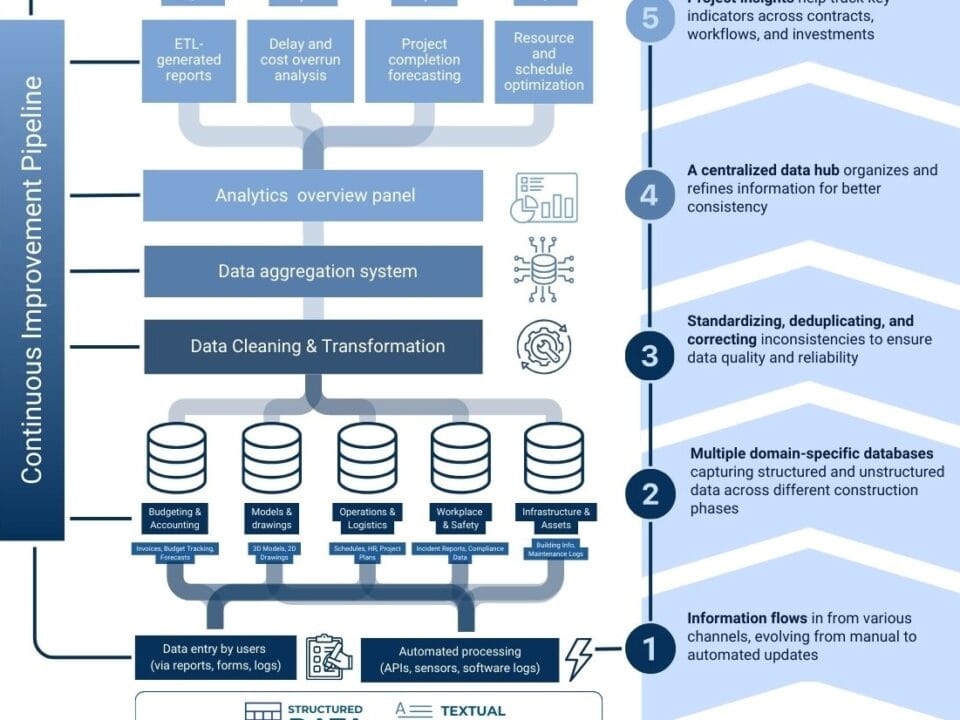
This problem is universal: some companies continue to struggle with chaos, while others find a solution in integration – moving information flows into a centralized storage system. Think of it as one big table where you can store any entities related to tasks, projects and objects. Instead of dozens of disparate tables and formats, a single cohesive repository appears (Fig. 2.2-2), allowing:

minimize data loss;

eliminate the need for constant harmonization of information;

improve data availability and quality;

simplify analytical processing and machine learning

Bringing data to a single standard means that regardless of the source, information is converted into a unified and machine-readable format. Such organization of data allows to check its integrity, analyze it in real time and promptly use it for making managerial decisions.

The concept of integrated storage systems and their application in analytics and machine learning will be discussed in more detail in the chapter “Big Data Storage and Machine Learning”. The topics of data modeling and structuring will be covered in detail in the chapters “Transforming data into a structured form” and “How standards change the game: from random files to an elaborate data model”.
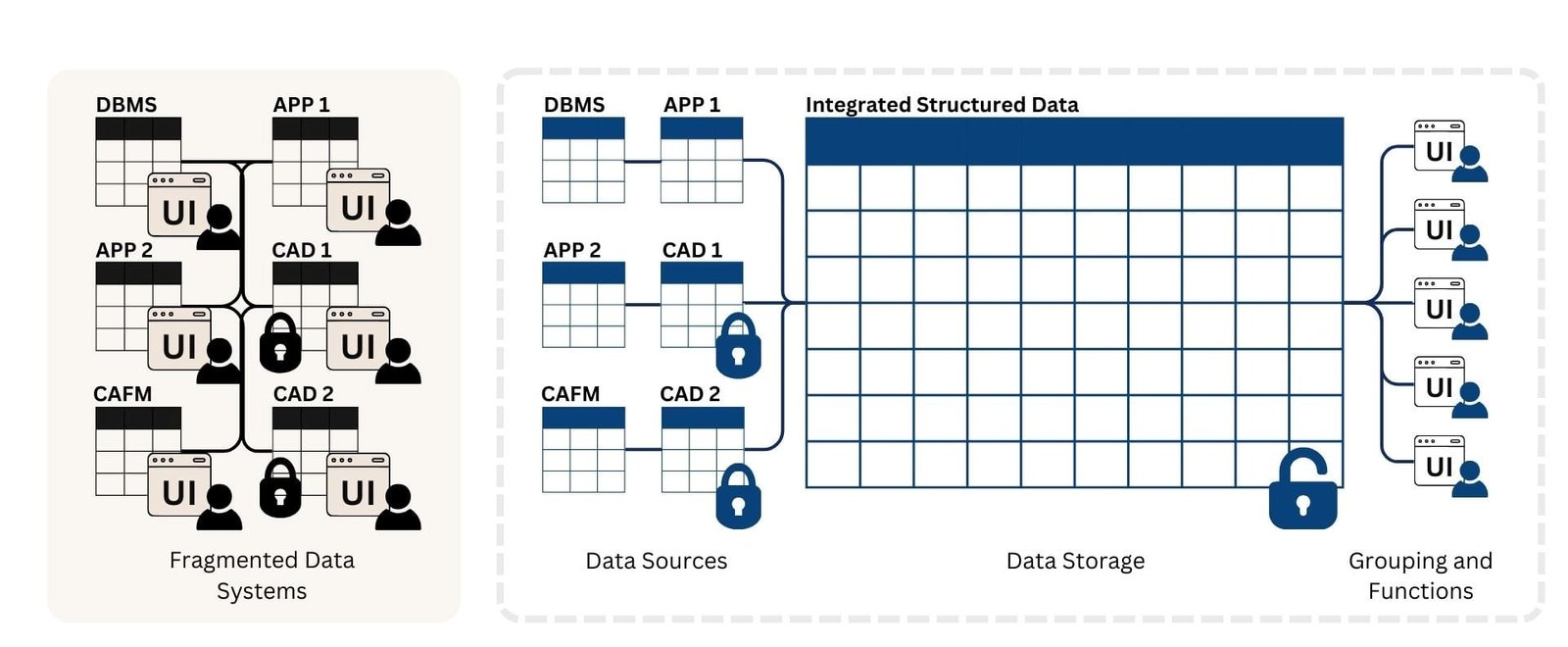
Рисунок 3
Fig. 2.2-2 Data integration eliminates silos, improves information availability, and optimizes business processes.

Once the data has been structured and merged, the next logical step is to validate it. With a single integrated repository, this process is greatly simplified: no more multiple inconsistent schemas, duplicate structures and complex relationships between tables. All information is aligned to a single data model, eliminating internal inconsistencies and speeding up the validation process. Validating and ensuring data quality are cornerstone aspects of all business processes, and we will explore them in more detail in the relevant chapters of the book.

At the final stage, the data are grouped, filtered and analyzed. Various functions are applied to them: aggregation (addition, multiplication), calculations between tables, columns or rows (Fig.‎ 2.2-4). Working with data becomes a sequence of steps: collection, structuring, validation, transformation, analytical processing and offloading to final applications where the information is used to solve practical problems. We will talk more about building such scenarios, automating steps and building processing flows in the chapters on ETL -processes and data pipeline approach.

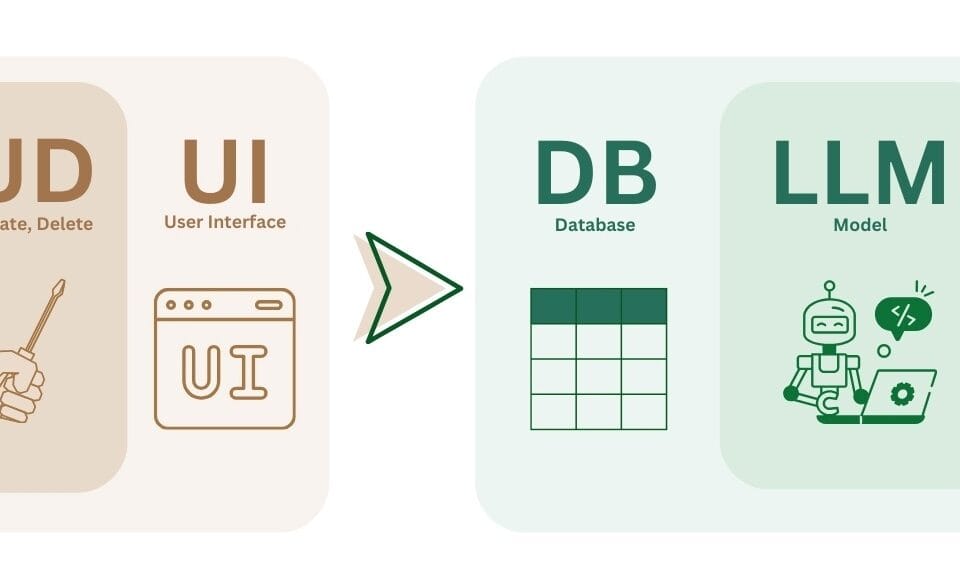
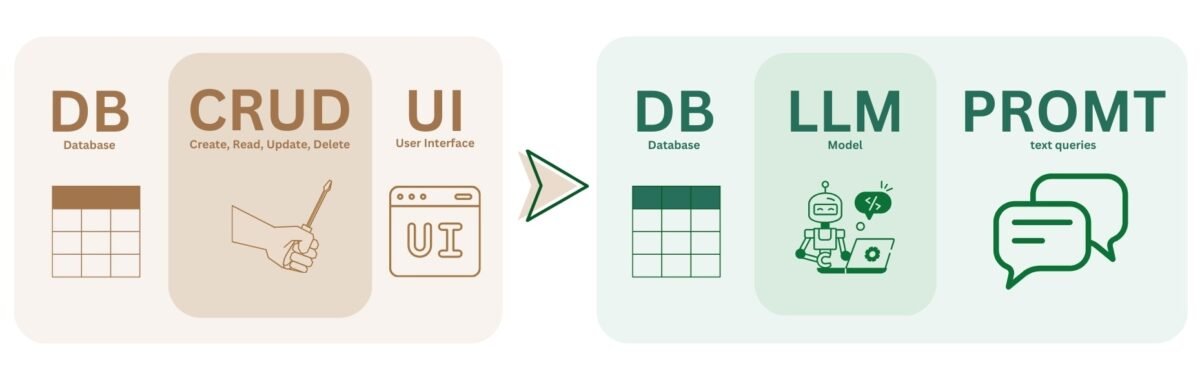
Thus, digital transformation is not just about simplifying the handling of information. It is about eliminating excessive complexity in data management, moving from chaos to predictability, from multiple systems to a manageable process. The lower the complexity of the architecture, the less code is required to support it. And in the future, code as such may disappear altogether, giving way to intelligent agents that independently analyze, systematize and transform data.

.

Leave a Reply

Change language

Post's Highlights

Stay updated: news and insights


We’re Here to Help

Fresh solutions are released through our social channels

UNLOCK THE POWER OF DATA
 IN CONSTRUCTION

Dive into the world of data-driven construction with this accessible guide, perfect for professionals and novices alike.
From the basics of data management to cutting-edge trends in digital transformation, this book
will be your comprehensive guide to using data in the construction industry.

Related posts 

Focus Areas

Search

Search
Sorry, no articles found.

✕

Don't miss the new solutions


✕
✕

Linux

macOS

Looking for the Linux or MAC version? Send us a quick message using the button below, and we’ll guide you through the process!

✕

📥 Download OnePager

Welcome to DataDrivenConstruction—where data meets innovation in the construction industry. Our One-Pager offers a concise overview of how our data-driven solutions can transform your projects, enhance efficiency, and drive sustainable growth. 

✕

🚀 Welcome to the future of data in construction!

You're taking your first step into the world of open data, working with normalized, structured data—the foundation of data analytics and modern automation tools.

By downloading, you agree to the DataDrivenConstruction terms of use 

Stay ahead with the latest updates on converters, tools, AI, LLM
and data analytics in construction — Subscribe now!

✕

🚀 Welcome to the future of data in construction!

You're taking your first step into the world of open data, working with normalized, structured data—the foundation of data analytics and modern automation tools.

By downloading, you agree to the DataDrivenConstruction terms of use 

Stay ahead with the latest updates on converters, tools, AI, LLM
and data analytics in construction — Subscribe now!

✕

🚀 Welcome to the future of data in construction!

You're taking your first step into the world of open data, working with normalized, structured data—the foundation of data analytics and modern automation tools.

By downloading, you agree to the DataDrivenConstruction terms of use 

Stay ahead with the latest updates on converters, tools, AI, LLM
and data analytics in construction — Subscribe now!

✕

🚀 Welcome to the future of data in construction!

You're taking your first step into the world of open data, working with normalized, structured data—the foundation of data analytics and modern automation tools.

By downloading, you agree to the DataDrivenConstruction terms of use 

Stay ahead with the latest updates on converters, tools, AI, LLM
and data analytics in construction — Subscribe now!

✕

🚀 Welcome to the future of data in construction!

You're taking your first step into the world of open data, working with normalized, structured data—the foundation of data analytics and modern automation tools.

By downloading, you agree to the DDC terms of use 

✕

🚀 Welcome to the future of data in construction!

You're taking your first step into the world of open data, working with normalized, structured data—the foundation of data analytics and modern automation tools.

By downloading, you agree to the DataDrivenConstruction terms of use 

Stay ahead with the latest updates on converters, tools, AI, LLM
and data analytics in construction — Subscribe now!

✕
DataDrivenConstruction offers workshops tested and practiced on global leaders in the construction industry to help your team navigate and leverage the power of data and artificial intelligence in your company's decision making.

Reserve your spot now to rethink your
approach to decision making!

✕


🚀 Welcome to the future of data in construction!

By downloading, you agree to the DataDrivenConstruction terms of use 

Stay ahead with the latest updates on converters, tools, AI, LLM
and data analytics in construction — Subscribe now!

✕
Have a question or need more information? Reach out to us directly!
Schedule a time to discuss your needs with our team.
Tailored sessions to help your team grow — let's plan together!
✕
Have you attended one of our workshops, read our book, or used our solutions? Share your thoughts with us!
Name
✕
Data Maturity Diagnostics

🧰 Data-Driven Readiness Check

This short assessment will help you identify your company's data management pain points and offer solutions to improve project efficiency. It takes only 1–2 minutes to complete and you will receive personalized recommendations tailored to your needs.

✕

Clean & Organized Data

Theoretical Chapters:

Practical Chapters:

What You'll Find on
DDC Solutions:

  • CAD/BIM to spreadsheet/database converters (Revit, AutoCAD, IFC, Microstation)
  • Ready-to-deploy n8n workflows for construction processes
  • ETL pipelines for data synchronization between systems
  • Customizable Python scripts for repetitive tasks
  • Intelligent data validation and error detection
  • Real-time dashboard connectors
  • Automated reporting systems
✕

Connect Everything

Theoretical Chapters:

Practical Chapters:

What You'll Find on
DDC Solutions:

  • CAD/BIM to spreadsheet/database converters (Revit, AutoCAD, IFC, Microstation)
  • Ready-to-deploy n8n workflows for construction processes
  • ETL pipelines for data synchronization between systems
  • Customizable Python scripts for repetitive tasks
  • Intelligent data validation and error detection
  • Real-time dashboard connectors
  • Automated reporting systems
✕

Add AI & LLM Brain

Theoretical Chapters:

Practical Chapters:

What You'll Find on
DDC Solutions:

  • CAD/BIM to spreadsheet/database converters (Revit, AutoCAD, IFC, Microstation)
  • Ready-to-deploy n8n workflows for construction processes
  • ETL pipelines for data synchronization between systems
  • Customizable Python scripts for repetitive tasks
  • Intelligent data validation and error detection
  • Real-time dashboard connectors
  • Automated reporting systems
020 From silos to a unified data warehouse
This website uses cookies to improve your experience. By using this website you agree to our Data Protection Policy.
Read more
×