018 The Fourth Industrial Revolution (Industry 4.0) and the Fifth Industrial Revolution (Industry 5.0) in the construction industry
20 December 2024
Рисунок 3
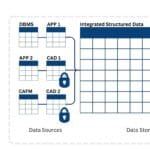
020 From silos to a unified data warehouse
22 December 2024

019 Redundant code and closed systems as a barrier to productivity improvement

Over the past decades, technological changes in the IT sphere have been driven primarily by software vendors. They set the course of development, determining which technologies companies should adopt and which ones should be left behind. In the era of transition from siloed solutions to centralized databases and integrated systems, vendors promoted licensed products, providing control over access and scaling. Later, with the advent of cloud technologies and Software as a Service (SaaS) models, this control evolved into a subscription model, cementing users as loyal customers of digital services.

This approach has given rise to a paradox: despite the unprecedented volumes of created program code, only a small part of it is actually used. Perhaps there is hundreds or thousands of times more code than necessary, because the same business processes are described and duplicated in dozens or hundreds of programs in different ways, even within one company. At the same time, development costs have already been paid for, and those costs are sunk. Nevertheless, the industry continues to reproduce this cycle, creating new products with minimal added value for the end user, more often under the pressure of market expectations than real needs.

According to the Defense Acquisition University (DAU) Software Development Cost Estimating Guide (Naval Center for Cost Analysis Air Force Cost Analysis Agency, “Software Development Cost Estimating Handbook,” 1 September 2008), the cost of software development can vary significantly depending on several factors, including the complexity of the system and theselected technology. Historically, development costs for 2008 have been about $100 per line of source code (SLOC), while maintenance costs can rise to $4,000 per SLOC.

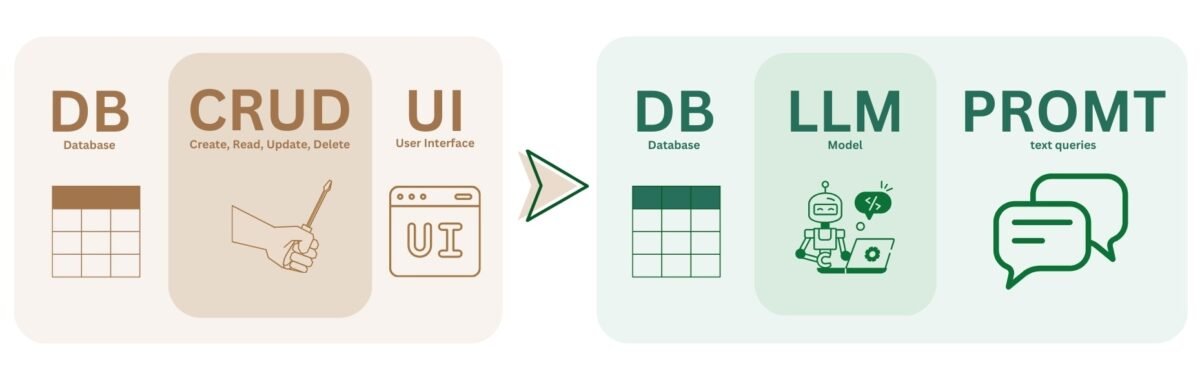
Just one of the components of CAD applications – the geometry kernel – can have tens of millions of lines of code (Fig.‎ 6.1-5). A similar situation is observed in ERP systems (Fig.‎ 5.4-4), to the discussion of the complexity of which we will return in the fifth part of the book. However, a closer look reveals that much of this code does not add value, but merely acts as a “mailman” – mechanically moving data between the database, API, user interface, and other tables in the system. Despite the popular myth about the critical importance of the so-called business logic, the harsh reality is much more prosaic: modern code bases are full of outdated template blocks (legacy code), the only purpose of which is to ensure data transfer between tables and components without affecting decision making or business efficiency growth.

As a result, closed solutions that process data from various sources inevitably turn into confusing “spaghetti ecosystems”. These complex, intertwined systems can only be handled by an army of managers working in a semi-routine mode. This organization of data management is not only inefficient in terms of resources, but also creates critical vulnerabilities in business processes, making the company dependent on a narrow circle of specialists who understand how this technological maze functions.

The continuous increase in the amount of code, the number of applications and the increasing complexity of concepts offered by vendors has led to a natural result – the growing complexity of the IT ecosystem in construction. This has made the practical implementation of digitalization through increasing the number of applications in the industry ineffective. Software products created without due attention to user needs often require significant resources for implementation and support, but do not bring the expected return.

According to McKinsey’s study “Increasing Construction Productivity” (McKinsey, “Improving construction productivity,”), over the past two decades, global labor productivity growth in construction has averaged only 1% per year, compared to growth of 2.8% for the world economy as a whole and 3.6% for manufacturing. In the United States, construction labor productivity per worker has halved since the 1960s (A. G. a. C. Syverson, “The Strange and Awful Path of Productivity in the US Construction Sector,” 19 Jan. 2023).

Increasing system complexity, isolation, and closed data have impaired communication among professionals, making the construction industry one of the least efficient (Fig. 2.2-1).

Picture 4
Fig.‎ 2.2-1 Closed and complex data and as a consequence poor communication between specialists led the construction industry to one of the least efficient sectors of the economy (based on (McKinsey, “Delivering on construction productivity is no longer optional,” August 9, 2024), (ING Group, “Lagging productivity in construction is driving up construction costs,” December 12, 2022)).

As emphasized in the McKinsey (2024) study “Ensuring construction productivity is no longer optional“, with increasing resource scarcity and the industry’s drive to double its growth rate, construction can no longer afford to remain at current productivity levels (McKinsey, “Delivering on construction productivity is no longer optional,” August 9, 2024). Global construction costs are projected to rise from $13 trillion in 2023to $22 trillion by 2040, making the issue of efficiency not just relevant, but critical.

One of the key ways to improve efficiency will be the inevitable unification and simplification of application structures and data ecosystem architectures. This approach to rationalization will eliminate excessive layers of abstraction and unnecessary complexity that have accumulated over the years in enterprise systems.

.

Leave a Reply

Change language

Post's Highlights

Stay updated: news and insights


We’re Here to Help

Fresh solutions are released through our social channels

UNLOCK THE POWER OF DATA
 IN CONSTRUCTION

Dive into the world of data-driven construction with this accessible guide, perfect for professionals and novices alike.
From the basics of data management to cutting-edge trends in digital transformation, this book
will be your comprehensive guide to using data in the construction industry.

Related posts 

Focus Areas

Search

Search
Sorry, no articles found.

✕

Don't miss the new solutions


✕
✕

Linux

macOS

Looking for the Linux or MAC version? Send us a quick message using the button below, and we’ll guide you through the process!

✕

📥 Download OnePager

Welcome to DataDrivenConstruction—where data meets innovation in the construction industry. Our One-Pager offers a concise overview of how our data-driven solutions can transform your projects, enhance efficiency, and drive sustainable growth. 

✕

🚀 Welcome to the future of data in construction!

You're taking your first step into the world of open data, working with normalized, structured data—the foundation of data analytics and modern automation tools.

By downloading, you agree to the DataDrivenConstruction terms of use 

Stay ahead with the latest updates on converters, tools, AI, LLM
and data analytics in construction — Subscribe now!

✕

🚀 Welcome to the future of data in construction!

You're taking your first step into the world of open data, working with normalized, structured data—the foundation of data analytics and modern automation tools.

By downloading, you agree to the DataDrivenConstruction terms of use 

Stay ahead with the latest updates on converters, tools, AI, LLM
and data analytics in construction — Subscribe now!

✕

🚀 Welcome to the future of data in construction!

You're taking your first step into the world of open data, working with normalized, structured data—the foundation of data analytics and modern automation tools.

By downloading, you agree to the DataDrivenConstruction terms of use 

Stay ahead with the latest updates on converters, tools, AI, LLM
and data analytics in construction — Subscribe now!

✕

🚀 Welcome to the future of data in construction!

You're taking your first step into the world of open data, working with normalized, structured data—the foundation of data analytics and modern automation tools.

By downloading, you agree to the DataDrivenConstruction terms of use 

Stay ahead with the latest updates on converters, tools, AI, LLM
and data analytics in construction — Subscribe now!

✕

🚀 Welcome to the future of data in construction!

You're taking your first step into the world of open data, working with normalized, structured data—the foundation of data analytics and modern automation tools.

By downloading, you agree to the DDC terms of use 

✕

🚀 Welcome to the future of data in construction!

You're taking your first step into the world of open data, working with normalized, structured data—the foundation of data analytics and modern automation tools.

By downloading, you agree to the DataDrivenConstruction terms of use 

Stay ahead with the latest updates on converters, tools, AI, LLM
and data analytics in construction — Subscribe now!

✕
DataDrivenConstruction offers workshops tested and practiced on global leaders in the construction industry to help your team navigate and leverage the power of data and artificial intelligence in your company's decision making.

Reserve your spot now to rethink your
approach to decision making!

✕


🚀 Welcome to the future of data in construction!

By downloading, you agree to the DataDrivenConstruction terms of use 

Stay ahead with the latest updates on converters, tools, AI, LLM
and data analytics in construction — Subscribe now!

✕
Have a question or need more information? Reach out to us directly!
Schedule a time to discuss your needs with our team.
Tailored sessions to help your team grow — let's plan together!
✕
Have you attended one of our workshops, read our book, or used our solutions? Share your thoughts with us!
Name
✕
Data Maturity Diagnostics

🧰 Data-Driven Readiness Check

This short assessment will help you identify your company's data management pain points and offer solutions to improve project efficiency. It takes only 1–2 minutes to complete and you will receive personalized recommendations tailored to your needs.

✕

Clean & Organized Data

Theoretical Chapters:

Practical Chapters:

What You'll Find on
DDC Solutions:

  • CAD/BIM to spreadsheet/database converters (Revit, AutoCAD, IFC, Microstation)
  • Ready-to-deploy n8n workflows for construction processes
  • ETL pipelines for data synchronization between systems
  • Customizable Python scripts for repetitive tasks
  • Intelligent data validation and error detection
  • Real-time dashboard connectors
  • Automated reporting systems
✕

Connect Everything

Theoretical Chapters:

Practical Chapters:

What You'll Find on
DDC Solutions:

  • CAD/BIM to spreadsheet/database converters (Revit, AutoCAD, IFC, Microstation)
  • Ready-to-deploy n8n workflows for construction processes
  • ETL pipelines for data synchronization between systems
  • Customizable Python scripts for repetitive tasks
  • Intelligent data validation and error detection
  • Real-time dashboard connectors
  • Automated reporting systems
✕

Add AI & LLM Brain

Theoretical Chapters:

Practical Chapters:

What You'll Find on
DDC Solutions:

  • CAD/BIM to spreadsheet/database converters (Revit, AutoCAD, IFC, Microstation)
  • Ready-to-deploy n8n workflows for construction processes
  • ETL pipelines for data synchronization between systems
  • Customizable Python scripts for repetitive tasks
  • Intelligent data validation and error detection
  • Real-time dashboard connectors
  • Automated reporting systems
019 Redundant code and closed systems as a barrier to productivity improvement
This website uses cookies to improve your experience. By using this website you agree to our Data Protection Policy.
Read more
×