



निर्माण उद्योग में डेटा युग
का मार्गदर्शन
मुक्त करने के लिए

Navegar na era dos dados na indústria da construção
gratuito


İnşaat sektöründe veri
çağında yolculuk
ücretsiz

在建筑行业中
穿越数据时代
免费
Menavigasi era data di
industri konstruksi
gratis

Навигация в эпоху данных в строительной отрасли
бесплатно

建設業界におけるデー
タ時代のナビゲーション
無料
التنقل في عصر
البيانات في صناعة البناء.
مجاناً
Naviguer dans l'ère des données dans la construction
gratuit
Navigare nell'Era dei Dati nel Settore delle Costruzioni
gratuito
Điều hướng Kỷ nguyên Dữ liệu trong Ngành Xây dựng
miễn phí
ניווט בעידן הנתונים
בתעשיית הבנייה
בחינם
Az építőiparban az adatkorszakban való navigálás
ingyenes
Andmeajastul navigeerimine ehitussektoris
tasuta

Navigarea în era datelor în industria construcțiilor
gratuit

Att navigera i dataåldern inom byggbranschen
Gratis
At navigere i dataalderen i byggebranchen
gratis

Навигация в ерата на данните в строителния бранш
безплатно
Pārvietošanās datu laikmetā būvniecības nozarē
bezmaksas
Navigacija v podatkovni dobi v gradbeništvu
brezplačno

건설 업계의 데이터
시대 탐색하기
무료
Nawigacja w erze danych w branży budowlanej
za darmo
Navigere i dataalderen i byggebransjen
gratis

Statybų pramonės naršymas duomenų amžiuje
nemokamai
Tietojen aikakaudella navigointi rakennusalalla
ilmainen
Navigace v době dat ve stavebnictví
zdarma
Navigácia v dobe dát v stavebníctve
zadarmo

নির্মাণ শিল্পে ডেটা যুগের নেভিগেট করা
বিনামূল্যে
Құрылыс индустриясындағы деректер дәуірін шарлау
тегін

Share the link to the book with your colleagues
I would be extremely grateful for any mentions of the book Data-Driven Construction on social media - sharing your reading experience helps spread the word about open data and tools and supports my work.
Support the Release of New Materials & Tools!
If you find these resources useful and want to see more tools, articles, and books released more often — your support means a lot! Every donation helps me dedicate more time to research, writing, and development.
Your learning journey starts here – select a chapter group
The first part of chapters examines the historical evolution of data manage-ment in the construction industry, from primitive records on physical media to modern digital ecosystems. It analyzes the transformation of information management technologies, the emergence of ERP -systems and the impact of data fragmentation on the efficiency of business processes. Special atten-tion is paid to the process of information digitalization and the growing im-portance of objective analysis instead of subjective expert assessments. The exponential growth of information volumes faced by the modern construc-tion industry and the associated challenges for enterprise systems are ex-amined in detail. The positioning of the construction industry in the context of the fourth and fifth industrial revolutions is explored, as well as the poten-tial of using artificial intelligence and data-centric approaches to create sus-tainable competitive advantage.
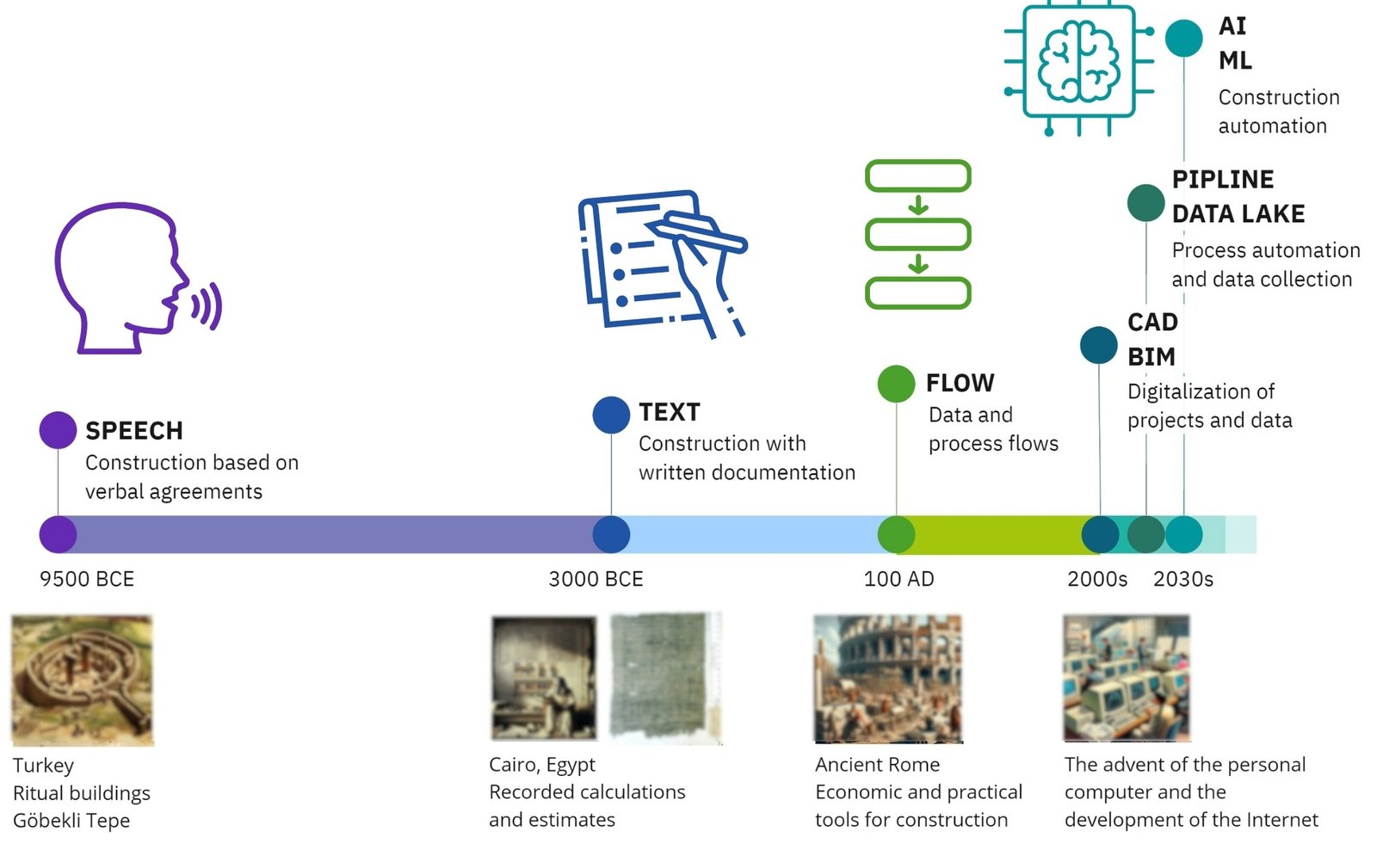
001 The birth of the data era in construction
About 10,000 years ago, in the Neolithic era, mankind made a revolutionary transition in its development, abandoning the nomadic lifestyle in favor of sedentary life, which led to the appearance of the first primitive buildings...
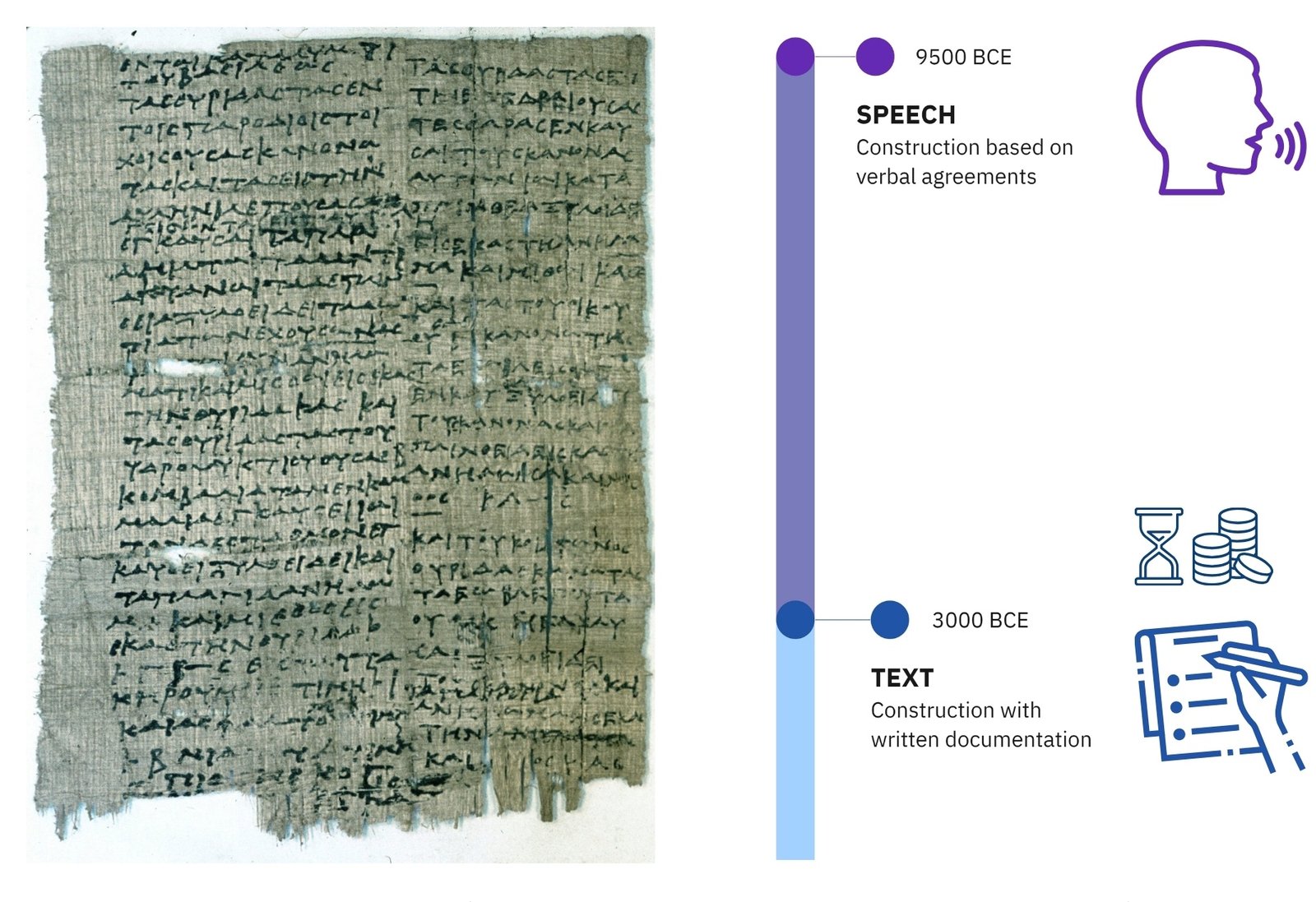
002 From clay and papyrus to digital technology
The first documentary evidence in construction dates back to the period of pyramid building, around 3000-4000 BC (“Papyrus, 3rd century B.C. Language is Greek,” 2024). Since then, the keeping of written records has facilitated and...

003 Process as a tool for data-driven experience
At the heart of any process is the transformation of past experience into a tool for planning the future. Experience in the modern sense is a structured set of data, the analysis of which allows...

004 Digitalization of construction process information
For millennia, the amount of information recorded in construction has barely changed, but it has grown rapidly in recent decades (Fig. 1.1-5). According to the PwC study® “Managed Data. What Students Need to Succeed in...
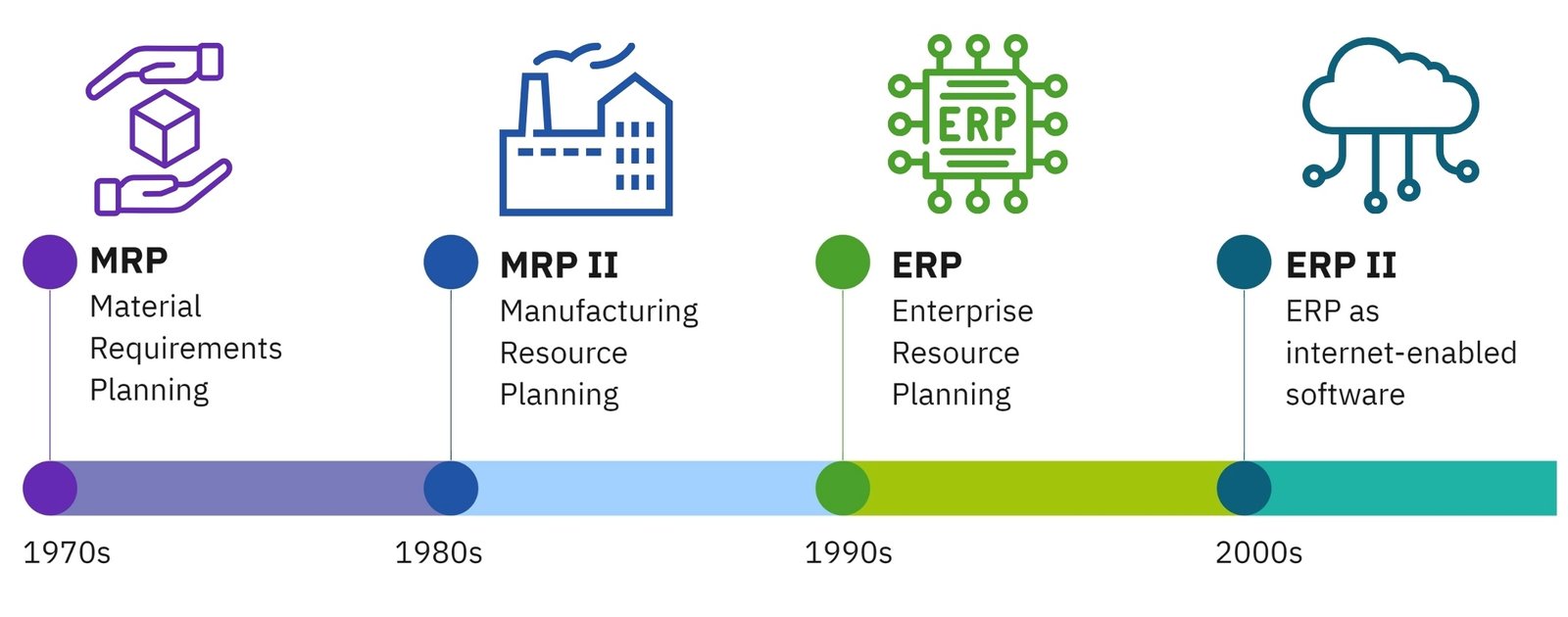
005 Digital revolution and the emergence of modular MRPERP-systems
The era of modern digital data storage and processing began with the advent of magnetic tape in the 1950s, which opened up the possibility of storing and utilizing large amounts of information. The next breakthrough...
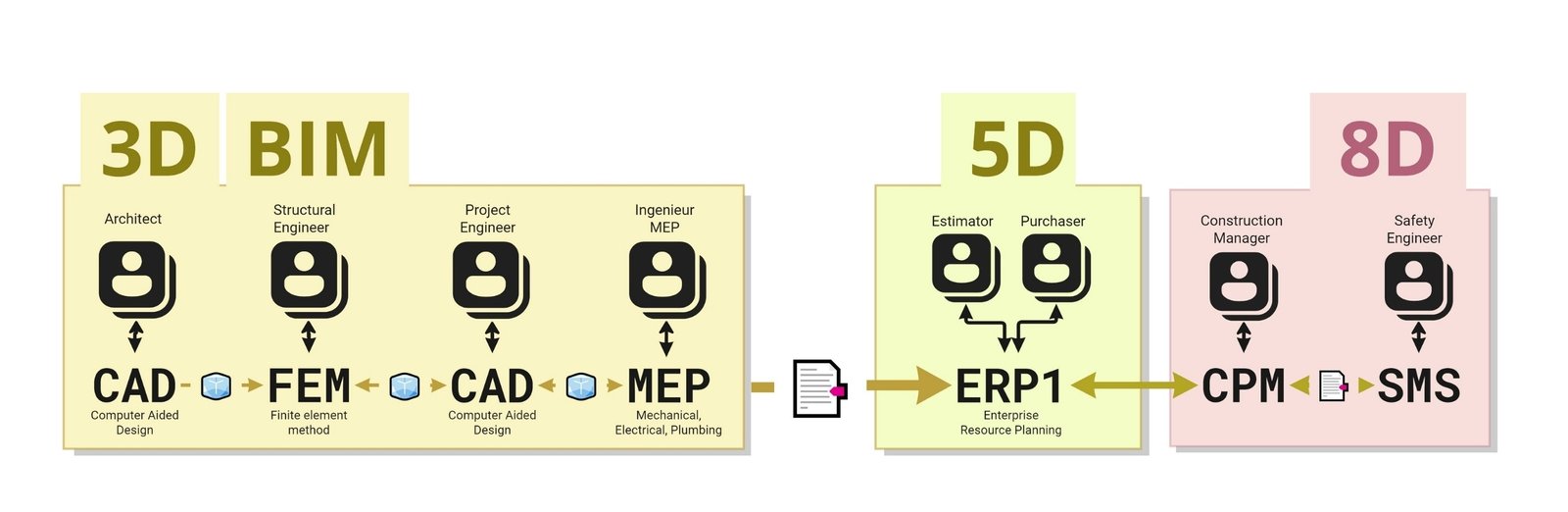
006 Data management systems from data mining to business challenges
Today’s companies are faced with the need to integrate multiple data management systems. Selecting data management systems, managing these systems well, and integrating disparate data sources is becoming critical to business performance. In the mid-2020s,...
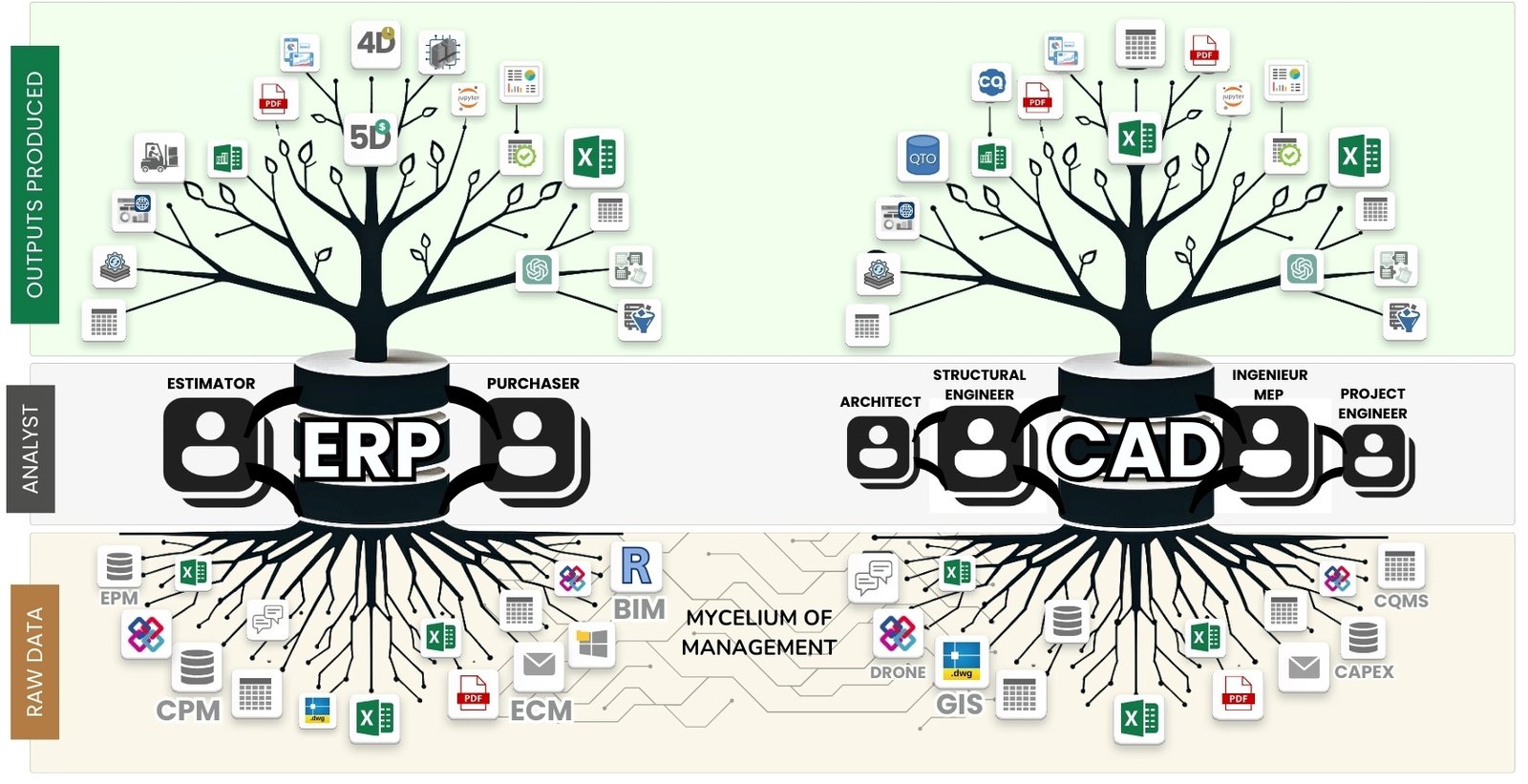
007 Corporate mycelium how data connects to business processes
The process of integrating data into applications and databases relies on the aggregation of information from a variety of sources, including different departments and specialists (Fig. 1.2-4). Specialists search for relevant data, process it, and...

008 The beginning of the data volume boom as an evolutionary wave
The construction industry is experiencing an unprecedented information explosion. If we think of business as a knowledge tree (Fig. 1.2-5) fed by data, the current stage of digitalization can be compared to the rapid growth...

009 The amount of data generated in a modern company
In the last two years, 90% of all existing data in the world has been created (B. Marr, “How much data do we create every day? The Mind-Blowing Stats Everyone Should Read,” 2018). As of...

010 Cost of data storage the economic aspect
In recent years, more and more companies are outsourcing data storage to cloud services. For example, if a company hosts half of its data in the cloud, at an average price of $0.015 per gigabyte...
012 Next steps from data theory to practical change
The evolution of data in construction is a journey from clay tablets to modern modular platforms. The challenge today is not to collect information, but to create a framework that turns disparate and diverse data...


(A review of the Italian version of the book "COSTRUZIONE BASATA SUI DATI. Navigare nell’era dei dati nel settore delle costruzioni")


Have you attended one of our workshops, read our book, or used our solutions?